

World’s First Biodegradable Cooling Film Cuts Energy Consumption By 20%—No Electricity Required
A team of researchers from Zhengzhou University and the University of South Australia (UniSA) has developed the world’s first biodegradable cooling film capable of passively lowering surface temperatures by up to 9.2°C — all without using electricity.
This groundbreaking innovation could reduce energy consumption by over 20% in some of the planet’s hottest urban areas, offering a sustainable alternative to traditional air conditioning systems, which are among the most energy-demanding technologies in use today.
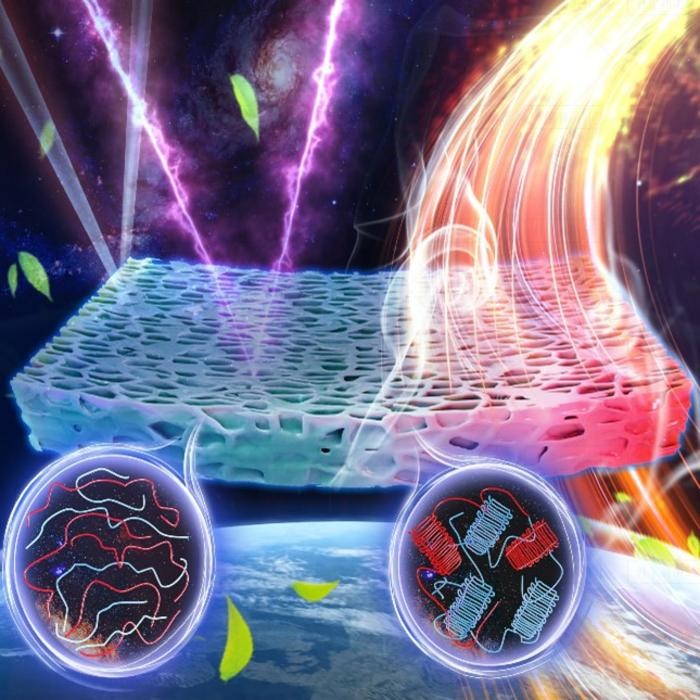
Figure 1. An Illustration of the Bioplastic Metafilm.
A Green Alternative to Energy-Intensive Cooling
The film, named a meta film, reflects nearly all solar radiation while allowing internal heat from buildings to radiate directly into space. According to UniSA PhD candidate Yangzhe Hou, who co-developed the material and is also affiliated with Zhengzhou University, the metafilm presents "an environmentally friendly alternative to air-conditioning, which significantly contributes to carbon emissions."
“It reflects almost all sunlight and enables heat within buildings to escape into outer space,” Hou explained. “As a result, the building can remain cooler than the surrounding air, even in direct sunlight.”Figure 1 shows An Illustration of the Bioplastic Meta film .
Efficient Cooling Without Power
Made from polylactic acid (PLA)—a plant-based, biodegradable plastic sourced from corn or sugarcane—the film features a porous, bi-continuous structure created through a low-temperature separation process. This structure reflects 98.7% of sunlight and demonstrated peak cooling of 9.2°C under strong midday sun, with daytime and nighttime average temperature drops of 4.9°C and 5.1°C, respectively.
Under testing, the metafilm delivered cooling performance of up to 136 watts per square meter in direct sunlight and had an extremely low thermal conductivity of just 0.049 W/m·K, due to its high porosity (84.6%).
Built for Real-World Conditions
Unlike previous biodegradable cooling materials that degraded quickly, this new metafilm proved resilient. It retained strong cooling performance even after 120 hours in a harsh acidic solution and the equivalent of eight months of UV exposure [1]. It continued to reduce temperatures by up to 6.5°C below ambient conditions.
Dr. Xianhu Liu of Zhengzhou University highlighted the environmental benefits: “Most passive radiative cooling systems today rely on petrochemical-based materials or ceramics that pose ecological concerns. By using biodegradable PLA, we’re offering a sustainable option with excellent solar reflectance, high thermal emission, and strong durability.”
The material’s internal structure, with 29.7% stereocomplex crystal content, contributes to its exceptional chemical and thermal stability—two of the main challenges for earlier cooling materials.
Energy Savings at Urban Scale
Simulations show that cities such as Lhasa, China could reduce annual energy consumption for cooling by up to 20.3% if the metafilm were widely applied to rooftops and urban structures. The researchers believe this approach could be scaled globally, particularly in densely populated regions with extreme heat.
Professor Jun Ma from UniSA emphasized the real-world potential: “This is more than a lab breakthrough. Our film is scalable, robust, and fully biodegradable.”
Broad Applications Ahead
Beyond buildings, the team sees potential uses in a variety of sectors — including transportation, agriculture, electronics, and even biomedicine, such as temperature-regulating wound dressings.
With its combination of sustainability, performance, and versatility, this metafilm represents a promising step toward eco-friendly cooling solutions in a warming world.
Reference:
- https://interestingengineering.com/innovation/no-power-cooling-film-saves-energy-in-buildings
Cite this article:
Keerthana S (2025), World’s First Biodegradable Cooling Film Cuts Energy Consumption By 20%—No Electricity Required, AnaTechMaz, pp.339
Recent Post
-

U.S. Startup Unveils World’s First Supersonic Artillery Shell, Capable of Reaching Mach 3.5 Speeds
A major breakthrough in artillery technology was announced at the...
-

A Digital Twin Reveals Overlooked Battery Blind Spot in Energy Storage Systems
A recent case study has introduced digital twins as a promising tool...
-
Point-of-Care to Precision: Carbon Nanodots Driving the Next MedTech Revolution
In an era where precision, personalization, and portability...
-

Inside the Chat: Can Governments Hack WhatsApp? Expert Explains the Possibilities
Earlier today, Iranian officials called on citizens to delete WhatsApp from..
-

World’s First Solar-Powered Drone with Boeing 747-Sized Wingspan Can Stay Airborne for a Month
In an effort to revolutionize long-range maritime surveillance and strategic....
-

Chinese Researchers Test Neural Implant Enabling Amputee to Control Cursor Using Only Their Mind
China has become the second....
-
China Begins Producing Yttrium-90 For Cancer Treatment Using Commercial Nuclear Reactor
China has taken a major step forward in cancer therapy by...
-

Magnetic Field Innovation May Pave the Way for Low-Cost MRIs in Rural Hospitals
German researchers have achieved a major breakthrough in magnetic field...
-
World’s First Biodegradable Cooling Film Cuts Energy Consumption By 20%—No Electricity Required
A team of researchers from....
-

Airbus Upgrades A400M Into a Combat-Ready Powerhouse with Drones and Electronic Warfare Tools
Airbus is evolving the A400M from....
-

World’s First Hybrid Solar Cargo Ship Set to Sail, Equipped With 192 Panels Generating 37,500 Kwh of Power Annually
Dutch solar innovator Wattlab and...
-

U.S. Engineer Develops One-Step Process to Produce Plastic Alternatives Using Bacteria
Amid growing concerns over plastic pollution, a U.S. engineer....
-

New Diagnostic Technology Harnesses Coffee-Ring Effect to Detect Deadly Diseases in Just 12 Minutes
Researchers at the University of...
-
Boosting RAM: New Magnetic Memory Cuts Write Power by 35% While Setting Speed Record
In a major leap toward ultra-efficient, high-speed memory...
-
Robotic Metabolism Could Enable Machines to Self-Repair Without Needing Human Assistance
We’ve witnessed robots perform some truly remarkable feats....