

Robotic Metabolism Could Enable Machines to Self-Repair Without Needing Human Assistance
We’ve witnessed robots perform some truly remarkable feats. Yet, their physical design often limits how freely they can move.
Most robotic bodies remain rigid and completely dependent on human intervention for repairs and upgrades. Break a part? Call in a human. Need an enhancement? Again, humans to the rescue.
To overcome this limitation, researchers at Columbia University have introduced a fascinating idea called “Robot Metabolism.” Just like it sounds, it envisions robots capable of “growing,” “healing,” and improving themselves physically.
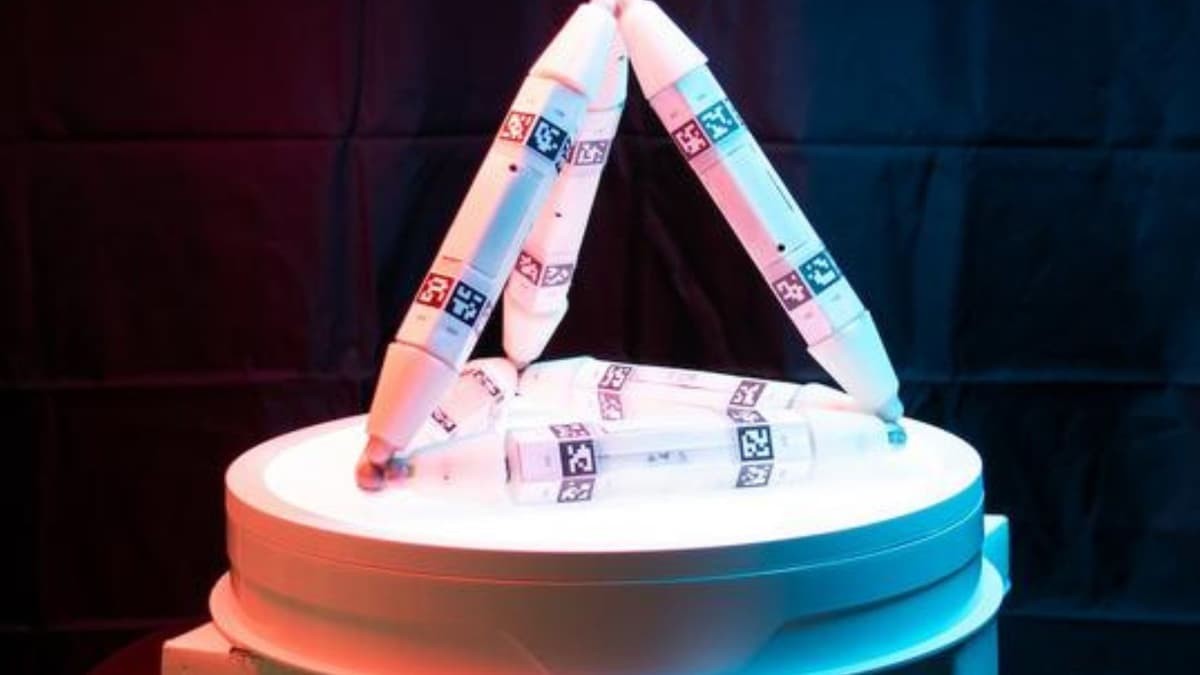
Figure 1. Robotic Metabolism.
Self-adaptive robots
In recent years, AI and machine learning have advanced robotic intelligence dramatically. But their bodies have hardly evolved, leaving them inflexible and ultimately posing recycling challenges. Professor Hod Lipson from Columbia points out that adaptability is fundamental in biology. Figure 1 shows Robotic Metabolism.
“This capability largely comes from the modular nature of biology, where organisms reuse building blocks like amino acids. Eventually, robots will need to do the same—learn to reuse parts from other machines. You can view this emerging field as ‘machine metabolism,’” Lipson explained.
In nature, our bodies are constantly repairing, growing, and adapting. When we’re injured, we heal. When we eat, we grow. This new robotic concept mirrors that same biological resilience. According to the study, these robots could “absorb and reuse parts” sourced not from factories but from their surroundings—or even other robots.
“True autonomy means robots should be able not only to make decisions but also to sustain themselves physically,” added Philippe Martin Wyder, the study’s lead author and a researcher at Columbia Engineering and the University of Washington.
To bring this idea to life, the team developed something called the Truss Link.These are essentially magnetic rods that act as dynamic building blocks [1]. They can expand, contract, and snap together at different angles to form increasingly complex structures. Using this technique, two-dimensional patterns can self-assemble and transform into fully functional 3D robots.
A remarkable demonstration showed that these machines can “integrate new parts” to enhance their performance. For example, a tetrahedron-shaped robot added a “walking stick,” enabling it to move downhill 66.5% faster.
Applications in disaster recovery and space missions
So, what might this mean for the future?
The researchers envision a world where robots can autonomously grow, repair, and adapt to new environments—much like living creatures.
By adopting nature’s modular strategies, “robot metabolism” could lead to truly independent machines that evolve physically over time.
Such robots could be invaluable in disaster zones, where self-repairing machines could keep working without human assistance. Or in deep-space missions, where they might build or upgrade themselves without resupply from Earth.
“Robot Metabolism offers a digital interface to the physical world, enabling AI not only to advance in thinking but also to evolve physically,” Wyder noted.
“Ultimately, it could pave the way for AI to create physical structures or robots, just as it now composes or edits text in your emails,” he added.
Reference:
- https://interestingengineering.com/innovation/robot-metabolism-could-help-machines-repair
Cite this article:
Keerthana S (2025), Robotic Metabolism Could Enable Machines to Self-Repair Without Needing Human Assistance, AnaTechMaz, pp.344.
Recent Post
-
U.S. Startup Unveils World’s First Supersonic Artillery Shell, Capable of Reaching Mach 3.5 Speeds
A major breakthrough in artillery technology was announced at the...
-

A Digital Twin Reveals Overlooked Battery Blind Spot in Energy Storage Systems
A recent case study has introduced digital twins as a promising tool...
-
Point-of-Care to Precision: Carbon Nanodots Driving the Next MedTech Revolution
In an era where precision, personalization, and portability...
-

Inside the Chat: Can Governments Hack WhatsApp? Expert Explains the Possibilities
Earlier today, Iranian officials called on citizens to delete WhatsApp from..
-
World’s First Solar-Powered Drone with Boeing 747-Sized Wingspan Can Stay Airborne for a Month
In an effort to revolutionize long-range maritime surveillance and strategic....
-

Chinese Researchers Test Neural Implant Enabling Amputee to Control Cursor Using Only Their Mind
China has become the second....
-
China Begins Producing Yttrium-90 For Cancer Treatment Using Commercial Nuclear Reactor
China has taken a major step forward in cancer therapy by...
-
Magnetic Field Innovation May Pave the Way for Low-Cost MRIs in Rural Hospitals
German researchers have achieved a major breakthrough in magnetic field...
-
World’s First Biodegradable Cooling Film Cuts Energy Consumption By 20%—No Electricity Required
A team of researchers from....
-

Airbus Upgrades A400M Into a Combat-Ready Powerhouse with Drones and Electronic Warfare Tools
Airbus is evolving the A400M from....
-

World’s First Hybrid Solar Cargo Ship Set to Sail, Equipped With 192 Panels Generating 37,500 Kwh of Power Annually
Dutch solar innovator Wattlab and...
-
U.S. Engineer Develops One-Step Process to Produce Plastic Alternatives Using Bacteria
Amid growing concerns over plastic pollution, a U.S. engineer....
-

New Diagnostic Technology Harnesses Coffee-Ring Effect to Detect Deadly Diseases in Just 12 Minutes
Researchers at the University of...
-
Boosting RAM: New Magnetic Memory Cuts Write Power by 35% While Setting Speed Record
In a major leap toward ultra-efficient, high-speed memory...
-
Robotic Metabolism Could Enable Machines to Self-Repair Without Needing Human Assistance
We’ve witnessed robots perform some truly remarkable feats....