

China Begins Producing Yttrium-90 For Cancer Treatment Using Commercial Nuclear Reactor
China Achieves Breakthrough in Cancer Treatment with Domestic Yttrium-90 Production
China has taken a major step forward in cancer therapy by producing Yttrium-90 (Y-90)—a potent beta-emitting isotope used to treat liver tumors—using a commercial heavy-water reactor at the Qinshan Nuclear Power Base.
The China National Nuclear Corporation (CNNC) announced that Y-90 glass microspheres were successfully irradiated and extracted at the Hefu-1 reactor unit in Haiyan, located in Zhejiang Province. This marks a significant milestone, as it enables large-scale domestic production of the medical isotope for the first time in the country.
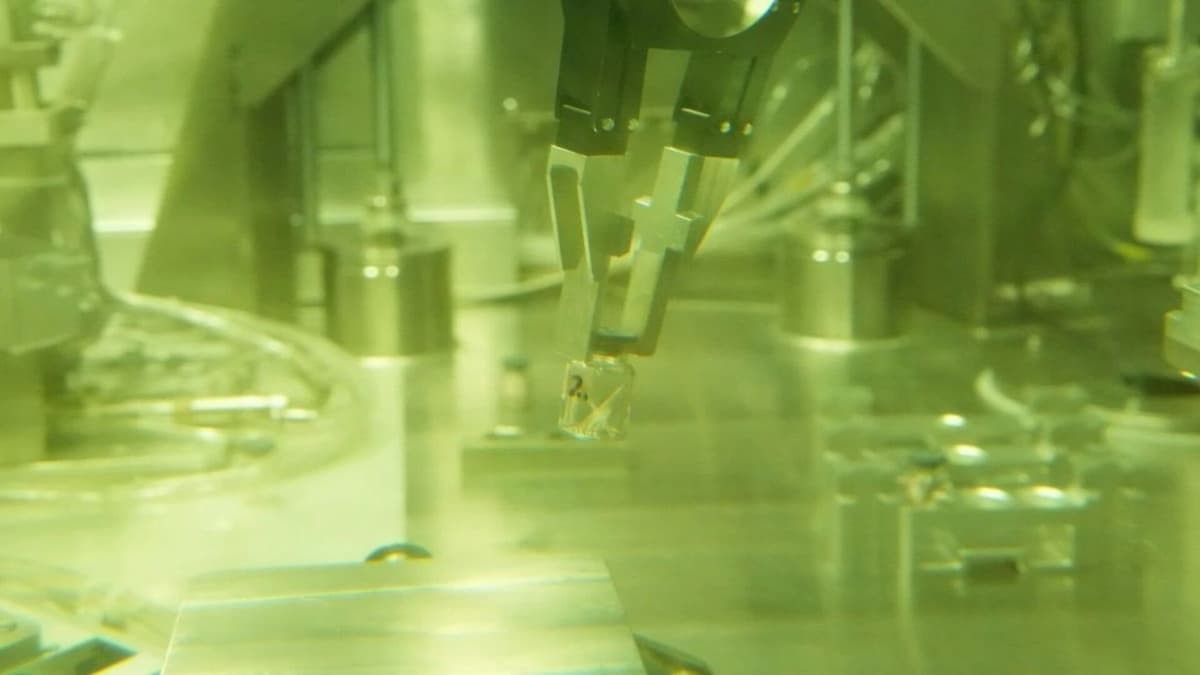
Figure 1.Yttrium-90 For Cancer Treatment.
CNNC representatives highlighted the achievement as a breakthrough in isotope manufacturing, paving the way for advancements in nuclear medicine and cancer treatment. The successful production signals China’s growing capabilities in the radiopharmaceutical sector and opens new possibilities for the development of high-end medical applications. Figure 1 shows Yttrium-90 For Cancer Treatment.
Precision Weapon Against Liver Cancer
Often referred to as a precision nuclear weapon in the fight against liver cancer, Y-90 microspheres deliver targeted beta radiation directly to tumor cells, making them a vital therapy for mid-to-late-stage liver cancer patients around the world.
Until now, all Y-90 glass microspheres used in clinical treatments in China were entirely imported, which created accessibility and cost challenges for many patients. The new domestic production effort by CNNC—a leading state-owned force in nuclear science and technology—aims to eliminate those barriers and strengthen China’s self-reliance in advanced cancer treatment technologies.
On June 14, China made a significant announcement confirming that the first batch of Yttrium-90 (Y-90) glass microspheres successfully met all required quality standards, including benchmarks for specific activity and stability [1]. This validation confirms that the Qinshan Nuclear Power Base’s reactor is fully capable of supporting continuous, large-scale production of the medical isotope.
The project was a collaborative effort involving scientists at Qinshan, in partnership with teams from Shanghai Nuclear Engineering Research & Design Institute, CNNC North China, and China Nuclear Engineering Group. The success of the initiative was largely attributed to the high neutron flux and stable performance of the heavy-water reactor at Qinshan.
“We aim to fully harness Qinshan’s nuclear capabilities to establish a reliable production system for Y-90 glass microspheres, secure domestic supply, and serve public health needs,” said Li Shisheng, deputy chief engineer at the Qinshan facility.
Transforming Liver Cancer Treatment
Researchers underscored the importance of Yttrium-90 in transarterial radioembolization (TARE)—a minimally invasive procedure in which Y-90-loaded microspheres are delivered directly to liver tumors via the hepatic artery. This technique enables precise radiation therapy, allowing doctors to target cancerous tissue with minimal impact on surrounding healthy cells, offering a transformative approach to treating inoperable liver cancer.
Reference:
- https://interestingengineering.com/innovation/world-first-china-yttrium90-nuclear-reactor
Cite this article:
Keerthana S (2025), China Begins Producing Yttrium-90 For Cancer Treatment Using Commercial Nuclear Reactor, AnaTechMaz, pp.337
Recent Post
-

U.S. Startup Unveils World’s First Supersonic Artillery Shell, Capable of Reaching Mach 3.5 Speeds
A major breakthrough in artillery technology was announced at the...
-

A Digital Twin Reveals Overlooked Battery Blind Spot in Energy Storage Systems
A recent case study has introduced digital twins as a promising tool...
-
Point-of-Care to Precision: Carbon Nanodots Driving the Next MedTech Revolution
In an era where precision, personalization, and portability...
-

Inside the Chat: Can Governments Hack WhatsApp? Expert Explains the Possibilities
Earlier today, Iranian officials called on citizens to delete WhatsApp from..
-

World’s First Solar-Powered Drone with Boeing 747-Sized Wingspan Can Stay Airborne for a Month
In an effort to revolutionize long-range maritime surveillance and strategic....
-

Chinese Researchers Test Neural Implant Enabling Amputee to Control Cursor Using Only Their Mind
China has become the second....
-
China Begins Producing Yttrium-90 For Cancer Treatment Using Commercial Nuclear Reactor
China has taken a major step forward in cancer therapy by...
-
Magnetic Field Innovation May Pave the Way for Low-Cost MRIs in Rural Hospitals
German researchers have achieved a major breakthrough in magnetic field...
-
World’s First Biodegradable Cooling Film Cuts Energy Consumption By 20%—No Electricity Required
A team of researchers from....
-

Airbus Upgrades A400M Into a Combat-Ready Powerhouse with Drones and Electronic Warfare Tools
Airbus is evolving the A400M from....
-

World’s First Hybrid Solar Cargo Ship Set to Sail, Equipped With 192 Panels Generating 37,500 Kwh of Power Annually
Dutch solar innovator Wattlab and...
-

U.S. Engineer Develops One-Step Process to Produce Plastic Alternatives Using Bacteria
Amid growing concerns over plastic pollution, a U.S. engineer....
-

New Diagnostic Technology Harnesses Coffee-Ring Effect to Detect Deadly Diseases in Just 12 Minutes
Researchers at the University of...
-
Boosting RAM: New Magnetic Memory Cuts Write Power by 35% While Setting Speed Record
In a major leap toward ultra-efficient, high-speed memory...
-
Robotic Metabolism Could Enable Machines to Self-Repair Without Needing Human Assistance
We’ve witnessed robots perform some truly remarkable feats....