

U.S. Engineer Develops One-Step Process to Produce Plastic Alternatives Using Bacteria
Amid growing concerns over plastic pollution, a U.S. engineer has pioneered a single-step method to produce strong, biodegradable sheets using bacteria.
Maksud Rahman, an assistant professor of mechanical and aerospace engineering at the University of Houston, has developed a process to transform bacterial cellulose into a high-performance material that could potentially replace plastic in a wide range of everyday applications.
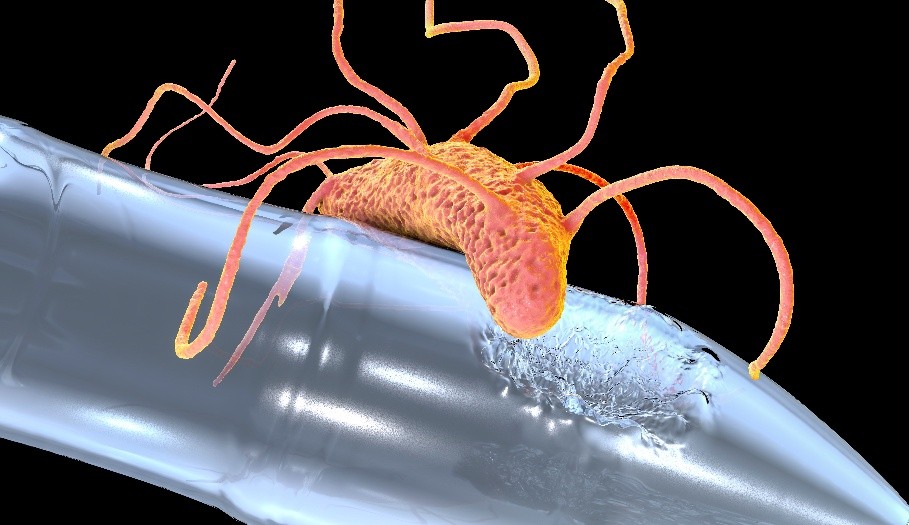
Figure 1.Plastic-eating bacteria.
The breakthrough lies not just in the material itself, but in how it’s made. By precisely controlling bacterial movement within a rotating incubator, Rahman’s team was able to guide the formation of aligned cellulose nanofibers. Figure 1 shows Plastic-eating bacteria.
The outcome is a flexible, durable sheet suited for various uses—from eco-friendly packaging to medical dressings. “We envision these strong, multifunctional, and environmentally friendly bacterial cellulose sheets becoming widespread, replacing plastics in numerous industries and helping reduce environmental harm,” Rahman said.
Smarter, Stronger Bioplastics
While bacterial cellulose is already known for being biodegradable and plentiful, the researchers took it further by enhancing the material’s properties. They introduced boron nitride nanosheets into the nutrient solution, enabling the creation of hybrid sheets with significantly improved characteristics.
These composite materials demonstrated impressive tensile strength—up to 553 MPa—and advanced thermal conductivity, dissipating heat three times faster than untreated versions.
“We’ve developed a simple, scalable, one-step biosynthesis process that uses fluid-driven shear forces in a rotational culture device to produce robust bacterial cellulose sheets with aligned nanofibers,” Rahman explained.
M.A.S.R. Saadi, a Rice University doctoral student and lead author of the study, noted that the resulting cellulose sheets offer “high tensile strength, flexibility, foldability, optical transparency, and long-term mechanical stability.”
Rice postdoctoral fellow Shyam Bhakta contributed to the biological components of the project.
Directing Bacterial Behavior
At the heart of this innovation is a custom-built rotating culture system—a cylindrical, oxygen-permeable incubator that spins on a central shaft [1]. This continuous rotation generates directional fluid flow, encouraging bacteria to move purposefully rather than randomly.
“By guiding the bacteria’s movement, we can control how they construct cellulose—resulting in a more organized, high-performance material,” Rahman said.
Published in Nature Communications, the study showcases a major advancement in sustainable, scalable material production.
Unlike many conventional bioplastics that require high energy input and complex processing, this method relies on basic biological processes enhanced by mechanical design, offering an eco-friendlier alternative.
A New Era for Sustainable Manufacturing
With the global push toward plastic reduction, Rahman’s approach could have far-reaching industrial applications. The team believes their method can pave the way for sustainable alternatives in fields ranging from packaging and textiles to electronics, energy storage, and thermal management.
“This single-step, scalable bio-fabrication technique for producing strong, multifunctional bacterial cellulose sheets could revolutionize how we think about materials,” Rahman concluded.
Reference:
- https://interestingengineering.com/innovation/eco-sheets-from-bacteria-plastic-breakthrough
Cite this article:
Keerthana S (2025), U.S. Engineer Develops One-Step Process to Produce Plastic Alternatives Using Bacteria, AnaTechMaz, pp. 342
Recent Post
-

U.S. Startup Unveils World’s First Supersonic Artillery Shell, Capable of Reaching Mach 3.5 Speeds
A major breakthrough in artillery technology was announced at the...
-

A Digital Twin Reveals Overlooked Battery Blind Spot in Energy Storage Systems
A recent case study has introduced digital twins as a promising tool...
-
Point-of-Care to Precision: Carbon Nanodots Driving the Next MedTech Revolution
In an era where precision, personalization, and portability...
-

Inside the Chat: Can Governments Hack WhatsApp? Expert Explains the Possibilities
Earlier today, Iranian officials called on citizens to delete WhatsApp from..
-

World’s First Solar-Powered Drone with Boeing 747-Sized Wingspan Can Stay Airborne for a Month
In an effort to revolutionize long-range maritime surveillance and strategic....
-

Chinese Researchers Test Neural Implant Enabling Amputee to Control Cursor Using Only Their Mind
China has become the second....
-
China Begins Producing Yttrium-90 For Cancer Treatment Using Commercial Nuclear Reactor
China has taken a major step forward in cancer therapy by...
-
Magnetic Field Innovation May Pave the Way for Low-Cost MRIs in Rural Hospitals
German researchers have achieved a major breakthrough in magnetic field...
-
World’s First Biodegradable Cooling Film Cuts Energy Consumption By 20%—No Electricity Required
A team of researchers from....
-

Airbus Upgrades A400M Into a Combat-Ready Powerhouse with Drones and Electronic Warfare Tools
Airbus is evolving the A400M from....
-

World’s First Hybrid Solar Cargo Ship Set to Sail, Equipped With 192 Panels Generating 37,500 Kwh of Power Annually
Dutch solar innovator Wattlab and...
-
U.S. Engineer Develops One-Step Process to Produce Plastic Alternatives Using Bacteria
Amid growing concerns over plastic pollution, a U.S. engineer....
-

New Diagnostic Technology Harnesses Coffee-Ring Effect to Detect Deadly Diseases in Just 12 Minutes
Researchers at the University of...
-
Boosting RAM: New Magnetic Memory Cuts Write Power by 35% While Setting Speed Record
In a major leap toward ultra-efficient, high-speed memory...
-
Robotic Metabolism Could Enable Machines to Self-Repair Without Needing Human Assistance
We’ve witnessed robots perform some truly remarkable feats....