

Frozen in Time: How Human Eggs Stay Alive for Decades
Human Eggs’ Longevity Secret: Slowing the Clock on Cellular Decay
Human eggs can remain viable for decades by dialing down their internal recycling systems, according to new research. By reducing protein breakdown, the cells minimize harmful byproducts that could damage DNA — and just before ovulation, they perform a final “spring cleaning,” clearing waste and reorganizing vital components to maintain quality.
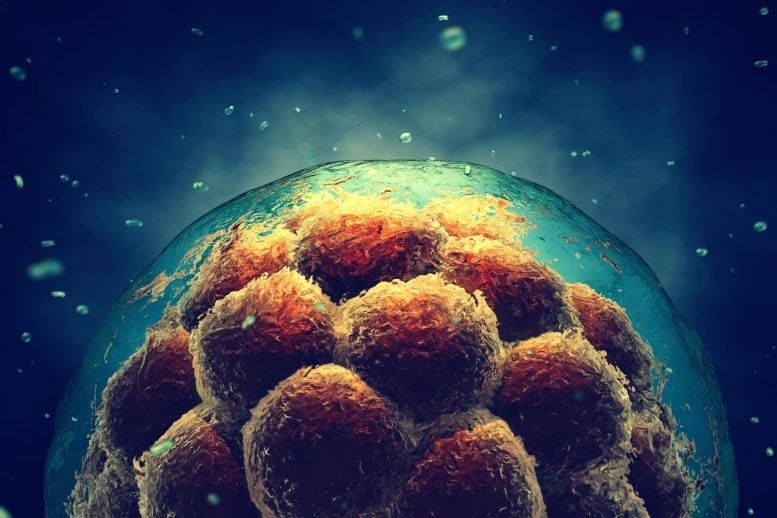
Figure 1. Human Eggs.
Dormant Yet Durable
Egg cells are among the body’s longest-lived cells, often lying dormant for decades before they’re called into action. A study in The EMBO Journal reveals that as eggs mature, they deliberately slow the activity of their internal waste disposal machinery. This appears to be an evolutionary strategy to keep metabolism low and cellular damage minimal over the long haul. Figure 1 shows Human Eggs.
“We analyzed more than a hundred freshly donated eggs — the largest dataset of its kind — and found a surprisingly minimalist survival strategy that keeps them pristine for decades,” said Dr. Elvan Böke, Group Leader at the Centre for Genomic Regulation (CRG) in Barcelona.
Women are born with 1–2 million immature eggs, which decline to a few hundred by menopause. Each one must stay in good condition for up to 50 years before potentially participating in reproduction.
Waste Control as a Power-Saving Tactic
In most cells, lysosomes and proteasomes continuously recycle proteins, a process that uses energy and can create reactive oxygen species (ROS) — molecules capable of damaging DNA and membranes. While the researchers didn’t directly measure ROS, they propose that slowing recycling reduces ROS production while still maintaining essential cell functions.
The findings build on the team’s 2022 work, which showed that eggs also bypass a major metabolic step to further limit ROS. Together, the studies reveal a multi-layered defense system that keeps eggs healthy and ready for reproduction over decades.
Live Imaging Reveals Egg Cell’s “Spring Cleaning”
Researchers gathered over 100 eggs from 21 healthy donors aged 19–34 at the Dexeus Mujer fertility clinic in Barcelona—70 of them fertilization-ready and 30 still-immature. Using fluorescent probes, they monitored lysosome, proteasome, and mitochondrial activity in living cells [1]. Each of these processes ran at roughly half the level seen in the eggs’ surrounding support cells, and activity dropped even further as the eggs matured.
Real-time imaging captured an unexpected behavior: in the final hours before ovulation, eggs expelled lysosomes into the surrounding fluid. At the same time, mitochondria and proteasomes migrated toward the cell’s outer edge. “It’s a type of spring cleaning we didn’t know human eggs were capable of,” says first author Dr. Gabriele Zaffagnini.
This work represents the largest study to date on healthy human eggs collected directly from donors. In contrast, most past research has relied on eggs matured artificially in the lab—cells that often behave abnormally and are associated with lower IVF success rates.
The findings could pave the way for better strategies to boost the success of millions of IVF cycles performed globally each year. “Fertility patients are often told to take various supplements to enhance egg metabolism, but the evidence linking them to improved pregnancy outcomes is weak,” notes Dr. Böke. “Our results suggest the opposite might be true—keeping the egg’s naturally slow metabolism intact may help maintain its quality.”
Next, the team will investigate whether this controlled slowdown in cellular waste disposal weakens with age or in cases of infertility by studying eggs from older donors and unsuccessful IVF attempts.
References:
- https://scitechdaily.com/frozen-in-time-the-hidden-trick-that-keeps-human-eggs-alive-for-decades/
Cite this article:
Keerthana S (2025), Frozen in Time: How Human Eggs Stay Alive for Decades, AnaTechMaz, pp.450
Recent Post
-

Scientists Remove Enigmatic Organelles from Cells to Uncover Hidden Secrets
Mitochondria are specialized organelles found in the cells of most eukaryotic.....
-

This Fish Can Regenerate Its Hearing – Scientists Finally Know Why
While the human body can regularly replace certain cell types......

Ancient Viruses Lurk in Your DNA – And They’re Calling the Shots
Large portions of our DNA are made up of repeated sequences known....

Scientists Unravel Long-Standing Mystery of Photosynthesis
In most photosynthetic organisms, a protein-pigment complex.....

Scientists Visualize Crucial Inflammation-Regulating Protein for the First Time
Using advanced microscopy, researchers have visualized two key...
-

Scientists Uncover Previously Unknown Organelle Within Human Cells
Researchers have discovered a previously unknown organelle in...
-

Revolutionary “Material Maze” May Help Prevent Bacterial Infections
Scientists at the University of Nottingham have discovered that patterned plastic surfaces can...
-

Actor–Critic Algorithm Enhances Power Output in Direct Methanol Fuel Cells
In the fast-growing field of sustainable energy, direct methanol fuel...
-

A More Efficient Approach to Studying Complex Treatment Interactions
MIT researchers have introduced a new theoretical framework that enables...
-

Scientists Identify Mysterious New Cell Type That Breaks Down Bone
Researchers studying Burmese pythons have discovered a previously unknown type of intestinal...
-
Unlocking RNA's Origins: A Chemical Clue Discovered
New research from Scripps Research offers a fresh look at why nature may have chosen ribose as RNA’s sugar ....
-
Gene Regulation Reveals Surprising Order, Defying Long-Held Scientific Assumptions
In a breakthrough that rewrites a key chapter of molecular biology,...
-
Artificial Intelligence Sheds Light on Gut Bacteria Communication
Gut bacteria are essential players in human health, influencing everything from digestion to brain function...
-
Plaque-Eating Immune Cells May Help Some Brains Resist Alzheimer’s
In Alzheimer’s disease, proteins such as amyloid beta can clump into...
-
Frozen in Time: How Human Eggs Stay Alive for Decades
Human eggs can remain viable for decades by dialing down their internal recycling systems, according to ...