

Scientists Remove Enigmatic Organelles from Cells to Uncover Hidden Secrets
Unraveling the Origins and Roles of Mitochondria
Mitochondria are specialized organelles found in the cells of most eukaryotic organisms, including animals, plants, and fungi. These cells are defined by having a membrane-bound nucleus and other enclosed structures. Unlike other organelles, mitochondria contain their own DNA, passed down exclusively through the maternal line. Scientists widely believe mitochondria originated from ancient prokaryotic cells that entered early eukaryotic cells, forming a symbiotic relationship that led to their evolution into essential energy-producing organelles.

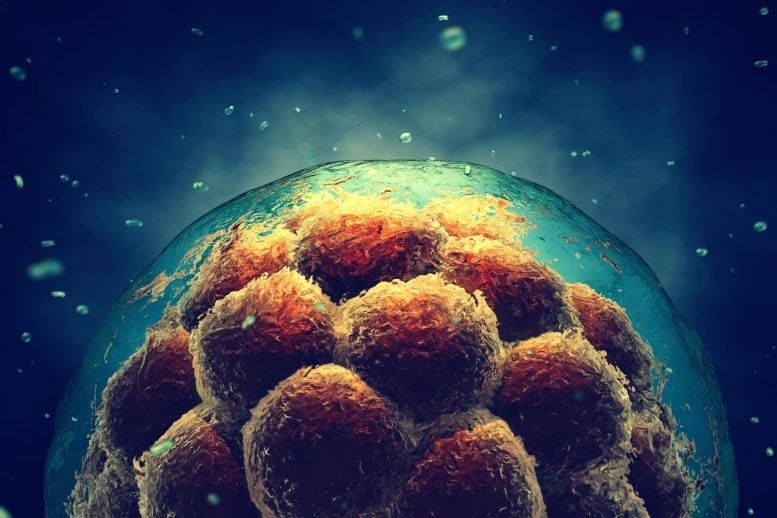
Figure 1. Scientists Eliminate Mysterious Cell Structures to Reveal Hidden Functions.
Beyond Powerhouses: The Expanding Roles of Mitochondria
While mitochondria are traditionally known for generating adenosine triphosphate (ATP)—the molecule that powers nearly all cellular activities—recent research has uncovered their involvement in a wide range of complex functions. These include regulating programmed cell death, guiding stem cell differentiation, transmitting molecular signals, influencing the aging process, and coordinating the timing of developmental events. Figure 1 shows Scientists Eliminate Mysterious Cell Structures to Reveal Hidden Functions.
Decoding Mitochondrial-Nuclear Communication
Many mitochondrial functions are thought to depend on communication—or “crosstalk”—between mitochondrial DNA and the nuclear genome. However, the mechanisms underlying this interaction, as well as the effects of its disruption, remain largely unknown.
Enforced Mitophagy Sheds Light on Life Without Mitochondria
To explore these mysteries, Dr. Wu, Dr. Schmitz, and their team employed mitophagy—a natural cellular process that removes damaged or aging mitochondria. Using genetic engineering, they induced cells to eliminate all of their mitochondria in a process known as “enforced mitophagy.”
Testing Mitochondrial Loss in Human Stem Cells
The research team applied enforced mitophagy to human pluripotent stem cells (hPSCs)—early-stage cells capable of developing into various specialized cell types. While the complete elimination of mitochondria stopped these cells from dividing, the scientists were surprised to find that the cells remained alive in petri dishes for up to five days. Similar results were observed in mouse stem cells and hPSCs with a harmful mitochondrial DNA mutation, suggesting that enforced mitophagy could be a broadly useful method for removing mitochondria across species and cell types.
Nuclear Genes Respond to Organelle Removal
To investigate how cells respond to mitochondrial loss, the team examined changes in nuclear gene activity. They found that 788 genes were downregulated while 1,696 genes were upregulated. Notably, the hPSCs retained the potential to differentiate into other cell types. Some nuclear-encoded proteins appeared to partially compensate for the missing mitochondria, taking over energy production and other key functions typically carried out by these organelles.
Cross-Species Cell Fusion Reveals Mitochondrial Compatibility
To explore mitochondrial-nuclear crosstalk further, the researchers fused human hPSCs with pluripotent stem cells from non-human primates—including chimpanzees, bonobos, gorillas, and orangutans—creating “composite” cells containing nuclear genomes and mitochondria from both species. Strikingly, the cells selectively eliminated all non-human primate mitochondria, retaining only the human ones.
Next, they reversed the experiment: hPSCs were first stripped of their mitochondria through enforced mitophagy, then fused with non-human primate stem cells. This created composite cells with nuclear DNA from both species, but only non-human mitochondria. The results showed that mitochondria from humans and great apes were largely interchangeable, with only minor differences in gene expression despite millions of years of evolution.
Possible Role in Brain Evolution
Interestingly, the genes that differed in activity between cells with human versus non-human mitochondria were primarily associated with brain development and neurological disorders. This finding hints that mitochondria may have contributed to the evolution of the human brain. However, as Dr. Wu noted, more research—particularly studies using neurons derived from these composite cells—is needed to clarify the implications.
Enforced Mitophagy in Developing Embryos
To study the effects of mitochondrial loss in whole organisms, the researchers engineered mouse embryos to reduce mitochondrial content using enforced mitophagy. These embryos were implanted into surrogate mothers. Embryos missing more than 65% of their mitochondria failed to implant successfully, while those with a roughly one-third reduction experienced delayed development. Notably, they later recovered normal mitochondrial levels and developmental timing by day 12.5 after fertilization.
Source: SciTECHDaily
Cite this article:
Priyadharshini S (2025), Scientists Remove Enigmatic Organelles from Cells to Uncover Hidden Secrets, AnaTechMaz, pp.436
Recent Post
-
Scientists Remove Enigmatic Organelles from Cells to Uncover Hidden Secrets
Mitochondria are specialized organelles found in the cells of most eukaryotic.....
-

This Fish Can Regenerate Its Hearing – Scientists Finally Know Why
While the human body can regularly replace certain cell types......

Ancient Viruses Lurk in Your DNA – And They’re Calling the Shots
Large portions of our DNA are made up of repeated sequences known....

Scientists Unravel Long-Standing Mystery of Photosynthesis
In most photosynthetic organisms, a protein-pigment complex.....

Scientists Visualize Crucial Inflammation-Regulating Protein for the First Time
Using advanced microscopy, researchers have visualized two key...
-

Scientists Uncover Previously Unknown Organelle Within Human Cells
Researchers have discovered a previously unknown organelle in...
-

Revolutionary “Material Maze” May Help Prevent Bacterial Infections
Scientists at the University of Nottingham have discovered that patterned plastic surfaces can...
-

Actor–Critic Algorithm Enhances Power Output in Direct Methanol Fuel Cells
In the fast-growing field of sustainable energy, direct methanol fuel...
-

A More Efficient Approach to Studying Complex Treatment Interactions
MIT researchers have introduced a new theoretical framework that enables...
-

Scientists Identify Mysterious New Cell Type That Breaks Down Bone
Researchers studying Burmese pythons have discovered a previously unknown type of intestinal...
-
Unlocking RNA's Origins: A Chemical Clue Discovered
New research from Scripps Research offers a fresh look at why nature may have chosen ribose as RNA’s sugar...
-
Gene Regulation Reveals Surprising Order, Defying Long-Held Scientific Assumptions
In a breakthrough that rewrites a key chapter of molecular biology,...
-
Artificial Intelligence Sheds Light on Gut Bacteria Communication
Gut bacteria are essential players in human health, influencing everything from digestion to brain function...
-
Plaque-Eating Immune Cells May Help Some Brains Resist Alzheimer’s
In Alzheimer’s disease, proteins such as amyloid beta can clump into...
-
Frozen in Time: How Human Eggs Stay Alive for Decades
Human eggs can remain viable for decades by dialing down their internal recycling systems, according to ...