

Gene Regulation Reveals Surprising Order, Defying Long-Held Scientific Assumptions
In a breakthrough that rewrites a key chapter of molecular biology, scientists have discovered that a well-organized protein plays a crucial role in helping floppy, disordered molecules regulate gene activity.
Inside every human cell, gene expression—the process that determines which genes are turned on or off—is orchestrated by proteins. But many of these proteins are surprisingly shapeless. Rather than having rigid, stable structures, they exist in a flexible, disordered form. For years, scientists believed these disordered proteins regulated genes through loose, droplet-like interactions—fluid and structureless, yet somehow effective.But new research from Baylor College of Medicine turns that idea on its head.
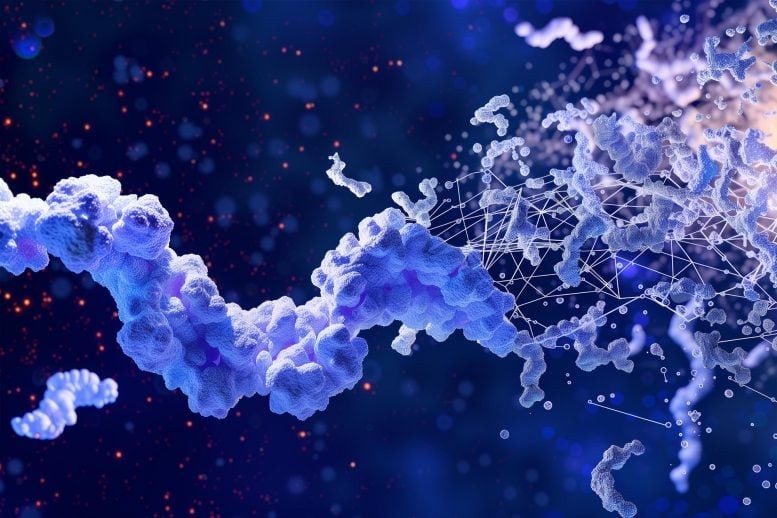
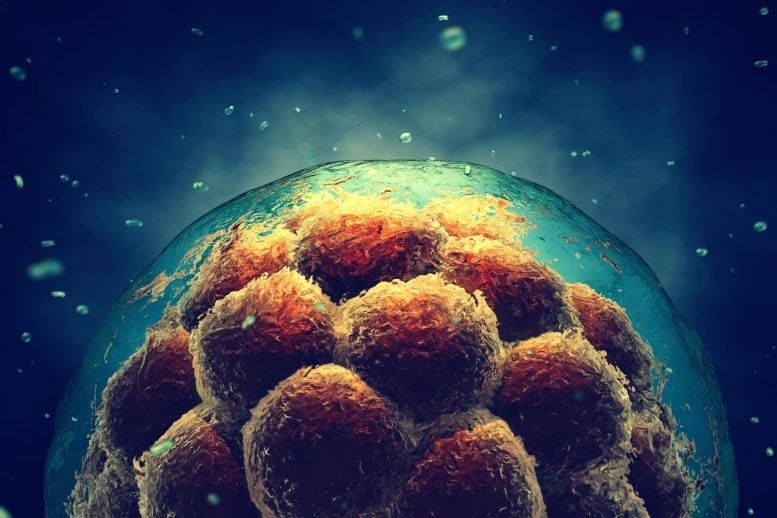
Figure 1. Gene Regulation.
A Hidden Framework in Gene Regulation
The Baylor team studied molecular machines known as BAF complexes, which help “open” DNA and prepare genes for activation. Most of the BAF complex is made up of disordered regions, earning it the nickname of a “floppy noodle” by Dr. H. Courtney Hodges, senior author of the study and associate professor at Baylor.
“For a long time, we didn’t fully understand how these floppy molecules interact with each other to coordinate gene regulation,” Hodges explained. Figure 1 represents gene regulation.
The key turned out to be beta-catenin, a well-structured protein that acts as a kind of molecular bridge.
Published in Molecular Cell, the study reveals that beta-catenin serves as a stable “docking station” that allows the disordered parts of the BAF complex and other proteins to come together and perform their gene-regulating tasks.
“Beta-catenin links the unstructured regions of multiple proteins, giving them a point of connection that allows for precise gene activation,” said Hodges.
Rethinking the Role of Disorder
This discovery challenges the prevailing view that gene regulation by disordered proteins happens in a completely unstructured and fluid environment. Instead, it shows that structured proteins can provide crucial organization within this apparent chaos, offering a new lens through which to understand how complex gene control mechanisms really work.
What began as a search for answers in a rare and aggressive cancer has led scientists to a broader discovery about the inner workings of gene regulation—one that challenges long-standing assumptions in molecular biology.
Dr. H. Courtney Hodges and his team at Baylor College of Medicine initially set out to investigate adrenocortical carcinoma (ACC), a severe adrenal gland cancer known for producing excessive steroid hormones [1]. These hormonal surges can result in serious symptoms like depression, weakened immunity, and metabolic imbalances.
“Our goal was to uncover the molecular mechanisms behind these hormonal disruptions and identify better treatment strategies,” said Dr. Yuen San Chan, the study’s first author and a postdoctoral researcher in Hodges’ lab.
By zeroing in on how ACC tumors control the production of steroid-synthesizing enzymes, the researchers made a key discovery: disordered regions of the BAF complex interact directly with the structured protein beta-catenin, allowing BAF to locate and activate genes responsible for hormone production.
Beyond Hormones: A Universal Principle
The team found that this same mechanism—disordered proteins linking to beta-catenin—also plays a role in other fundamental biological processes, including stress response, stem cell behavior, and cancer development. Beta-catenin serves as a crucial connector, enabling floppy, unstructured regions of gene-regulating proteins to find and engage with their target genes.
“Our results challenge traditional thinking about disorder in biology,” said Dr. Katerina Cermakova, co-corresponding author and assistant professor at Baylor. “We’re showing that disordered proteins aren’t just random—they can engage in highly specific and organized interactions, thanks to structured partners like beta-catenin.”
This work reveals that even within the seeming chaos of disordered molecules, there is an underlying modular organization—one that could be harnessed for future therapies. The researchers believe that targeting these interactions could eventually lead to novel drugs aimed at regulating gene activity in cancer and other diseases.
References:
- https://scitechdaily.com/study-overturns-decades-old-dogma-scientists-discover-hidden-organization-in-gene-regulation/
Cite this article:
Keerthana S (2025), Gene Regulation Reveals Surprising Order, Defying Long-Held Scientific Assumptions, AnaTechMaz, pp.447
Recent Post
-

Scientists Remove Enigmatic Organelles from Cells to Uncover Hidden Secrets
Mitochondria are specialized organelles found in the cells of most eukaryotic.....
-

This Fish Can Regenerate Its Hearing – Scientists Finally Know Why
While the human body can regularly replace certain cell types......

Ancient Viruses Lurk in Your DNA – And They’re Calling the Shots
Large portions of our DNA are made up of repeated sequences known....

Scientists Unravel Long-Standing Mystery of Photosynthesis
In most photosynthetic organisms, a protein-pigment complex.....

Scientists Visualize Crucial Inflammation-Regulating Protein for the First Time
Using advanced microscopy, researchers have visualized two key...
-

Scientists Uncover Previously Unknown Organelle Within Human Cells
Researchers have discovered a previously unknown organelle in...
-

Revolutionary “Material Maze” May Help Prevent Bacterial Infections
Scientists at the University of Nottingham have discovered that patterned plastic surfaces can...
-

Actor–Critic Algorithm Enhances Power Output in Direct Methanol Fuel Cells
In the fast-growing field of sustainable energy, direct methanol fuel...
-

A More Efficient Approach to Studying Complex Treatment Interactions
MIT researchers have introduced a new theoretical framework that enables...
-

Scientists Identify Mysterious New Cell Type That Breaks Down Bone
Researchers studying Burmese pythons have discovered a previously unknown type of intestinal...
-
Unlocking RNA's Origins: A Chemical Clue Discovered
New research from Scripps Research offers a fresh look at why nature may have chosen ribose as RNA’s sugar ....
-
Gene Regulation Reveals Surprising Order, Defying Long-Held Scientific Assumptions
In a breakthrough that rewrites a key chapter of molecular biology,...
-
Artificial Intelligence Sheds Light on Gut Bacteria Communication
Gut bacteria are essential players in human health, influencing everything from digestion to brain function...
-
Plaque-Eating Immune Cells May Help Some Brains Resist Alzheimer’s
In Alzheimer’s disease, proteins such as amyloid beta can clump into...
-
Frozen in Time: How Human Eggs Stay Alive for Decades
Human eggs can remain viable for decades by dialing down their internal recycling systems, according to ...