

Artificial Intelligence Sheds Light on Gut Bacteria Communication
Gut bacteria are essential players in human health, influencing everything from digestion to brain function. But due to their vast diversity and complex biochemical interactions, studying them has long posed a challenge. Now, researchers at the University of Tokyo are using artificial intelligence to change that.
In a groundbreaking study, the team applied a Bayesian neural network—a sophisticated form of AI—to analyze a massive dataset of gut microbiome samples. This advanced method enabled the researchers to uncover subtle patterns and relationships that traditional tools often miss.
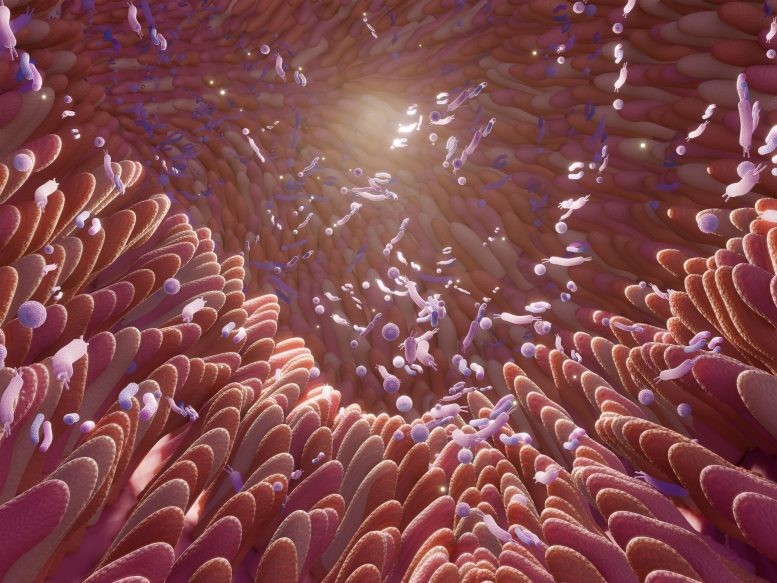
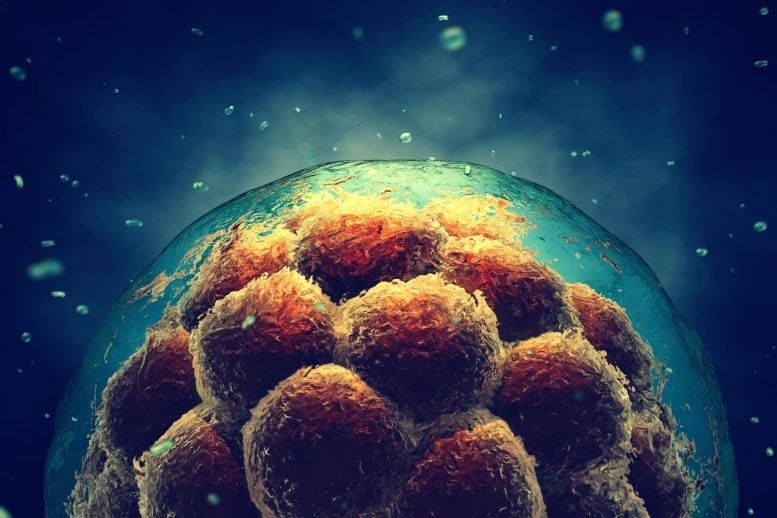
Figure 1. Gut Bacteria Communication.
Why Your Gut Bacteria Matter
While the human body contains about 30 to 40 trillion cells, your intestines alone are home to roughly 100 trillion microbial cells—meaning you're more bacteria than human, in a sense. These microbes do far more than help digest food. They produce and modify metabolites—chemical messengers that travel through the body, influencing everything from immune responses and metabolism to brain activity and even mood.
By decoding the intricate language of these microbes, scientists hope to unlock powerful new insights into disease prevention, diagnostics, and personalized medicine. Figure 1 shows Gut Bacteria Communication.
AI-Powered Gut Research Moves Toward Personalized Medicine
Understanding the gut microbiome—the trillions of microbes living inside our intestines—is key to unlocking new paths in personalized health. But while scientists know that gut bacteria influence everything from digestion to mood, the details of how they do this are still largely a mystery.
“We’re only beginning to identify which bacteria produce which human metabolites, and how those relationships shift in disease,” says Tung Dang, project researcher from the Tsunoda Lab in the University of Tokyo’s Department of Biological Sciences. “If we can accurately map these bacteria-metabolite links, we could one day engineer specific microbes to produce health-boosting compounds—or even design targeted therapies that manipulate them to treat disease.”
Tackling the Complexity with AI
The challenge? The gut ecosystem is staggeringly complex. With countless bacterial species and thousands of metabolites in play, uncovering meaningful patterns is like finding needles in a molecular haystack.
To address this, Dang and his team developed an AI system called VBayesMM, a Bayesian neural network specifically built to analyze gut microbiome data. Unlike conventional models, VBayesMM not only identifies which bacterial players significantly impact metabolite levels, but also quantifies the uncertainty in those predictions—a critical step in avoiding misleading conclusions.
“Our system doesn’t pretend to be 100% sure when it isn’t,” says Dang. “Instead, it highlights strong signals while acknowledging what’s still unknown—giving researchers greater confidence in the biological significance of its findings.”
Tested and Proven
When tested on real-world data from studies on sleep disorders, obesity, and cancer, VBayesMM consistently outperformed existing tools. It accurately pinpointed specific bacterial families tied to known biological functions, helping to distinguish genuine patterns from statistical noise.
What’s Next for VBayesMM?
Despite its strengths, VBayesMM faces a few limitations. It performs best when there’s more data available about the bacteria than the metabolites they produce—something that’s not always the case [1]. The system also assumes microbes act independently, though real-life bacterial communities are highly interdependent and dynamic.
To push the research further, the team plans to:
- Integrate broader chemical datasets to track a wider range of microbial products
- Distinguish between chemicals made by bacteria, the human body, or influenced by diet
- Incorporate bacterial evolutionary relationships to improve prediction accuracy
- Optimize the system for diverse patient populations
- Speed up computation time to support clinical use
“The long-term goal is practical,” Dang explains. “We want to identify specific bacterial targets for treatments or dietary changes that actually benefit patients. This research brings us one step closer to making that a reality.”
References:
- https://scitechdaily.com/ai-decodes-the-secret-language-of-your-gut-bacteria/
Cite this article:
Keerthana S (2025), Artificial Intelligence Sheds Light on Gut Bacteria Communication, AnaTechMaz, pp.448
Recent Post
-

Scientists Remove Enigmatic Organelles from Cells to Uncover Hidden Secrets
Mitochondria are specialized organelles found in the cells of most eukaryotic.....
-

This Fish Can Regenerate Its Hearing – Scientists Finally Know Why
While the human body can regularly replace certain cell types......

Ancient Viruses Lurk in Your DNA – And They’re Calling the Shots
Large portions of our DNA are made up of repeated sequences known....

Scientists Unravel Long-Standing Mystery of Photosynthesis
In most photosynthetic organisms, a protein-pigment complex.....

Scientists Visualize Crucial Inflammation-Regulating Protein for the First Time
Using advanced microscopy, researchers have visualized two key...
-

Scientists Uncover Previously Unknown Organelle Within Human Cells
Researchers have discovered a previously unknown organelle in...
-

Revolutionary “Material Maze” May Help Prevent Bacterial Infections
Scientists at the University of Nottingham have discovered that patterned plastic surfaces can...
-

Actor–Critic Algorithm Enhances Power Output in Direct Methanol Fuel Cells
In the fast-growing field of sustainable energy, direct methanol fuel...
-

A More Efficient Approach to Studying Complex Treatment Interactions
MIT researchers have introduced a new theoretical framework that enables...
-

Scientists Identify Mysterious New Cell Type That Breaks Down Bone
Researchers studying Burmese pythons have discovered a previously unknown type of intestinal...
-
Unlocking RNA's Origins: A Chemical Clue Discovered
New research from Scripps Research offers a fresh look at why nature may have chosen ribose as RNA’s sugar ....
-
Gene Regulation Reveals Surprising Order, Defying Long-Held Scientific Assumptions
In a breakthrough that rewrites a key chapter of molecular biology,...
-
Artificial Intelligence Sheds Light on Gut Bacteria Communication
Gut bacteria are essential players in human health, influencing everything from digestion to brain function...
-
Plaque-Eating Immune Cells May Help Some Brains Resist Alzheimer’s
In Alzheimer’s disease, proteins such as amyloid beta can clump into...
-
Frozen in Time: How Human Eggs Stay Alive for Decades
Human eggs can remain viable for decades by dialing down their internal recycling systems, according to ...