

Unlocking RNA's Origins: A Chemical Clue Discovered
New research from Scripps Research offers a fresh look at why nature may have chosen ribose as RNA’s sugar backbone—hinting at how life’s essential molecules formed before biology even began.
In modern cells, enzymes carefully construct complex molecules like RNA and DNA. But what happened billions of years ago, when life had yet to evolve? Why did ribose, and not some other sugar, become the key component of RNA?
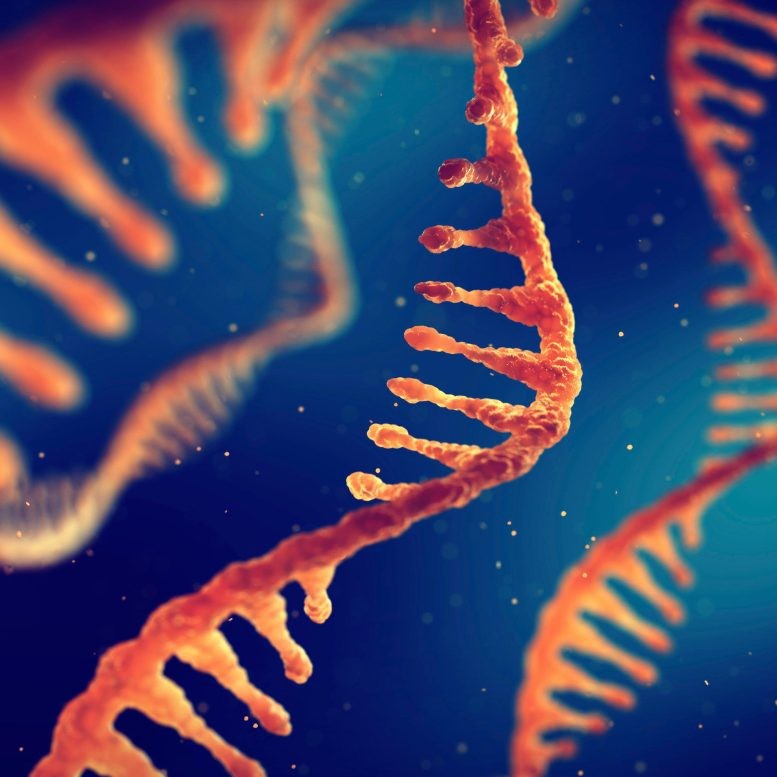
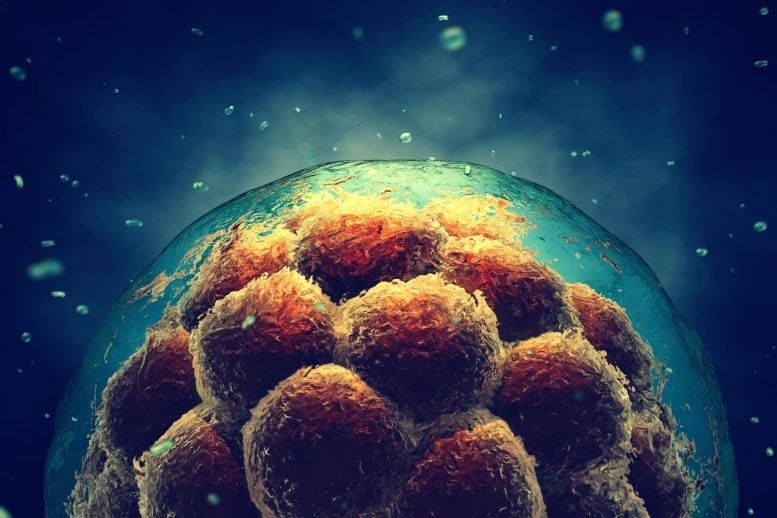
Figure 1. RNA's Origins.
A study published in Angewandte Chemie sheds light on this mystery. The Scripps team discovered that ribose naturally bonds with phosphate—a critical RNA component—more quickly and efficiently than similar sugars. This chemical advantage might explain why ribose was selected as life’s molecular scaffold in prebiotic Earth conditions.
“This supports the idea that early, enzyme-free chemistry could have formed RNA building blocks—potentially leading to life-like systems,” explains lead researcher Ramanarayanan Krishnamurthy, a chemistry professor at Scripps. Figure 1 represents RNA’s Origins.
What’s So Special About Ribose?
Nucleotides—the pieces that make up RNA and DNA—are composed of a sugar (like ribose), a phosphate group, and a nitrogenous base (A, C, G, or U). Krishnamurthy’s study focused on phosphorylation; the step were ribose links with phosphate. The team’s findings suggest ribose wasn’t just a random pick—but a chemically favored one.
New research from Scripps Research offers a fresh look at why nature may have chosen ribose as RNA’s sugar backbone—hinting at how life’s essential molecules formed before biology even began.
In modern cells, enzymes carefully construct complex molecules like RNA and DNA. But what happened billions of years ago, when life had yet to evolve? Why did ribose, and not some other sugar, become the key component of RNA?
A study published in Angewandte Chemie sheds light on this mystery. The Scripps team discovered that ribose naturally bonds with phosphate—a critical RNA component—more quickly and efficiently than similar sugars [1]. This chemical advantage might explain why ribose was selected as life’s molecular scaffold in prebiotic Earth conditions.
“This supports the idea that early, enzyme-free chemistry could have formed RNA building blocks—potentially leading to life-like systems,” explains lead researcher Ramanarayanan Krishnamurthy, a chemistry professor at Scripps.
What’s So Special About Ribose?
Nucleotides—the pieces that make up RNA and DNA—are composed of a sugar (like ribose), a phosphate group, and a nitrogenous base (A, C, G, or U). Krishnamurthy’s study focused on phosphorylation, the step where ribose links with phosphate. The team’s findings suggest ribose wasn’t just a random pick—but a chemically favored one.
References:
- https://scitechdaily.com/where-did-rna-come-from-scientists-find-a-chemical-clue/
Cite this article:
Keerthana S (2025), Unlocking RNA's Origins: A Chemical Clue Discovered, AnaTechMaz, pp.446
Recent Post
-

Scientists Remove Enigmatic Organelles from Cells to Uncover Hidden Secrets
Mitochondria are specialized organelles found in the cells of most eukaryotic.....
-

This Fish Can Regenerate Its Hearing – Scientists Finally Know Why
While the human body can regularly replace certain cell types......

Ancient Viruses Lurk in Your DNA – And They’re Calling the Shots
Large portions of our DNA are made up of repeated sequences known....

Scientists Unravel Long-Standing Mystery of Photosynthesis
In most photosynthetic organisms, a protein-pigment complex.....

Scientists Visualize Crucial Inflammation-Regulating Protein for the First Time
Using advanced microscopy, researchers have visualized two key...
-

Scientists Uncover Previously Unknown Organelle Within Human Cells
Researchers have discovered a previously unknown organelle in...
-

Revolutionary “Material Maze” May Help Prevent Bacterial Infections
Scientists at the University of Nottingham have discovered that patterned plastic surfaces can...
-

Actor–Critic Algorithm Enhances Power Output in Direct Methanol Fuel Cells
In the fast-growing field of sustainable energy, direct methanol fuel...
-

A More Efficient Approach to Studying Complex Treatment Interactions
MIT researchers have introduced a new theoretical framework that enables...
-

Scientists Identify Mysterious New Cell Type That Breaks Down Bone
Researchers studying Burmese pythons have discovered a previously unknown type of intestinal...
-
Unlocking RNA's Origins: A Chemical Clue Discovered
New research from Scripps Research offers a fresh look at why nature may have chosen ribose as RNA’s sugar...
-
Gene Regulation Reveals Surprising Order, Defying Long-Held Scientific Assumptions
In a breakthrough that rewrites a key chapter of molecular biology,...
-
Artificial Intelligence Sheds Light on Gut Bacteria Communication
Gut bacteria are essential players in human health, influencing everything from digestion to brain function...
-
Plaque-Eating Immune Cells May Help Some Brains Resist Alzheimer’s
In Alzheimer’s disease, proteins such as amyloid beta can clump into...
-
Frozen in Time: How Human Eggs Stay Alive for Decades
Human eggs can remain viable for decades by dialing down their internal recycling systems, according to ...