

Scientists Claim: Large Language Model
Large Language Model (noun, “LARJ LANG-wuhj MAH-del”)
A large language model (LLM) is an artificial intelligence (AI) program designed to read text and generate written responses. LLMs are the driving force behind many modern AI technologies, including systems like ChatGPT.

Figure 1. How about: "Researchers Assert: Large Language Models"?
These models generate human-like text by utilizing algorithms that “learn” from vast amounts of data, such as text from webpages, online books, or social media posts. Scientists "train" these algorithms by providing them with this data. Figure 1 shows How about: "Researchers Assert: Large Language Models"?
To start, an LLM breaks the training data into smaller pieces, called tokens, which can be words or parts of words. It then categorizes these tokens and identifies relationships and patterns between them. Since computers solve problems using math rather than words, LLMs assign numerical values to tokens to calculate responses based on probabilities.
Once trained, an LLM can process new text, like a question, by breaking it into tokens. It then generates a response one token at a time, determining the most likely sequence based on patterns learned during training.
Humans excel at recognizing patterns in language. For example, if a friend tells you to “turn right,” the word “right” could have various meanings, but in this context, it clearly refers to direction. You recognize this because of prior experience.
Similarly, LLMs use their training to interpret meaning through a program called a transformer. This program evaluates text—such as a sentence—considering multiple possible meanings of the tokens and selecting the most likely interpretation.
While LLMs are powerful tools, they come with challenges. The data used for training can introduce biases into the system, and LLMs can oversimplify topics. They also struggle with verifying accuracy since they do not grasp the concept of truth in the same way humans do.
Despite sounding human-like, it’s important to remember the limitations of LLMs. They do not understand the text they generate in the way people do. While they can mimic some patterns of human reasoning, LLMs lack emotions and true comprehension.
Scientists have introduced large language models (LLMs) as advanced AI tools capable of processing vast amounts of text. These models, such as GPT-4, are trained using huge datasets that allow them to recognize patterns in language, enabling them to generate human-like responses. The models "learn" by analyzing words, sentences, and their structures to predict the most probable next word or phrase in a given context.
How LLMs Work
LLMs operate by breaking down text into smaller units called tokens (which can be words or parts of words). These tokens are then processed through sophisticated algorithms that map relationships and patterns between them. LLMs use mathematical equations to assign numbers to these tokens, allowing the AI to compute responses based on probability. The trained models can respond to prompts by predicting which tokens are most likely to follow each other, generating coherent and contextually appropriate text.
The Training Process
The training of an LLM involves feeding it large amounts of data, such as books, articles, and other text sources. During this training phase, the model "learns" language patterns, grammar, and context. Scientists and engineers use techniques like supervised learning, where they provide the model with labeled data, or unsupervised learning, where the model derives its own patterns from the data without explicit labels. This process helps the model to build an understanding of language structure, even though it doesn’t "understand" language the way humans do.
Strengths and Applications of LLMs
LLMs have become indispensable in a variety of fields. They power applications like chatbots (e.g., ChatGPT), content generation tools, and even tools for translating languages. Their ability to generate text that sounds natural has made them useful in everything from customer service to creative writing. Scientists claim that LLMs are revolutionizing industries by providing intelligent assistance in analyzing and producing written content, which saves time and resources.
Challenges and Limitations
Despite their impressive capabilities, LLMs are not without their flaws. One of the primary concerns highlighted by scientists is the potential for LLMs to produce biased or inaccurate information. Since the models are trained on data from the internet, they may inherit biases present in the data, such as gender, racial, or ideological biases. Furthermore, LLMs do not have true comprehension or emotional understanding; they can generate text that mimics human reasoning but don’t actually "understand" concepts in the way a human would. This makes it important to critically evaluate the outputs generated by LLMs.
Source:ScienceNewsExplores
Cite this article:
Priyadharshini S (2025),”Scientists Claim: Large Language Model", AnaTechMaz, pp. 224
Recent Post
-
Alibaba Unveils Qwen 2.5 AI Model, Claims It Surpasses Deepseek-V3
Chinese tech giant Alibaba introduced its new Qwen 2.5-Max AI model, claiming it outperforms the .....
-

CERT-In Issues Urgent Security Advisory Regarding Vulnerabilities in Google Chrome
The Indian Computer Emergency Response Team (CERT-In) has...
-

Why Chinese Tech Firm Deepseek's 'Open AI' Could Be a Major Threat to Sam Altman
Since launching ChatGPT two years ago, OpenAI CEO Sam Altman.....
-

Comcast Introduces Ultra-Low Latency Internet Connection
Comcast has introduced new technology aimed at delivering ultra-low lag internet on its Xfinity service....
-

Lawmakers Urge Trump to Contemplate New Restrictions on Nvidia Chips Utilized by China's Deepseek
WASHINGTON (Reuters) – Two ....
-

T-Mobile Launches Starlink Satellite-To-Cell Beta for AT&T and Verizon Customers, Unveils Pricing
Beginning in July, T-Mobile’s direct-to-cell Starlink service will be .....
-

The App That Helps Your Mind Relax and Recharge
In a world that never slows down, your mind deserves a moment to rest. This app is designed to help you ...

Google Launches Android 16 Beta 1 For Pixel Devices: New Features and Supported Models
In addition to the features from the Android 16 Developer Previews.....

IOS 18.3.1 Update Released to Address Critical, Actively Exploited USB Security Vulnerability
iOS 18.3.1 began rolling out to users on Monday, delivering a crucial .......

Wikitok Could Be the Solution to Your Doomscrolling Habit
It can feel almost impossible to escape doomscrolling, but that’s no accident—it’s by design. Social media .......-

Deepseek Brings Both Advantages and Challenges to The AI Industry
DeepSeek's emergence as a competitor to ChatGPT is both exciting and concerning for the.......
-

How To Use Apple Intelligence to Organize Your Emails
Managing emails is one area of digital life where AI can be a real lifesaver: For those of us who spend hours ......
-

E Ink Gaming Slate Brings You Back To 80s Text Adventures
In the early days of home computing, onscreen graphics were limited, so text-based adventure games dominated....
-
Scientists Claim: Large Language Model
A large language model (LLM) is an artificial intelligence (AI) program designed to read text and....
-
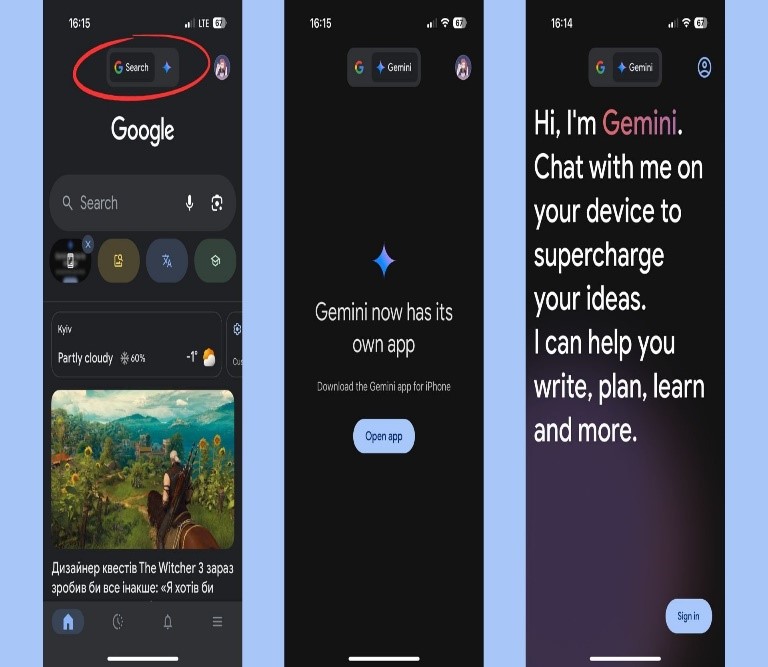
Google Removes Gemini from The Main Search App On iOS
Google is removing its AI assistant, Gemini, from the main Google app on iOS to encourage users to .....