

Why Chinese Tech Firm Deepseek's 'Open AI' Could Be a Major Threat to Sam Altman
Since launching ChatGPT two years ago, OpenAI CEO Sam Altman has emphasized that his company's success depends on three key factors: chips, data, and money. The more resources invested; the more powerful AI OpenAI can develop. However, Chinese startup DeepSeek is challenging this formula with an AI model just as capable—built at a fraction of the cost.
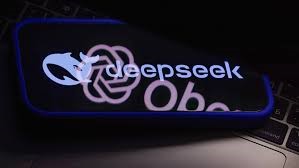
Figure 1. DeepSeek's Open AI: A Game-Changer and Challenge for Sam Altman.
This isn’t just about DeepSeek or China. Around the world, open-source AI models are emerging, threatening OpenAI and Anthropic’s business model, which relies on charging premium access fees. Unlike Google and Microsoft, which have other revenue streams, these companies face increasing competition from free or low-cost alternatives. Figure 1 shows DeepSeek's Open AI: A Game-Changer and Challenge for Sam Altman.
DeepSeek’s new model, R1, has been praised for its transparency—something critics say OpenAI has lacked since GPT-3. Founder Liang Wenfeng, a hedge fund entrepreneur, assembled a team of Ph.D. graduates and leveraged 10,000 Nvidia chips acquired before U.S. export restrictions. Despite using only, a fraction of the computing power of its Western counterparts, DeepSeek’s breakthrough signals a shift in China’s AI ambitions—and a potential shake-up of the global AI market.
Cracking OpenAI’s Business Model
Since ChatGPT’s launch, OpenAI CEO Sam Altman has built his company around three key resources: chips, data, and money. The idea is simple—more investment in these areas means more powerful AI models. However, DeepSeek, a rising AI firm from China, has developed a model just as capable as OpenAI’s latest iterations—at a fraction of the cost. This challenges the fundamental notion that AI advancement requires massive financial and computational resources, potentially disrupting OpenAI’s business model.
The Power of Open-Source AI
Unlike OpenAI, which keeps its models proprietary and charges for access, DeepSeek is embracing a more transparent and open-source approach. Open-source AI models are rapidly improving, making it easier for developers worldwide to build alternatives to ChatGPT and Claude (Anthropic’s AI). If freely available models can rival OpenAI’s, companies may opt for these cost-effective solutions instead of paying for access, eroding OpenAI’s market share.
China’s Strategic AI Push
DeepSeek is part of a larger movement within China to develop homegrown AI technologies amid increasing U.S. sanctions. The company was founded by hedge fund entrepreneur Liang Wenfeng, who assembled a team of Ph.D. researchers to create human-level AI. Despite facing restrictions on high-end chips, DeepSeek managed to train its AI using only 1/50th of the computing power used by companies like OpenAI, Google, and Microsoft—proving that efficient AI development is possible without Western resources.
A Global Shift in AI Competition
DeepSeek isn’t the only company embracing open-source AI—other startups worldwide are developing models that threaten OpenAI’s dominance. Companies like Meta and Mistral are also releasing powerful, freely available AI models, challenging OpenAI’s paid-access approach. If this trend continues, OpenAI and Anthropic may struggle to justify their high costs when equally powerful and transparent alternatives exist.
The Future of AI—Adapt or Be Disrupted
For OpenAI to maintain its lead, it may need to pivot toward more transparency, lower pricing, or additional revenue streams like cloud computing (similar to Microsoft and Google). Meanwhile, DeepSeek’s emergence signals that AI development no longer belongs exclusively to tech giants with billion-dollar budgets. The battle between closed-source AI firms and open-source challengers is just beginning—and it could reshape the industry forever.
Source:Business Standard
Cite this article:
Priyadharshini S (2025),” Why Chinese Tech Firm Deepseek's 'Open AI' Could Be a Major Threat to Sam Altman", AnaTechMaz, pp. 213
Recent Post
-
Alibaba Unveils Qwen 2.5 AI Model, Claims It Surpasses Deepseek-V3
Chinese tech giant Alibaba introduced its new Qwen 2.5-Max AI model, claiming it outperforms the .....
-

CERT-In Issues Urgent Security Advisory Regarding Vulnerabilities in Google Chrome
The Indian Computer Emergency Response Team (CERT-In) has...
-
Why Chinese Tech Firm Deepseek's 'Open AI' Could Be a Major Threat to Sam Altman
Since launching ChatGPT two years ago, OpenAI CEO Sam Altman.....
-

Comcast Introduces Ultra-Low Latency Internet Connection
Comcast has introduced new technology aimed at delivering ultra-low lag internet on its Xfinity service....
-
Lawmakers Urge Trump to Contemplate New Restrictions on Nvidia Chips Utilized by China's Deepseek
WASHINGTON (Reuters) – Two ....
-
T-Mobile Launches Starlink Satellite-To-Cell Beta for AT&T and Verizon Customers, Unveils Pricing
Beginning in July, T-Mobile’s direct-to-cell Starlink service will be .....
-

The App That Helps Your Mind Relax and Recharge
In a world that never slows down, your mind deserves a moment to rest. This app is designed to help you ...
Google Launches Android 16 Beta 1 For Pixel Devices: New Features and Supported Models
In addition to the features from the Android 16 Developer Previews.....

IOS 18.3.1 Update Released to Address Critical, Actively Exploited USB Security Vulnerability
iOS 18.3.1 began rolling out to users on Monday, delivering a crucial .......

Wikitok Could Be the Solution to Your Doomscrolling Habit
It can feel almost impossible to escape doomscrolling, but that’s no accident—it’s by design. Social media .......-
Deepseek Brings Both Advantages and Challenges to The AI Industry
DeepSeek's emergence as a competitor to ChatGPT is both exciting and concerning for the.......
-

How To Use Apple Intelligence to Organize Your Emails
Managing emails is one area of digital life where AI can be a real lifesaver: For those of us who spend hours ......
-

E Ink Gaming Slate Brings You Back To 80s Text Adventures
In the early days of home computing, onscreen graphics were limited, so text-based adventure games dominated....
-

Scientists Claim: Large Language Model
A large language model (LLM) is an artificial intelligence (AI) program designed to read text and....
-
Google Removes Gemini from The Main Search App On iOS
Google is removing its AI assistant, Gemini, from the main Google app on iOS to encourage users to .....