

Wikitok Could Be the Solution to Your Doomscrolling Habit
It can feel almost impossible to escape doomscrolling, but that’s no accident—it’s by design. Social media platforms like Facebook, TikTok, X, YouTube, and Instagram use algorithms specifically built to keep users engaged for as long as possible. While growing research suggests that this approach isn’t the healthiest way to browse the internet, these gamification tactics aren’t going away anytime soon. In the meantime, WikiTok offers a way to break the cycle.

Figure 1. WikiTok Might Help You Escape the Doomscrolling Trap.
The newly launched website, available on both mobile and desktop browsers, offers a fresh, potentially healthier way to spend time online. Inspired by TikTok’s scrolling format (hence the name), WikiTok eliminates algorithmic manipulation, serving up randomly selected Wikipedia entries instead. Each page includes an accompanying image, and users can either click through to read more or swipe up to discover the next article—without the usual pitfalls of misinformation, AI-generated content, or toxic comment sections. Figure 1. WikiTok Might Help You Escape the Doomscrolling Trap.
WikiTok came together in just a matter of hours. On February 3rd, developer Tyler Angert shared an “insane project idea” on X: “all of Wikipedia on a single, scrollable page.” Bloomberg Beta VC James Cham followed up with the concept of an “infinitely scrolling Wikipedia page based on whatever you are interested in next,” prompting Angert to coin the name “WikiTok.”
That same night, programmer Isaac Gemal saw the exchange and got to work. With the help of generative AI tools like Claude and the coding editor Cursor, he built a working prototype in just an hour and a half—bringing WikiTok to life by early Tuesday morning.
"The code is very simple—there’s no backend at all, actually," Gemal explained in a post on Y Combinator’s Hacker News forum. "Wikipedia’s API is very permissive, so you can just make requests from the frontend. You simply request random articles, get some snippets, and the image attached!"
In an interview with Ars Technica last week, Gemal estimated that AI tools handled about "90 percent of the heavy lifting" but noted that there’s still room for optimization. In just a few scrolls, WikiTok users might encounter topics as varied as Nielluccio (a red wine grape varietal), the U.S. Special Operations Command parachute team, or the history of ancient Roman-Armenian relations. It’s a randomized grab bag of trivia—one Gemal is committed to keeping free from targeted algorithms, despite suggestions to incorporate them.
"I put my foot down several days ago, and people have mostly been respectful," Gemal told Popular Science. "I think people are getting a bit tired of algorithm-driven content and want something different."
He likened WikiTok to StumbleUpon, a once-popular early 2010s service that directed users to random websites based on their interests.
"I think we may be entering a cycle where people want a more primitive form of the internet, where they can explore weird, unknown things organically," Gemal said.
While he acknowledged the challenges surrounding generative AI tools like Claude and Cursor, he also highlighted their ability to help bring projects like WikiTok to life quickly.
"Ultimately, generative AI allows people to turn their thoughts into words, code, images, etc., very quickly—for better or worse," he explained. "Unfortunately, there isn’t a clear-cut, one-size-fits-all answer on how to navigate this, given how fast the landscape is changing. We’re headed for some strange times."
WikiTok may not be a perfect antidote to doomscrolling, but at the very least, it offers a refreshing way to break the cycle.
Source:POPULAR SCIENCE
Cite this article:
Priyadharshini S (2025),”Wikitok Could Be the Solution to Your Doomscrolling Habit", AnaTechMaz, pp. 220
Recent Post
-
Alibaba Unveils Qwen 2.5 AI Model, Claims It Surpasses Deepseek-V3
Chinese tech giant Alibaba introduced its new Qwen 2.5-Max AI model, claiming it outperforms the .....
-

CERT-In Issues Urgent Security Advisory Regarding Vulnerabilities in Google Chrome
The Indian Computer Emergency Response Team (CERT-In) has...
-
Why Chinese Tech Firm Deepseek's 'Open AI' Could Be a Major Threat to Sam Altman
Since launching ChatGPT two years ago, OpenAI CEO Sam Altman.....
-

Comcast Introduces Ultra-Low Latency Internet Connection
Comcast has introduced new technology aimed at delivering ultra-low lag internet on its Xfinity service....
-
Lawmakers Urge Trump to Contemplate New Restrictions on Nvidia Chips Utilized by China's Deepseek
WASHINGTON (Reuters) – Two ....
-
T-Mobile Launches Starlink Satellite-To-Cell Beta for AT&T and Verizon Customers, Unveils Pricing
Beginning in July, T-Mobile’s direct-to-cell Starlink service will be .....
-

The App That Helps Your Mind Relax and Recharge
In a world that never slows down, your mind deserves a moment to rest. This app is designed to help you ...
Google Launches Android 16 Beta 1 For Pixel Devices: New Features and Supported Models
In addition to the features from the Android 16 Developer Previews.....

IOS 18.3.1 Update Released to Address Critical, Actively Exploited USB Security Vulnerability
iOS 18.3.1 began rolling out to users on Monday, delivering a crucial .......
Wikitok Could Be the Solution to Your Doomscrolling Habit
It can feel almost impossible to escape doomscrolling, but that’s no accident—it’s by design. Social media .......-
Deepseek Brings Both Advantages and Challenges to The AI Industry
DeepSeek's emergence as a competitor to ChatGPT is both exciting and concerning for the.......
-
How To Use Apple Intelligence to Organize Your Emails
Managing emails is one area of digital life where AI can be a real lifesaver: For those of us who spend hours ......
-

E Ink Gaming Slate Brings You Back To 80s Text Adventures
In the early days of home computing, onscreen graphics were limited, so text-based adventure games dominated....
-

Scientists Claim: Large Language Model
A large language model (LLM) is an artificial intelligence (AI) program designed to read text and....
-
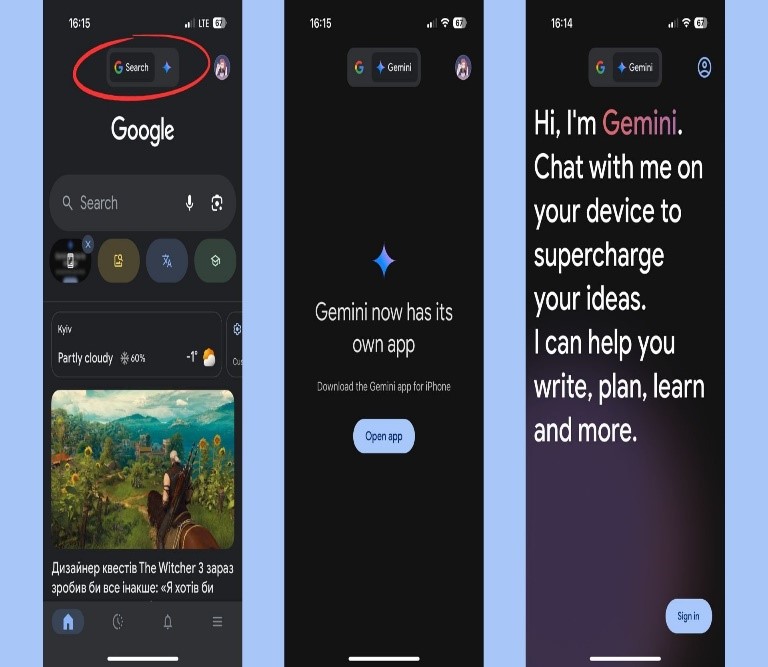
Google Removes Gemini from The Main Search App On iOS
Google is removing its AI assistant, Gemini, from the main Google app on iOS to encourage users to .....