

Lithium Has Been Extracted from Discarded Batteries Using a Cost-Effective, Electrochemically Driven Recovery Process
Researchers in the United States have successfully recovered lithium from battery waste using a low-cost, electrochemically driven process. Lithium is a vital material for rechargeable batteries and is increasingly vulnerable to supply chain disruptions.
The new technique was tested on commonly used lithium-based batteries. It involves dissolving metals from spent batteries into an organic solvent and then using an electrochemical cell equipped with a polymer-coated electrode to selectively capture lithium. The copolymer used in the process enables lithium to be separated from other metals, which is a key challenge in battery recycling.
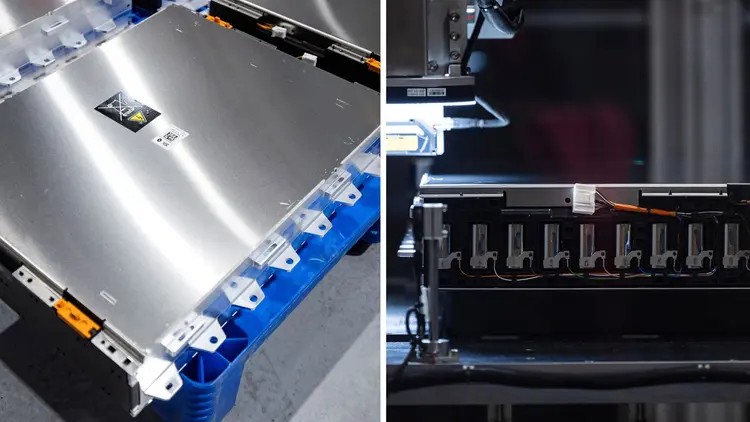
Figure 1. lithium from battery waste.
“The presence of competing metals in organic leachates makes lithium extraction difficult,” explained Xiao Su, a chemical and biomolecular engineering professor at the University of Illinois Urbana-Champaign. “Our approach uses a copolymer that selectively captures lithium from these solvents and can be electrochemically regenerated.”
In the laboratory, the team dismantles old batteries, extracts the metals into an organic solvent, and then transfers the mixture into an electrochemical cell. The specialized polymer on the electrode acts like a sponge, absorbing lithium ions from the solution. Once loaded with lithium, the electrode is moved to a different solution where an applied voltage releases the lithium for collection, allowing the electrode to be reused for additional cycles.
Su’s team also conducted an economic analysis and found that, using a three-stage scale-up strategy, the recovered lithium could be produced at a cost competitive with current market prices.
With global lithium demand rising and concerns over resource shortages and supply chain reliability increasing, recovering lithium from spent lithium-ion batteries has become a high priority. The research, published in ACS Energy Letters, introduces a redox-active crown ether copolymer designed to enable highly selective and reversible lithium extraction from organic battery leachates. Figure 1 shows lithium from battery waste.
The system combines a lithium-selective chemical unit with a redox-active unit to replace traditional acid-based regeneration with an electrochemical process. This design doubles lithium uptake while maintaining selectivity against other metals such as iron, cobalt, and nickel.
Techno-economic analysis shows that the process is energy-efficient and could produce lithium at an estimated cost of about $12.70 per kilogram—competitive with current commercial pricing [1]. The researchers emphasize that the method offers a scalable, chemical-free pathway for recovering critical materials and could significantly reduce the environmental and economic costs of lithium extraction.
While further work is needed to scale the technology and refine process modeling, the approach demonstrates strong potential to make lithium recycling more sustainable and to support a circular supply chain for battery materials.
References:
- https://interestingengineering.com/energy/lithium-recovered-from-battery-waste
Cite this article:
Keerthana S (2025), Lithium Has Been Extracted from Discarded Batteries Using a Cost-Effective, Electrochemically Driven Recovery Process, AnaTechMaz, pp.305
Recent Post
-
Gigapascal Plasma Reached as FuZE3 Marks Major Fusion Milestone
Using its newest Fusion Z-pinch Experiment (FuZE-3), Zap Energy...
-
Compact Laser Technology Could Redefine Medical and Manufacturing Applications
Researchers have created a groundbreaking and adaptable ...
-

Chaotic Bubbles Validate a 100-Year-Old Physics Prediction
Researchers have discovered experimental proof that a fundamental theory of turbulence applies...
-
Ultra-Light, Ultra-Strong Material Survives 932°F — A Game-Changer for Aerospace
Researchers have created an exceptionally lightweight yet ....
-
Lithium Has Been Extracted from Discarded Batteries Using a Cost-Effective, Electrochemically Driven Recovery Process
Researchers in the United States...
-
Chinese Solid-State EV Battery Giant Wins Eight Patents for Future Battery Tech
Tinci’s newest patents signal rapid progress in solid-state....
-
1950s Material Is Making a Major Comeback—and Could Redefine Modern Computing
Researchers are exploring hole mobility in compressively strained ....
-
INL Marks a Milestone as First TRISO Fuel Shipment Arrives for Upcoming Demonstration Reactor
The United States has taken a significant step toward deploying its...
-
A Breakthrough Material for Buildings Can Store Carbon Instead of Emitting it
A new carbon-negative building material developed at...
-

Explained: Small Modular Reactors and Their Role in Supporting Rising Global Power Demand
Small modular reactors (SMRs) are quickly moving from ...
-
Scientists Trace Atoms in Real Time as They Melt, Uncovering A Never-Before-Seen Transitional Phase
Scientists have directly ....
-
MIT Study Sheds New Light on Proton Dynamics Inside Metal Oxides
As renewable energy technologies such as fuel cells and electrolyzers ...
-
Game-Changing Flexible Battery Material Promises 45% Boost in Drone and EV Range
A new battery manufacturing approach that avoids the use of explosive...
-
Nuclear Breakthrough: UK Converts First Can of Radioactive Plutonium into Stable Waste
The UK holds around 140 tonnes of plutonium, accumulated since...
-
Exciton Tomography Maps Electron-Hole Correlations in 2D Materials
Excitons—quasiparticles formed by bound electron-hole pairs—are key to understanding a material’s optical....