

OpenAI Unveils ChatGPT Atlas — The Browser Poised to Replace Chrome
OpenAI has entered the browser wars with ChatGPT Atlas, a new AI-powered web browser launching exclusively for macOS at first.
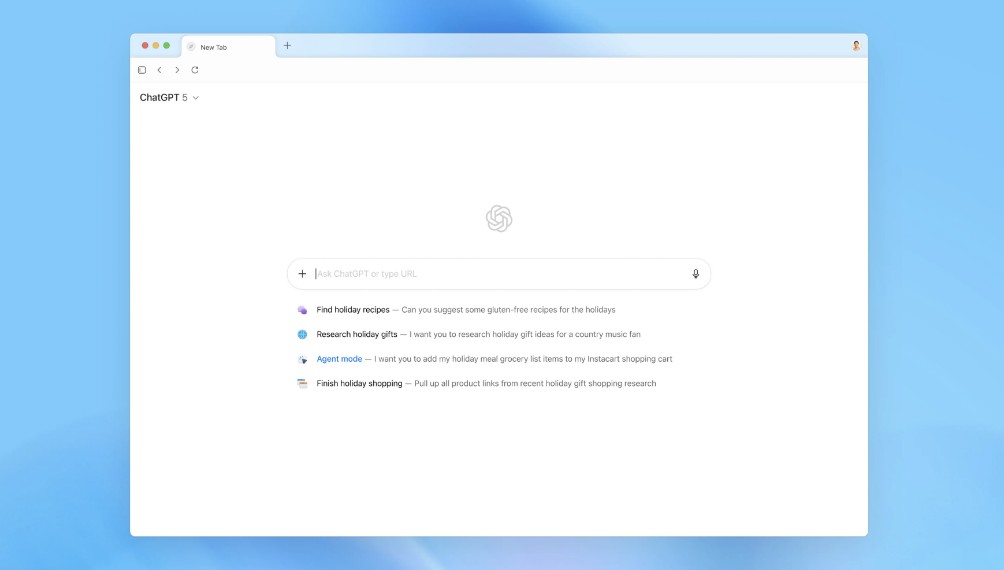
Figure 1. OpenAI Introduces ChatGPT Atlas — An AI-Powered Browser Aiming to Redefine Web Surfing.
Built on Google’s Chromium engine, Atlas offers familiar tools like tabs, bookmarks, password autofill, and incognito mode, but its key distinction lies in deep ChatGPT integration — putting artificial intelligence at the core of your web browsing experience. Figure 1 shows OpenAI Introduces ChatGPT Atlas — An AI-Powered Browser Aiming to Redefine Web Surfing.
This integration eliminates the need to copy and paste content between the web and the ChatGPT app or website. Instead, ChatGPT is seamlessly embedded throughout the browser — in the interface, tabs, and even the cursor pointer.
During a live demo, OpenAI showcased how users can highlight text in an email, click the “ChatGPT nub”, and instantly ask the chatbot to rewrite or enhance the message — bringing AI assistance directly into everyday browsing tasks.
The browser also includes a dedicated “Ask ChatGPT” button in the upper-right corner that opens a sidebar connected to the chatbot. This allows ChatGPT to view the current webpage and provide context-aware assistance — such as summarizing a movie review or analyzing a snippet of code directly alongside the content.
However, OpenAI noted during its demo that responses may not always be perfectly accurate, cautioning users to stay alert for occasional AI hallucinations.
Another standout feature is that searches made in the URL bar can now default to ChatGPT’s own search engine, which neatly organizes results into categories such as text, images, videos, and news.
Meanwhile, the ChatGPT Atlas homepage is powered by a recommendation engine that curates websites and content tailored to your browsing habits, creating a more personalized and AI-driven web experience.
During the live stream, an OpenAI representative highlighted “agent mode” as ChatGPT Atlas’s most powerful feature. This mode allows the AI to take control of a browser tab and perform tasks on your behalf, with your explicit permission.
In the demo, the agent mode successfully generated a list of ingredients for a recipe, logged into the user’s Instacart account, and added the items to the cart for checkout—though the process took a few minutes to complete.
To ensure safety, OpenAI has restricted the agent’s capabilities: it can only interact with browser tabs, and cannot execute code or access files on your computer. The company emphasized that users remain in full control, noting that ChatGPT is designed to ask before taking key actions, and you can pause, interrupt, or override the AI at any time.
Google has already begun integrating its Gemini chatbot into Chrome, while Microsoft continues to embed Copilot AI throughout Windows and Edge, signaling a growing trend of AI-driven browsing experiences.
OpenAI, meanwhile, has confirmed plans to expand ChatGPT Atlas beyond macOS, with versions for Windows, iOS, and Android coming “soon.” According to its support documentation, Atlas will also allow users to import data from other browsers, ensuring a smooth transition.
disclosure: Ziff Davis, the parent company of PCMag, filed a lawsuit against OpenAI in April 2025, alleging that the company%E2%80%99s AI systems infringed on Ziff Davis copyrights during training and operation.
Source: PC MAG
Cite this article:
Priyadharshini S (2025), OpenAI Unveils ChatGPT Atlas — The Browser Poised to Replace Chrome, AnaTechMaz, pp.855
Recent Post
-
OpenAI Loosens Content Restrictions, Allowing ChatGPT to Generate Adult Erotica Starting in December
OpenAI plans to relax its content.....
-

DeepMind’s New AI Could Accelerate Discoveries in Cancer Treatment
Google DeepMind and Yale University have unveiled a new AI.....
-

Tumor-on-a-Chip Technology Propels CAR-T Therapy Development
A groundbreaking study has introduced a micro engineered.....
-

AI’s Fast-Track Approach to Efficiency Could Expose Systems to Hackers
AI is increasingly writing the world’s code—but with speed comes risk. A....
-

Google’s Veo 3.1 Redefines the Art of AI Filmmaking
When Google first unveiled Flow, its AI-powered filmmaking tool built on Veo, it promised to redefine creativity.....
-

AI Unlocks Breakthroughs for the Future of Solar Energy
Halide perovskites are emerging as some of the most promising materials for affordable....
-

Princeton’s Smart AI Cracks Major Challenge in Fusion Power
The name Diag2Diag comes from “diagnostic,” the term for techniques used to analyze plasma.....
-

AI Boom Fueled by Billion-Dollar Infrastructure Deals
Running AI products demands enormous computing power, and as companies race to harness.....
-

Enterprises are Going All-in on AI, Whether Ready or Not
It’s been a big week for AI in the enterprise. Zendesk unveiled new AI agents....
-

AI Discovers the Next-Generation Battery Beyond Lithium
Unlike conventional lithium-ion batteries, multivalent-ion batteries use ions carrying two or three.....
-

AI Takes Imaging Right to the Edge of Physical Limits
“Imagine observing a small object behind an irregular, cloudy pane of glass,”.....
-

Google’s New AI Tool Could Replace Photoshop for Photo Editing
Generative AI has already made creating images from text prompts commonplace. These tools.....
-

AI-Powered Effects Pedal Lets You Capture the Guitar Tone of Any Song
For guitarists who love experimenting with tones but....
-

AI Browsers at Risk: A Single Malicious Image Could Compromise Security
The vulnerability is another example of a prompt injection attack.....
-
OpenAI Unveils ChatGPT Atlas — The Browser Poised to Replace Chrome
Built on Google’s Chromium engine, Atlas offers familiar tools like tabs, bookmarks, password autofill.....