

AI Takes Imaging Right to the Edge of Physical Limits
An Absolute Limit to Precision
“Imagine observing a small object behind an irregular, cloudy pane of glass,” explains Prof. Stefan Rotter from TU Wien’s Institute of Theoretical Physics. “Instead of a clear image, we see a complex light pattern with varying bright and dark patches. The question is: how precisely can we determine the object’s true position from this pattern—and what is the fundamental limit of that precision?”
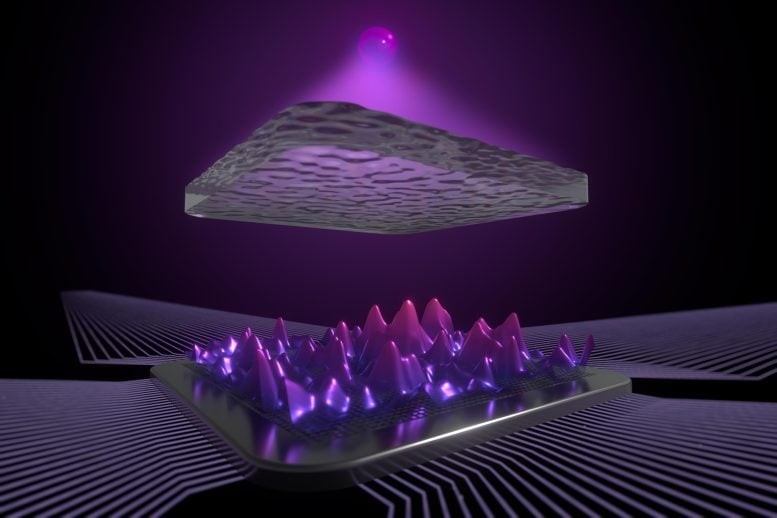
Figure 1. AI Pushes Optical Imaging to Its Physical Limits.
This problem is highly relevant in fields like biophysics and medical imaging. When light scatters through biological tissue, information about deeper structures seems to be lost. But physics sets strict boundaries on how much of this information can, in principle, be recovered. Figure 1 shows AI Pushes Optical Imaging to Its Physical Limits.
To quantify this, the team used a theoretical measure called Fisher information, which describes how much an optical signal tells us about an unknown parameter, such as the object’s position. If the Fisher information is low, no method—no matter how sophisticated—can achieve high precision. Using this approach, the researchers calculated the theoretical upper limit of precision in various experimental scenarios.
Neural Networks Decode Chaotic Light
While TU Wien’s team handled the theoretical side, an experiment was carried out by Dorian Bouchet (University of Grenoble) with Ilya Starshynov and Daniele Faccio (University of Glasgow). They directed a laser at a small reflective object behind a turbid liquid, producing images that appeared as highly distorted light patterns. The turbidity was varied, making precise position detection more or less challenging.
“To the human eye, these images seem random,” says Maximilian Weimar (TU Wien). “But if we train a neural network on many such images with known object positions, it learns the relationship between patterns and positions.” After training, the network could predict the object’s location with remarkable accuracy—even for previously unseen patterns.
Approaching the Physical Limit
Crucially, the network’s precision was only slightly below the theoretical maximum calculated via Fisher information. “Our AI algorithm is not just effective—it is nearly optimal,” says Rotter. “It achieves almost exactly the precision that physics allows.”
This breakthrough opens possibilities for significantly enhancing optical measurement techniques across fields ranging from medical diagnostics to materials research and quantum technologies. The team now plans to collaborate with applied physics and medical partners to explore real-world applications of these AI-supported methods.
Source: SciTECHDaily
Cite this article:
Priyadharshini S (2025), AI Takes Imaging Right to the Edge of Physical Limits, AnaTechMaz, pp.851
Recent Post
-
OpenAI Loosens Content Restrictions, Allowing ChatGPT to Generate Adult Erotica Starting in December
OpenAI plans to relax its content.....
-

DeepMind’s New AI Could Accelerate Discoveries in Cancer Treatment
Google DeepMind and Yale University have unveiled a new AI.....
-

Tumor-on-a-Chip Technology Propels CAR-T Therapy Development
A groundbreaking study has introduced a micro engineered.....
-

AI’s Fast-Track Approach to Efficiency Could Expose Systems to Hackers
AI is increasingly writing the world’s code—but with speed comes risk. A....
-

Google’s Veo 3.1 Redefines the Art of AI Filmmaking
When Google first unveiled Flow, its AI-powered filmmaking tool built on Veo, it promised to redefine creativity.....
-

AI Unlocks Breakthroughs for the Future of Solar Energy
Halide perovskites are emerging as some of the most promising materials for affordable....
-

Princeton’s Smart AI Cracks Major Challenge in Fusion Power
The name Diag2Diag comes from “diagnostic,” the term for techniques used to analyze plasma.....
-

AI Boom Fueled by Billion-Dollar Infrastructure Deals
Running AI products demands enormous computing power, and as companies race to harness.....
-

Enterprises are Going All-in on AI, Whether Ready or Not
It’s been a big week for AI in the enterprise. Zendesk unveiled new AI agents....
-

AI Discovers the Next-Generation Battery Beyond Lithium
Unlike conventional lithium-ion batteries, multivalent-ion batteries use ions carrying two or three.....
-
AI Takes Imaging Right to the Edge of Physical Limits
“Imagine observing a small object behind an irregular, cloudy pane of glass,”.....
-
Google’s New AI Tool Could Replace Photoshop for Photo Editing
Generative AI has already made creating images from text prompts commonplace. These tools.....
-
AI-Powered Effects Pedal Lets You Capture the Guitar Tone of Any Song
For guitarists who love experimenting with tones but....
-

AI Browsers at Risk: A Single Malicious Image Could Compromise Security
The vulnerability is another example of a prompt injection attack.....
-

OpenAI Unveils ChatGPT Atlas — The Browser Poised to Replace Chrome
Built on Google’s Chromium engine, Atlas offers familiar tools like tabs, bookmarks, password autofill.....