

AI Unlocks Breakthroughs for the Future of Solar Energy
Promising Materials for High-Efficiency Solar Cells
Halide perovskites are emerging as some of the most promising materials for affordable, flexible, and lightweight solar cells and optoelectronic devices, including LED bulbs, thanks to their exceptional ability to absorb and emit light. Despite their potential, these materials are prone to rapid degradation. To harness their full capabilities, researchers need a deeper understanding of both their underlying properties and the mechanisms that drive their breakdown.

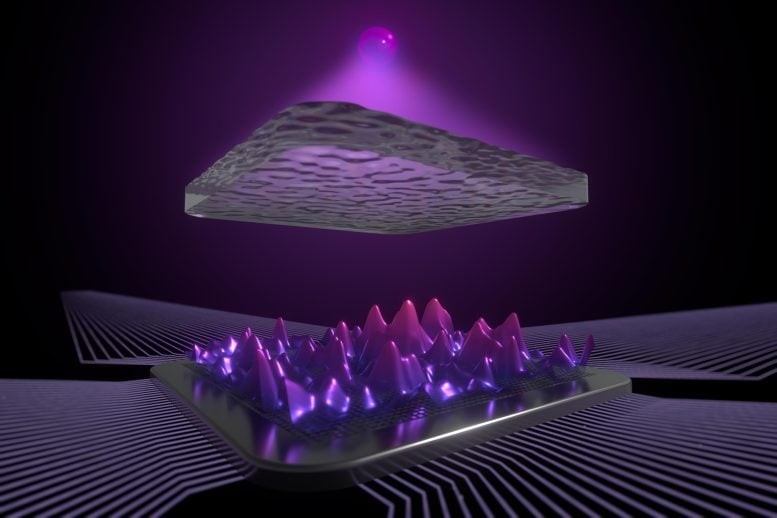
Figure 1. AI Paves the Way for Next-Generation Solar Energy Breakthroughs.
Cracking the Code of a Challenging Solar Material
Scientists have long grappled with understanding a crystalline compound called formamidinium lead iodide, known for its exceptional optoelectronic properties. Its widespread use has been limited by instability, though this can be mitigated by combining it with another type of halide perovskite. To optimize such mixtures, researchers need a deeper understanding of both materials and how they interact. Figure 1 shows AI Paves the Way for Next-Generation Solar Energy Breakthroughs.
Solving a Long-Standing Puzzle in Solar Materials
“The low-temperature phase of this material has long been a missing piece of the research puzzle, and we’ve now settled a fundamental question about its structure,” says Chalmers researcher Sangita Dutta.
Machine Learning Powers the Breakthrough
The team specializes in creating highly accurate computational models of materials, allowing them to test behavior under different scenarios that can then be verified experimentally. Modeling halide perovskites, however, is notoriously challenging, requiring powerful supercomputers and extensive simulation times.
“By combining our traditional methods with machine learning, we can now run simulations thousands of times longer than before. Our models can also include millions of atoms instead of just hundreds, bringing them much closer to real-world conditions,” Dutta explains.
Simulations Confirmed in the Lab
Using this approach, the researchers identified the low-temperature structure of formamidinium lead iodide. They also observed that the formamidinium molecules become trapped in a semi-stable state as the material cools. To validate their models, they collaborated with experimentalists at the University of Birmingham, cooling the material to –200°C to ensure their lab results matched the simulations.
“We hope the insights from our simulations will guide future efforts to model and analyze complex halide perovskite materials,” says Erik Fransson of the Department of Physics at Chalmers.
Source: SciTECHDaily
Cite this article:
Priyadharshini S (2025), AI Unlocks Breakthroughs for the Future of Solar Energy, AnaTechMaz, pp.846
Recent Post
-

OpenAI Loosens Content Restrictions, Allowing ChatGPT to Generate Adult Erotica Starting in December
OpenAI plans to relax its content.....
-

DeepMind’s New AI Could Accelerate Discoveries in Cancer Treatment
Google DeepMind and Yale University have unveiled a new AI.....
-

Tumor-on-a-Chip Technology Propels CAR-T Therapy Development
A groundbreaking study has introduced a micro engineered.....
-

AI’s Fast-Track Approach to Efficiency Could Expose Systems to Hackers
AI is increasingly writing the world’s code—but with speed comes risk. A....
-

Google’s Veo 3.1 Redefines the Art of AI Filmmaking
When Google first unveiled Flow, its AI-powered filmmaking tool built on Veo, it promised to redefine creativity.....
-
AI Unlocks Breakthroughs for the Future of Solar Energy
Halide perovskites are emerging as some of the most promising materials for affordable....
-

Princeton’s Smart AI Cracks Major Challenge in Fusion Power
The name Diag2Diag comes from “diagnostic,” the term for techniques used to analyze plasma.....
-

AI Boom Fueled by Billion-Dollar Infrastructure Deals
Running AI products demands enormous computing power, and as companies race to harness.....
-

Enterprises are Going All-in on AI, Whether Ready or Not
It’s been a big week for AI in the enterprise. Zendesk unveiled new AI agents....
-

AI Discovers the Next-Generation Battery Beyond Lithium
Unlike conventional lithium-ion batteries, multivalent-ion batteries use ions carrying two or three.....
-
AI Takes Imaging Right to the Edge of Physical Limits
“Imagine observing a small object behind an irregular, cloudy pane of glass,”.....
-

Google’s New AI Tool Could Replace Photoshop for Photo Editing
Generative AI has already made creating images from text prompts commonplace. These tools.....
-

AI-Powered Effects Pedal Lets You Capture the Guitar Tone of Any Song
For guitarists who love experimenting with tones but....
-

AI Browsers at Risk: A Single Malicious Image Could Compromise Security
The vulnerability is another example of a prompt injection attack.....
-

OpenAI Unveils ChatGPT Atlas — The Browser Poised to Replace Chrome
Built on Google’s Chromium engine, Atlas offers familiar tools like tabs, bookmarks, password autofill.....