

AI-Powered Effects Pedal Lets You Capture the Guitar Tone of Any Song
For guitarists who love experimenting with tones but hate spending hours chasing the perfect sound, Groundhog Audio offers a solution. Its AI-powered pedal can replicate the tone from any song and deliver it straight to your feet—no endless knob-twiddling required.
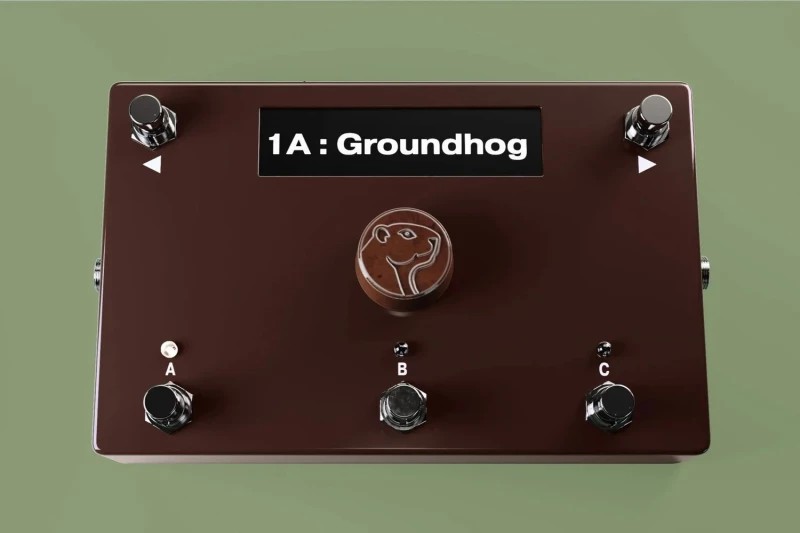
Figure 1. Replicate Any Guitar Tone Instantly with This AI-Powered Pedal.
The startup, just a year old, says its proprietary engine isolates the guitar track from uploaded audio files and reconstructs the complete effects chain, including amp, cab, reverb, and pedals. It even factors in your guitar and pickup type to ensure the tone fits your instrument perfectly. Figure 1 shows Replicate Any Guitar Tone Instantly with This AI-Powered Pedal.
Once the tone is ready, the app sends it via Bluetooth to a deceptively simple-looking pedal. You can scroll through saved tones or even multiple tones from a single song, allowing you to recreate an entire track live.
The pedal only needs to be paired with your phone during tone transfers; afterward, it works independently and can store up to 100 tones. The app also lets you create and tweak tones, selecting from a variety of gear for your signal chain.
I love the concept behind this gadget—it goes beyond traditional amp profilers that capture an amp’s impulse response and let you run it through a digital interface.
That said, it’s probably better suited for hobbyists than professional musicians, who typically need more precise control over their tone for recording and live performances.
I’m also a bit skeptical about the app experience. It claims to function like a streaming music player with over 100,000 songs available—but that’s still far short of the 100 million tracks Spotify offers. Groundhog doesn’t clarify where or how it’s sourcing these songs. While you can import any MP3 or AAC you already own, those formats aren’t as widely available as they used to be in the pre-streaming era.
I also checked out the tone samples Groundhog shared on Instagram and YouTube. They sound decent, with a variety of effects layered in, but I didn’t hear any high-gain tones that rock or metal players might want, or that “signature” tone that makes a guitar truly sing, like you get with Neural DSP’s desktop plugins. The demos also don’t show how the pedal performs as a standalone multi-effects unit without the tone extraction, making it hard to tell if it’s ready to replace an analog pedalboard—even for casual home jamming.
Groundhog Audio is still refining its pedal, aiming to start shipping the OnePedal in March 2026. This gives the team some extra time to perfect the experience and ensure the hardware is durable enough to handle regular stomping. It’s an exciting concept, though certainly ambitious for a young company.
The OnePedal is currently being crowdfunded on Kickstarter, discounted from its expected $550 retail price to $499 at the time of writing. As with any crowdfunding campaign, there’s some risk—especially since this is Groundhog Audio’s first product. Still, it has already surpassed its funding goal, with more than 340 backers on board. If everything goes according to plan, worldwide orders should begin shipping next March. Shipping is free within the U.S., while international delivery costs vary by location.
Source: NEW ATLAS
Cite this article:
Priyadharshini S (2025), AI-Powered Effects Pedal Lets You Capture the Guitar Tone of Any Song, AnaTechMaz, pp.853
Recent Post
-
OpenAI Loosens Content Restrictions, Allowing ChatGPT to Generate Adult Erotica Starting in December
OpenAI plans to relax its content.....
-

DeepMind’s New AI Could Accelerate Discoveries in Cancer Treatment
Google DeepMind and Yale University have unveiled a new AI.....
-

Tumor-on-a-Chip Technology Propels CAR-T Therapy Development
A groundbreaking study has introduced a micro engineered.....
-

AI’s Fast-Track Approach to Efficiency Could Expose Systems to Hackers
AI is increasingly writing the world’s code—but with speed comes risk. A....
-

Google’s Veo 3.1 Redefines the Art of AI Filmmaking
When Google first unveiled Flow, its AI-powered filmmaking tool built on Veo, it promised to redefine creativity.....
-

AI Unlocks Breakthroughs for the Future of Solar Energy
Halide perovskites are emerging as some of the most promising materials for affordable....
-

Princeton’s Smart AI Cracks Major Challenge in Fusion Power
The name Diag2Diag comes from “diagnostic,” the term for techniques used to analyze plasma.....
-

AI Boom Fueled by Billion-Dollar Infrastructure Deals
Running AI products demands enormous computing power, and as companies race to harness.....
-

Enterprises are Going All-in on AI, Whether Ready or Not
It’s been a big week for AI in the enterprise. Zendesk unveiled new AI agents....
-

AI Discovers the Next-Generation Battery Beyond Lithium
Unlike conventional lithium-ion batteries, multivalent-ion batteries use ions carrying two or three.....
-
AI Takes Imaging Right to the Edge of Physical Limits
“Imagine observing a small object behind an irregular, cloudy pane of glass,”.....
-

Google’s New AI Tool Could Replace Photoshop for Photo Editing
Generative AI has already made creating images from text prompts commonplace. These tools.....
-
AI-Powered Effects Pedal Lets You Capture the Guitar Tone of Any Song
For guitarists who love experimenting with tones but....
-

AI Browsers at Risk: A Single Malicious Image Could Compromise Security
The vulnerability is another example of a prompt injection attack.....
-
OpenAI Unveils ChatGPT Atlas — The Browser Poised to Replace Chrome
Built on Google’s Chromium engine, Atlas offers familiar tools like tabs, bookmarks, password autofill.....