

AI Uncovers 86,000 Hidden Earthquakes Beneath Yellowstone
Yellowstone’s Fiery Foundation: AI Reveals Hidden Volcanic Activity
Yellowstone, America’s first and one of its most iconic national parks, is renowned for its geysers and breathtaking landscapes. But beneath its surface lies one of the world’s most active volcanic systems.
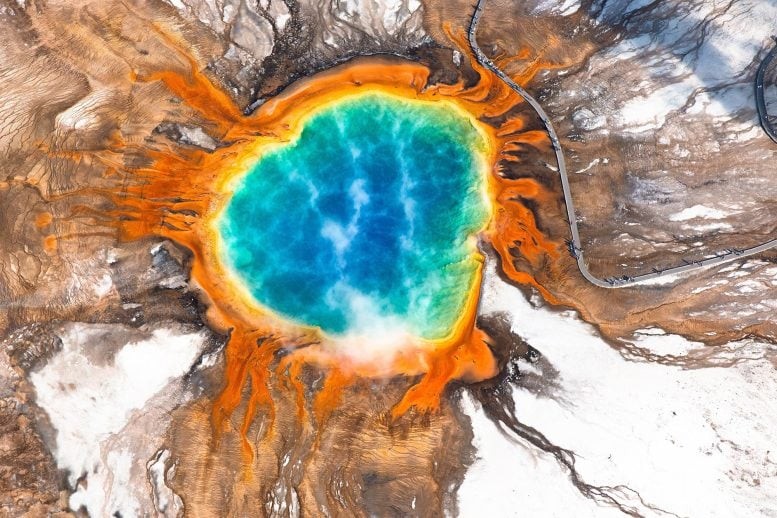
Figure 1. AI Reveals 86,000 Previously Hidden Quakes Beneath Yellowstone.
Their innovative method uncovered a dramatic increase in detected activity—revealing nearly 86,000 earthquakes, about ten times more than previously recorded. This discovery paints a far more dynamic picture of Yellowstone’s subsurface behavior. Figure 1 shows AI Reveals 86,000 Previously Hidden Quakes Beneath Yellowstone.
What Is a Caldera?
The Yellowstone caldera—spanning parts of Wyoming, Idaho, and Montana—is a vast geological depression formed when a massive volcanic eruption empties the underground magma chamber, causing the surface above to collapse inward. Unlike a typical volcanic crater, which forms from an explosive outward blast, a caldera results from structural collapse.
Thanks to advanced machine learning analysis, the seismic record for Yellowstone has now expanded to include 86,276 earthquakes between 2008 and 2022. This enriched dataset offers scientists a deeper and more nuanced understanding of Yellowstone’s seismic and volcanic dynamics.
Seismic Swarms Beneath Yellowstone
One of the study’s most significant discoveries is that over half of the detected earthquakes occurred in the form of seismic swarms—clusters of small, linked quakes that ripple through the crust over short time spans and confined areas.
This behavior differs from traditional aftershocks, which follow a larger, central quake. Seismic swarms often suggest shifting magma or hydrothermal fluids beneath the surface, making them a valuable clue to the hidden processes driving Yellowstone’s geologic activity.
Implications for Global Safety and Energy
“While Yellowstone and other volcanoes each have unique traits, the hope is that our findings will be applicable elsewhere,” said Dr. Bing Li, an expert in fluid-induced earthquakes and rock mechanics. “By understanding seismic patterns—particularly earthquake swarms—we can enhance public safety, better communicate potential risks, and even optimize geothermal energy development by steering it away from unstable areas with high underground heat flow.”
Before machine learning entered the scene, seismologists detected earthquakes primarily through manual inspection—a time-consuming and costly process that often-missed subtle seismic activity. Now, AI offers a scalable, efficient way to extract insights from decades of archived data, leading to what some researchers call a “data-mining gold rush.”
“If we had to do this the old-fashioned way—clicking through seismic data by hand—it would be virtually impossible,” said Li. “Machine learning has transformed what’s possible.”
Immature Faults and Unusual Swarm Patterns
Another key insight from the study is that many of Yellowstone’s earthquake swarms occur along immature, rugged fault structures, in contrast to the more developed fault systems found in southern California or just outside the Yellowstone caldera.
To analyze this, researchers used fractal geometry—mathematical patterns that repeat at different scales—to measure fault roughness. Fractals are found in nature in things like coastlines, snowflakes, broccoli, and blood vessels. This approach allowed the team to characterize the irregularity of these faults and connect the seismic activity to underground processes involving slow-moving water and abrupt bursts of fluid.
A Clearer Window into Yellowstone’s Inner Workings
"To a large extent, we still don’t fully understand how one earthquake in a swarm trigger another," Li noted. “We can only infer connections through the spacing and timing of events. But with our expanded seismic catalog, we can now apply statistical models to detect and analyze new swarms we hadn’t previously seen—and hopefully learn from them.”
This breakthrough not only deepens our understanding of Yellowstone’s volcanic system but also paves the way for safer monitoring and smarter energy planning worldwide.
Source: SciTECHDaily
Cite this article:
Priyadharshini S (2025), AI Uncovers 86,000 Hidden Earthquakes Beneath Yellowstone, AnaTechMaz, pp.755
Recent Post
-

Revolutionary AI Tool Transforms the Future of Protein Engineering
In this study, researchers introduced AiCEsingle, a specialized module engineered to.....
-

Meta Patches Bug That May Have Exposed Users' AI Prompts and Outputs
Meta has resolved a security vulnerability that allowed users...
-
XAI Claims Grok 4's Response Issues Have Been Resolved
When xAI launched Grok 4 last week, it claimed the model outperformed its competitors on...
-

DuckDuckGo Now Offers Option to Hide AI-Generated Images in Search Results
Privacy-first browser DuckDuckGo is introducing a new feature that allows...
-
AI Uncovers 86,000 Hidden Earthquakes Beneath Yellowstone
Yellowstone, America’s first and one of its most iconic national parks, is renowned...
-

Amazon Acquires Bee, The Always-on AI Wearable That Records Your Conversations
Amazon has acquired Bee, an AI wearables startup, as confirmed in...
-

AI Cracks the Hidden Code of Gut Bacteria Communication
The human body is made up of about 30 to 40 trillion cells—but your gut hosts nearly...
-
Google Pilots a Vibe–Coding App Called Opal
AI-powered coding tools have surged in popularity in recent months, prompting nearly...
-
AI Takes Imaging to the Edge of What Physics Allows
How accurately can you measure an object when all you have is a blurred image? Scientists...
-

New GPT-OSS Model by NVIDIA And OpenAI Sets Record With 1.5 million Tokens Per Second
OpenAI and NVIDIA have jointly introduced two powerful...
-

Google’s Genie 3 Breathes Life Into AI-Generated Worlds with Dynamic, Real-Time Gameplay
World models like Genie 3 are seen as vital stepping stones on the path...
-

OpenAI Brings Back GPT-4o After User Backlash Over Complaints That the New GPT-5 Feels Less Intelligent
OpenAI rolled out its ...
-

Hexaware Technologies to Establish South African Hub for Delivering AI-Driven Solutions Across Africa
“South Africa has always been a key hub for IT transformation and serves...
-

Google Confronts $34.5 Billion Threat as AI Challenger Perplexity Targets Chrome
In a dramatic David-and-Goliath play, Perplexity AI has made an...
-

AI-Powered Radar Can Eavesdrop on Phone Calls from 10 Feet Away, Raising Fresh Privacy Concerns
Your phone’s smallest vibrations may be giving away your conversations...
-