

Revolutionary AI Tool Transforms the Future of Protein Engineering
Unveiling AiCEsingle: Precision Redefined with Structural Constraints
In this study, researchers introduced AiCEsingle, a specialized module engineered to predict high-fitness (HF) single amino acid substitutions with remarkable accuracy. By extensively sampling inverse folding models—AI systems that propose compatible amino acid sequences from protein 3D structures—and integrating structural constraints, AiCEsingle significantly boosts the precision of protein variant predictions.
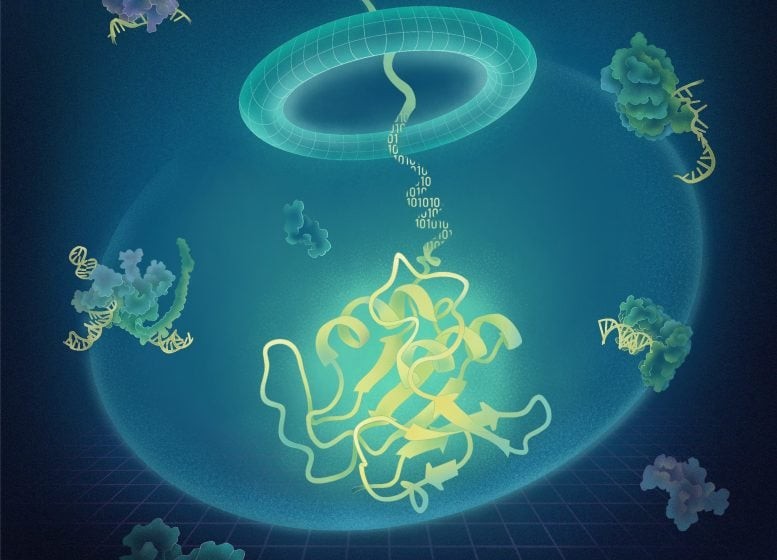
Figure 1. AI Breakthrough Redefines the Future of Protein Engineering.
Benchmarking Performance and Expanding Capabilities with AiCE
When tested against 60 deep mutational scanning (DMS) datasets, AiCEsingle consistently outperformed other AI-based methods, with accuracy improvements ranging from 36% to 90%. Its superior performance extended to complex proteins and protein–nucleic acid complexes. Notably, the inclusion of structural constraints alone led to a 37% gain in predictive accuracy. Figure 1 shows AI Breakthrough Redefines the Future of Protein Engineering.
To overcome the challenge of negative epistatic interactions in multi-mutation scenarios, the researchers developed AiCEmulti. This companion module incorporates evolutionary coupling constraints, enabling accurate identification of multiple high-fitness mutations with minimal computational overhead. This enhancement broadens AiCE’s applicability across a wider range of protein engineering tasks.
Engineering the Next Generation of Functional Proteins
Using the AiCE framework, the team successfully evolved eight structurally and functionally diverse proteins—including deaminases, nuclear localization signals, nucleases, and reverse transcriptases. These innovations led to the development of next-generation base editors tailored for precision medicine and molecular breeding, such as:
- enABE8e – A cytosine base editor with a ~50% narrower editing window
- enSdd6-CBE – An adenine base editor with 1.3× higher fidelity
- enDdd1-DdCBE –A mitochondrial base editor with 13× greater activity
A Powerful, Interpretable Tool for Protein Engineering
AiCE offers a streamlined, efficient, and broadly applicable strategy for protein design. By harnessing and enhancing existing AI models through structural and evolutionary constraints, it not only improves prediction performance but also boosts interpretability—marking a significant leap forward in AI-driven protein engineering.
Cracking the Code of Protein Design with AI
Protein engineering aims to create proteins with enhanced or entirely new functions, but predicting which mutations will work remains a massive challenge. Traditional methods are time-consuming and often miss subtle structural interactions. Enter AiCEsingle, an AI-powered tool that predicts high-fitness single amino acid substitutions by deeply analyzing a protein's 3D structure. By leveraging inverse folding models—which predict compatible sequences for a given structure—and enforcing structural constraints, AiCEsingle dramatically boosts accuracy, outperforming existing tools by up to 90%.
Going Beyond Single Mutations — Tackling Complex Protein Interactions
When designing proteins with multiple mutations, scientists face a common obstacle: epistasis, where the combined effect of mutations is worse than expected. To address this, the researchers developed AiCEmulti, a companion module that integrates evolutionary coupling constraints. This allows the system to predict multiple beneficial mutations that work well together—without falling into the trap of negative epistasis. Remarkably, AiCEmulti achieves this while keeping computational demands low, making it suitable for real-world, large-scale protein design efforts.
Real-World Impact — From Lab Bench to Precision Medicine
The true potential of AiCE shines in practical applications. Using its framework, researchers successfully evolved eight proteins with diverse roles, such as reverse transcriptases and nucleases. These innovations led to the creation of advanced base editors, key tools in gene therapy and crop engineering. Highlights include:
- enABE8e – A cytosine base editor with tighter editing precision
- enSdd6-CBE –An adenine editor offering greater fidelity
- enDdd1-DdCBE – A mitochondrial editor with 13× more activity
Source: SciTECHDaily
Cite this article:
Priyadharshini S (2025), Revolutionary AI Tool Transforms the Future of Protein Engineering, AnaTechMaz, pp.751
Recent Post
-
Revolutionary AI Tool Transforms the Future of Protein Engineering
In this study, researchers introduced AiCEsingle, a specialized module engineered to.....
-

Meta Patches Bug That May Have Exposed Users' AI Prompts and Outputs
Meta has resolved a security vulnerability that allowed users...
-

XAI Claims Grok 4's Response Issues Have Been Resolved
When xAI launched Grok 4 last week, it claimed the model outperformed its competitors on...
-

DuckDuckGo Now Offers Option to Hide AI-Generated Images in Search Results
Privacy-first browser DuckDuckGo is introducing a new feature that allows...
-

AI Uncovers 86,000 Hidden Earthquakes Beneath Yellowstone
Yellowstone, America’s first and one of its most iconic national parks, is renowned...
-

Amazon Acquires Bee, The Always-on AI Wearable That Records Your Conversations
Amazon has acquired Bee, an AI wearables startup, as confirmed in...
-

AI Cracks the Hidden Code of Gut Bacteria Communication
The human body is made up of about 30 to 40 trillion cells—but your gut hosts nearly...
-
Google Pilots a Vibe–Coding App Called Opal
AI-powered coding tools have surged in popularity in recent months, prompting nearly...
-

AI Takes Imaging to the Edge of What Physics Allows
How accurately can you measure an object when all you have is a blurred image? Scientists...
-

New GPT-OSS Model by NVIDIA And OpenAI Sets Record With 1.5 million Tokens Per Second
OpenAI and NVIDIA have jointly introduced two powerful...
-

Google’s Genie 3 Breathes Life Into AI-Generated Worlds with Dynamic, Real-Time Gameplay
World models like Genie 3 are seen as vital stepping stones on the path...
-

OpenAI Brings Back GPT-4o After User Backlash Over Complaints That the New GPT-5 Feels Less Intelligent
OpenAI rolled out its ...
-

Hexaware Technologies to Establish South African Hub for Delivering AI-Driven Solutions Across Africa
“South Africa has always been a key hub for IT transformation and serves...
-

Google Confronts $34.5 Billion Threat as AI Challenger Perplexity Targets Chrome
In a dramatic David-and-Goliath play, Perplexity AI has made an...
-

AI-Powered Radar Can Eavesdrop on Phone Calls from 10 Feet Away, Raising Fresh Privacy Concerns
Your phone’s smallest vibrations may be giving away your conversations...
-