

Zelda Spirit Shines Bright in New Tabletop RPG Twilight Sword
Twilight Sword has quickly become Backerkit’s breakout tabletop RPG, launched by Italian studio Two Little Mice (2LM). Debuting on Nov. 20, it didn’t just meet its €10,000 funding goal — it soared past it, pulling in over €300,000 within its first day.
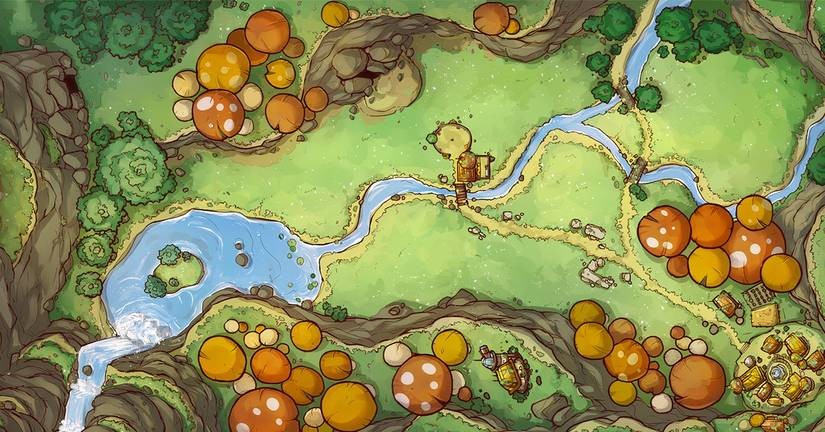
Figure 1. Twilight Sword Glows with Clear Zelda Inspiration.
While its art and style hint at influences like Final Fantasy, Dragon Quest, and Ni No Kuni, a closer look at the rulebook — or a chat with the creators — reveals that The Legend of Zelda is truly at the heart of its design. Unlike many fantasy RPGs that subtly echo elements of Hyrule, Twilight Sword openly embraces them, right down to using hearts as its health system. Figure 1 shows Twilight Sword Glows with Clear Zelda Inspiration.
“We wanted to make something that felt like playing Breath of the Wild at the table,” Sirignano said in a video call with Polygon. “During the pandemic we spent hundreds of hours on Breath of the Wild and then Tears of the Kingdom, and that’s where the idea really took shape.”
In Twilight Sword, players step into the roles of newly awakened Champions who begin their journey with no memories. After a millennium of peace, the scourge Vardas seized the legendary Twilight Sword and unleashed its ancient power to summon an army of monsters, plunging the once-vibrant realm of Radia into chaos. Your mission is to rekindle “Hope” and push back the spreading “Despair,” a paired mechanic that shapes which regions the party can access as the story unfolds.
This philosophy guides every aspect of the game’s design. Rather than relying on a fixed campaign map, the world of Radia is unveiled piece by piece through modular cards, revealing new areas, quests, and landmarks in a style reminiscent of open-world exploration. The core rules are crafted to stay quick and intuitive, mirroring the classic video games that inspired them.
Sirignano and co-creator Simone Formicola highlight the game’s cooking and brewing system as a standout feature — one that again draws clear parallels to Link’s adventures in Hyrule.
“Cooking is such a key part of Zelda, but most RPG crafting systems are overwhelming, full of charts and complex rules,” Sirignano explained. “We built ours so ingredients have simple effects, and the rules show how those effects combine. You can cook anything without flipping through pages of references.”
One of the most distinctive systems in Twilight Sword is its unconventional use of dice. In the Realm of Radia, the inverted d12 reigns supreme. The game’s core engine — Created at Twilight (CAT) — turns familiar tabletop expectations upside down: a roll of 1 is a critical success, while a roll of 12 spells disaster. Instead of the GM determining difficulty, each character’s sheet provides the target number. Sirignano said this roll-low approach emerged from deliberate experimentation.
“We start by tinkering with mechanics we don’t immediately enjoy — that’s where innovation happens,” he explained. “You never need to ask the GM for a difficulty rating. Everything is right there on your card.”
Formicola added that this clarity is meant to welcome players and GMs alike: “New players and new game masters need something solid to lean on when they’re learning the game.”
These paired ideas — freeform exploration and accessible structure — are the foundation of Twilight Sword, and they reflect 2LM’s broader creative ethos. The studio is already known for visually striking, art-forward TTRPGs like Outgunned, Household, and Broken Compass, which have earned multiple ENNIE Awards for both design and production. With Twilight Sword, they aim to capture the spirit and emotional rhythm of video games, rather than directly copying their mechanics, and reshape them into something that thrives at the tabletop.
Parties advance by collecting Hope, which they earn by assisting NPCs, uncovering landmarks, and defeating major foes. Opposing this is Despair — a measure of looming corruption that restricts where the group can travel until they’ve grown strong enough. Ultimately, the heroes’ journey leads them toward the Fortress of Evil, where they must confront Vargas and reclaim the legendary Twilight Sword.
One of the clearest homages to recent Zelda titles appears in a recurring world event: “When the night sky turns red, the Monsters rise again to plague Radia.” Periodically, this eerie phenomenon repopulates the map with revived enemies, meaning that as players backtrack and explore to raise their Hope, they may be forced to re-engage familiar threats — including resurrected bosses.
Just like Breath of the Wild, Twilight Sword embraces the idea that discovery should be uplifting. Its world encourages players to spark hope by helping others, reinforcing the belief that even the smallest kindness can reshape the world.
Source: Polygon
Cite this article:
Priyadharshini S (2025), Zelda Spirit Shines Bright in New Tabletop RPG Twilight Sword, AnaTechMaz, pp.343
Recent Post
-
Daggerheart's First Expansion Adds Werewolves and Vampires
Critical Role’s Daggerheart RPG is receiving its first expansion in summer 2026, introducing new character...
-
Fortnite’s “No Sweat” Plan Backfired
Fortnite’s Simpsons season faced backlash as players grew frustrated with constant losses. In response...
-
Marvel Rivals Keeps Mimicking Overwatch 2
Nearly a year after its launch, Marvel Rivals still leans heavily on Overwatch 2 for inspiration. While NetEase...
-
Possessor(s) Devs on Crafting a Melancholy Yet Colorful World
Exploring Heart Machine’s simple yet stylized approach to characters and environments: across games like...
-

PSA: Get Battlefield 6 Free This Week
Less than two months after launch, Battlefield 6 is offering a one-week free trial. From Nov. 25 to Dec. 2, a...
-
Scott Pilgrim EX Reimagines Toronto with Chrono Trigger and Sonic Elements
While Scott Pilgrim vs. the World began as a comic, its identity has always...
-
Slots & Daggers Turns Slay the Spire into a Slot Machine
A faint light glimmers at the back of a medieval tavern, where a crowd gathers around a...
-
Sword of the Sea’s Game Awards Snub Stuns
Despite the hype around this year’s Game Awards, Sword of the Sea has been largely overlooked, becoming...
-
Double Fine Unveils a Surprise New Game: A Delightful Multiplayer Pottery Party Brawler
Kiln, Double Fine explains, is all about the joyful clash between creativity...
-
Daggerheart Expands with First Expansion, Introducing Werewolves and Vampires
Daggerheart: Hope & Fear significantly expands character creation options...
-
Keith Baker and Monte Cook Lead Courses at Dungeon Master University
Since 2018, Tabletop Vacations has been hosting immersive experiences...
-
Kirby Air Riders Revives the Forgotten Joy of Unlockable
I remember being at a sleepover at a friend’s house with the brand-new GameCube I’d gotten for Christmas...
-
Zelda Spirit Shines Bright in New Tabletop RPG Twilight Sword
Twilight Sword has quickly become Backerkit’s breakout tabletop RPG, launched by Italian studio Two...
-
Fortnite’s “No Sweat” Strategy Backfires, Making Things Worse for Players
Despite the initial hype surrounding Fortnite’s the Simpsons season...
-
Scott Pilgrim EX Constructs a Digital Toronto Using Chrono Trigger and Sonic Elements
Scott Pilgrim vs. the World may have begun as a comic, but it owes much...