

Strategies for Enterprise Cloud Success
Many enterprises are rethinking their cloud strategies after facing unexpectedly high costs—so high in some cases that they’ve had to move certain applications back to on-premises data centers. Yet, a small minority—less than 10% of those I’ve spoken with—managed to get it right from the start. What sets them apart? They’ve followed a set of practices that consistently deliver cost efficiency and stability in the cloud.

Figure 1. Enterprise Strategies for Achieving Cloud Success.
The top lesson they share is to stick to basic cloud services unless your initial design shows you truly need something more. When possible, choose IaaS or VMs over containers, containers over serverless, dedicated resources over usage-based pricing, and bring your own middleware instead of relying on cloud provider services. Most of these high performers applied this approach from day one, while others admitted they initially fell for the hype but corrected course quickly. Figure 1 shows Enterprise Strategies for Achieving Cloud Success.
These companies stress that many “value-add” provider features are helpful during development but end up draining budgets long-term. One enterprise reported that even when licensing middleware to run in IaaS VMs, the yearly cost was about half of using provider-hosted tools—and even less when leveraging open-source software, provided the team had the skills to manage it.
A related rule is to avoid chasing every new cloud feature or reworking application that already function well. This group found that most new features increase ongoing costs without improving performance or reliability. One company that broke this rule rebuilt the same application twice in two years, only to see costs rise both times—while users disliked every visible change. As one veteran CIO put it decades ago: “The worst project is a conversion—it’s all cost and no benefit. The best outcome is that nobody even notices you did anything.”
The second most common piece of advice—shared by over 80% of cloud-savvy enterprises—concerns selecting the right applications to move to the cloud. Their guidance is to prioritize applications with significant workload variability over time. More than four out of five enterprises told me that when workloads are steady, running a VM in a data center is typically 25% to 40% cheaper than in the cloud. However, when peak resource demand is about twice the average demand (a 2:1 ratio), costs tend to break even, since in a data center those extra resources often sit idle. At a 2.5:1 ratio, cloud hosting becomes cost-effective enough to meet most CIO ROI benchmarks.
These experts stress that the cloud is fundamentally a game of economies of scale. Its biggest value comes where an enterprise’s own data center efficiency is weakest—especially in situations with highly variable loads. In a public cloud, one customer’s peak usage can be balanced by another’s lull, creating a smoother overall workload and making it possible to price services more competitively than an individual enterprise could achieve internally.
The third tip—mentioned by roughly two-thirds of these enterprises—is to focus on applications with a widely dispersed user base. And by “widely,” they mean spread across continents, not just across town. Performance and availability can suffer when requests must cross multiple networks before reaching the processing location, leading to user dissatisfaction. Deploying resources closer to those users may be the only viable fix. If an enterprise doesn’t already have data centers near each major user hub, building new ones may not achieve economies of scale in terms of capital, power, cooling, and operations costs—making the cloud the more affordable choice.
That said, these leaders caution against assuming that geographic dispersion always justifies cloud migration. In some cases, performance issues aren’t caused by hosting location at all. As one enterprise put it: “The cloud may look like the easy way out, but it may not be the economical way.” Before choosing distributed cloud hosting, confirm that the problem actually stems from user location rather than other factors.
The fourth tip is to carefully evaluate how users interact with the application and whether there’s a large non-transactional component. Mission-critical systems and core business databases almost always stay in the data center, with transactions—adding, updating, or deleting records—driving changes. If user interaction is tightly tied to those transactions, moving the interface to the cloud will be difficult and unlikely to save costs. However, if much of the interaction happens before any database access, that front-end component may be hosted in the cloud more economically.
To determine if this applies, examine the data delivered to users during pre-transaction interactions. If most of it must come from the core database, moving it to the cloud can create unpredictable and potentially high data transfer costs. But if a summarized dataset or secondary database can be hosted in the cloud, those costs become predictable and manageable.
Source: NETWORK WORLD
Cite this article:
Priyadharshini S (2025), Strategies for Enterprise Cloud Success, AnaTechMaz, pp.156
Recent Post
-

Oracle Expands Cloud Infrastructure Across Europe
The tech giant plans to invest USD 2 billion in Germany and USD 1 billion in the Netherlands over the...
-

Telefónica Tech Teams Up with Wiz to Strengthen Cloud Security
Telefónica Tech, the digital division of Telefónica, has partnered with cloud security leader Wiz to strengthen...
-

Cloudera Delivers On-Premise Cloud Data Services to Strengthen AI Security
Enterprise cloud provider Cloudera has announced plans to extend...
-

Rackspace Rolls Out Cloud Platform to Streamline Multicloud Operations
Hybrid cloud provider Rackspace Technology has refreshed its...
-

IP Vanish Introduces Remote Browser Isolation for Windows and Mac Apps
IP Vanish has added a cloud-based Secure Browser to its...
-
Strategies for Enterprise Cloud Success
Many enterprises are rethinking their cloud strategies after facing unexpectedly...
-

IBM Cloud Suffers Fourth Major Outage Since May Amid Widespread Authentication Failures
IBM Cloud suffered another ...
-

VMware Explore Preview: Unlocking VCF Value for Customers
VMware Explore 2025 is just around the corner (Aug. 25–28 in Las Vegas), and customers are eager to...
-

Hitachi Vantara: Empowering Businesses to Unlock the Full Potential of Data
Dia Ali, Global Platforms & Solutions Leader for Data Intelligence at ...
-

Kubernetes V1.34 Introduces Enhanced Networking for Cloud-Native Infrastructure
Kubernetes 1.34 was released this week, delivering a range of ....
-

Huawei Joins US Tech in Deutsche Telekom’s ‘Sovereign’ Cloud
Deutsche Telekom promotes its cloud as a “sovereign” offering, but the infrastructure relies on both...
-

NTT Data, Google Cloud Partner on Agentic AI and Sovereign Cloud
Google Cloud and NTT Data have formed a partnership to deliver industry-focused cloud and AI solutions,....
-
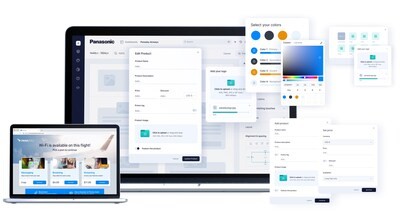
Panasonic Avionics Launches New Wi-Fi Portal
Panasonic’s new cloud-native Wi-Fi Portal provides airlines with a service-agnostic platform that works ...
-

5G Core Goes Cloud-Native — Top Telcos Fully Committed
For mobile operators, adopting a practical, risk-conscious deployment approach is essential to ensure ...
-

Why Google Is Focusing Its Investments on AI and Cloud in Virginia
Google plans to invest US$9 billion by 2026 to strengthen its cloud...