

New Research Suggests Sperm Behave Beyond a Fundamental Physics Rule
Sperm cells are able to swim through microscopic environments that should rapidly halt their movement, and new research suggests they do so by taking advantage of the unusual behavior of active living matter.
At tiny scales, fluids behave very differently than they do in everyday life, creating strong resistance to motion. Despite this, sperm propel themselves forward using beating tails while continuously supplying their own energy. Researchers led by Kyoto University mathematician Kenta Ishimoto found that this self-driven activity can create dynamics that appear to bypass the conventional action-and-reaction symmetry associated with Newton’s third law.
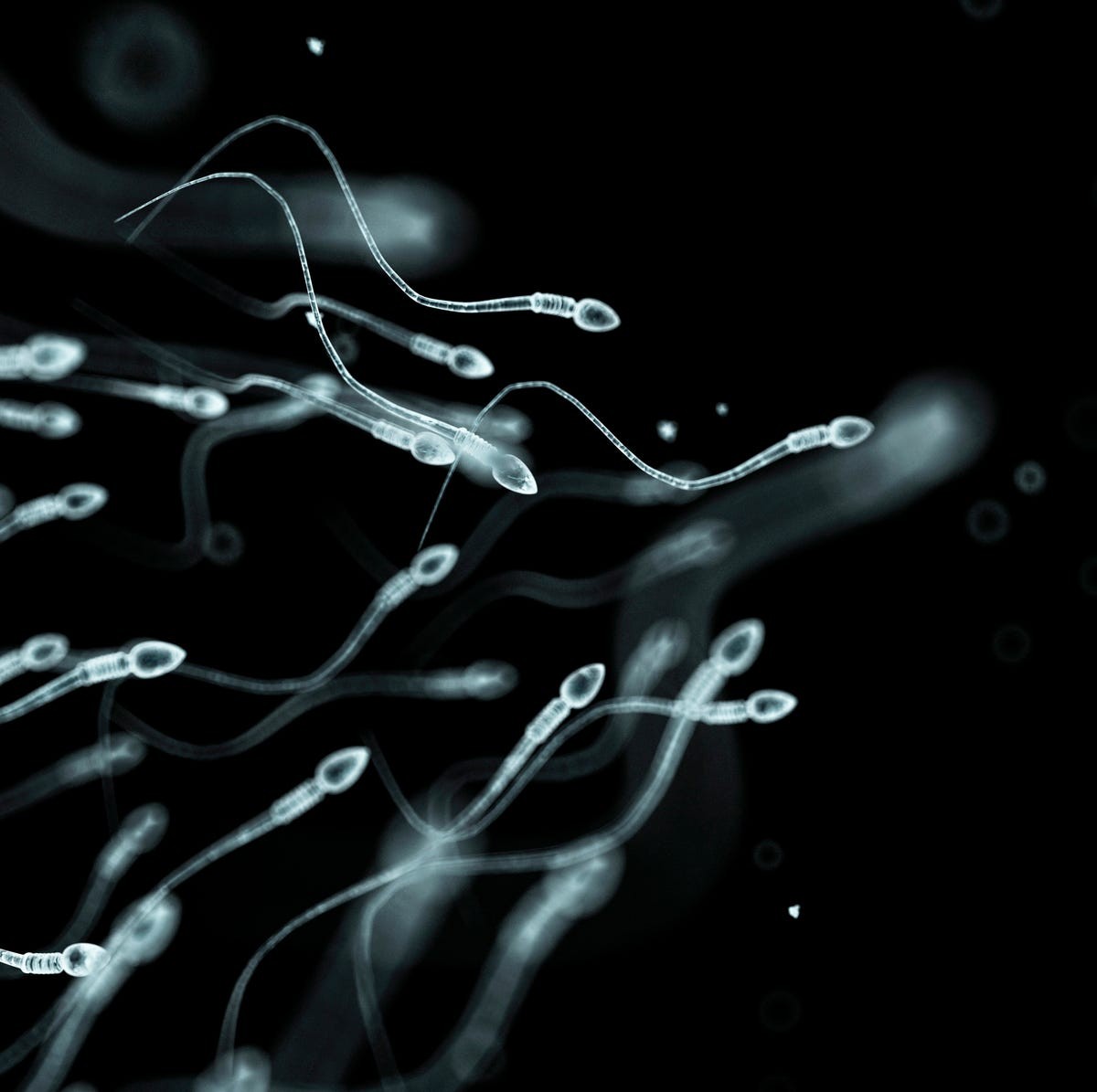
Figure 1. The Hidden Physics Behind Sperm Swimming
Rather than violating physics, the findings highlight how living systems operate as active matter, constantly injecting energy into their surroundings. This allows sperm to generate motion in ways that differ from passive objects, offering new insights into the physics of life at microscopic scales. Figure 1 shows The Hidden Physics Behind Sperm Swimming.
The Unique Physics Governing Tiny Swimmers
At the microscopic scale of sperm cells, inertia plays almost no role and fluid viscosity dominates. As a result, a sperm cannot coast through the fluid—if its tail stops moving, it comes to a halt almost instantly.
This challenge is described by the scallop theorem, which states that microscopic swimmers cannot move efficiently by simply repeating and reversing the same motion. To generate forward movement, they must perform strokes that are not perfectly reversible. Sperm overcome this limitation using flagella—thin, flexible tails that produce traveling waves along their length. Similar propulsion systems are found in microorganisms such as green algae.
These wave-like motions are driven by molecular motors embedded within the flagellum. By continuously supplying energy, the motors transform the tail into an active material, allowing it to propel the cell through highly viscous environments where passive motion would be impossible.
Researchers Uncover the Elasticity Behind Sperm Propulsion
The researchers focused on a phenomenon known as odd elasticity, which differs from the behavior of conventional elastic materials. In ordinary materials, forces and responses are reciprocal—stretching or bending the material produces an equal and predictable reaction. In active systems, however, internal energy sources can generate non-reciprocal forces that do not simply mirror the applied forces.
This unusual behavior can help maintain wave-like motion even in highly viscous environments that would normally dissipate energy. To study the effect, the team developed a theoretical framework called odd elastohydrodynamics, which describes how active elastic materials interact with surrounding fluids. The model allowed the researchers to distinguish between the influence of fluid drag and the internal processes within the flagellum that actually drive wave propagation.
They also introduced an odd-elastic modulus, a mathematical measure designed to identify and quantify the active, non-reciprocal forces responsible for movement, helping separate them from the effects of ordinary elasticity.
What the Study Revealed
Using their new model, the researchers analyzed both human sperm cells and the green alga Chlamydomonas. The results indicate that these microscopic swimmers generate traveling waves along their flexible flagella through internally powered activity rather than relying solely on passive mechanical forces.
In human sperm, internal energy-driven processes appeared to create the flagellar waves, while the tail’s natural elasticity helped stabilize the motion [1]. For Chlamydomonas, the researchers found that non-reciprocal, or “odd,” elastic effects closely matched the observed beating patterns, suggesting that odd elasticity plays a direct role in propulsion.
The study shows that flagella function as active, energy-consuming structures whose internal mechanics enable movement in environments where simple back-and-forth motions would be ineffective. Beyond improving our understanding of how living cells move, the findings could inspire new technologies, including artificial microswimmers, self-assembling microscopic robots, and soft materials designed to mimic the dynamic behavior of living systems.
References:
- https://scitechdaily.com/scientists-discover-sperm-seem-to-bypass-a-fundamental-law-of-physics/
Cite this article:
Janani R (2026), New Research Suggests Sperm Behave Beyond a Fundamental Physics Rule, AnaTechMaz, pp.770
Recent Post
-
Scientists Find Common Medications May Change the Gut for Years
A new study suggests that the gut microbiome may preserve ....
-

Scientists Develop New Method to Freeze and Restore Living Brain Tissue
Scientists have made progress toward safely freezing and restoring....

Researchers Compare Multiple Sclerosis Models with Human Tissue to Improve Future Therapies
Researchers have uncovered important differences between two...
Scientists Identify Genetic “Off Switch” That Boosts CAR T Cell Cancer Fighting Power
A new study has identified a potential strategy for making CAR T-cell....
New Research Suggests Sperm Behave Beyond a Fundamental Physics Rule
Sperm cells are able to swim through microscopic environments that....
-
New Strategy Boosts Immune Cells While Starving Tumors
Researchers at UCLA have developed a technique that provides T cells with a protected source of sugar, ....