

Scientists Develop “Levitating” Time Crystals That Challenge the Laws of Physics
Acoustic Levitation and Sound-Driven Interactions
The time crystal is composed of tiny Styrofoam beads, similar to those used in packaging, which are suspended in place using sound waves. These waves function as an acoustic levitation system, keeping the beads floating and initially stationary in mid-air.
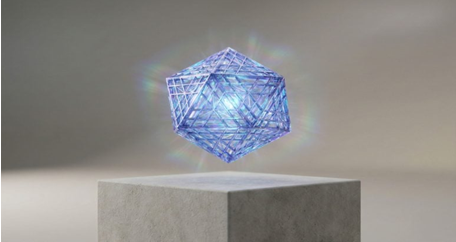
Figure 1. Levitating” Time Crystals Engineered by Scientists to Push the Boundaries of Physics.
“Sound waves apply forces to particles—much like ripples on a pond push a floating leaf,” Morrell explains. “By placing objects within a standing sound wave, we can counteract gravity and make them levitate.” Figure 1 shows Levitating” Time Crystals Engineered by Scientists to Push the Boundaries of Physics.
After being levitated, the particles start to interact by scattering sound waves back and forth between one another. These wave exchanges drive the system’s unusual dynamics.
Nonreciprocal Forces Challenge Newton’s Third Law
A crucial factor is that larger particles scatter sound waves more strongly than smaller ones. This means a larger bead influences a smaller bead more than the smaller bead influences it in return, creating an inherently unbalanced interaction between particles of different sizes.
“Imagine two ferries of different sizes moving toward a dock,” Morrell explains. “Each creates waves that push the other, but the impact differs depending on their size.”
Because these sound-mediated forces do not strictly obey Newton’s Third Law of equal and opposite reactions, the beads can begin oscillating spontaneously while remaining suspended. Over time, they synchronize into a stable, repeating rhythm that balances these asymmetric forces—producing a sustained and visible time-crystal motion.
What Are Time Crystals?
Time crystals are a unique state of matter that repeat their motion in time, rather than just existing in a fixed structure in space. The idea was first proposed by Frank Wilczek in 2012. Unlike ordinary crystals—such as diamonds, where atoms are arranged in repeating patterns—time crystals exhibit a repeating pattern of motion.
How Scientists Made a “Levitating” Time Crystal
In this experiment, researchers used acoustic levitation to suspend tiny styrofoam beads in mid-air using carefully controlled sound waves. These sound waves form what is called a standing wave, which can counteract gravity and hold small objects in place.
Why This Challenges Physics
One of the most surprising aspects of this system is that the sound-mediated forces do not strictly follow the traditional interpretation of Newton’s Third Law (every action has an equal and opposite reaction). Since larger beads affect smaller ones more strongly than the reverse, the forces between them are not perfectly balanced.
Source: SciTECHDaily
Cite this article:
Priyadharshini S (2026), Scientists Develop “Levitating” Time Crystals That Challenge the Laws of Physics, AnaTechMaz, pp.445
Recent Post
-

Fermilab and Qblox Collaborate to Advance Quantum Research and Training
Fermilab, in partnership with Qblox and supported by the U.S. Department...
-

Quantum Computing Threat Spurs Preparations for Future Cyberattacks
Sharon Dolmans, an associate professor in Industrial...
-

Fermilab and Qblox Collaborate to Advance Quantum Research and Training
Fermilab, in partnership with Qblox and supported by the U.S....
-

Quantum and High-Throughput Computing Enable Molecular Resonance Discovery with Integrated qDRIVE
Researchers have introduced a powerful hybrid...
-

Silicon Processor Connects 11 Qubits with Over 99% Fidelity
Scaling up quantum computers requires adding and interconnecting more qubits, but ...
-
Quantum Internet Advances with 100 km Secure Communication Breakthrough
One of the main technical obstacles in quantum...
-
Revolutionary Cooling Method Could Redefine Quantum Computer Design
s quantum computers scale up with more qubits to tackle...
-
Scientists Transform Ordinary Glass into a High-Speed Quantum Security Device
Continuous-variable (CV) quantum information processing...
-

Caltech Achieves Fiber-Optic–Level Performance on Silicon Chips
To create the light-guiding structures—called waveguides, which are nanoscale pathways that...
-
Scientists Develop “Levitating” Time Crystals That Challenge the Laws of Physics
The time crystal is composed of tiny Styrofoam beads...
-

Scientists Uncover Unexpected Quantum Behavior in a Common Element
To investigate these phenomena, the team employed spin...
-

Quantum Microchip Simulated in Exceptional Detail Using 7,000 GPUs
Designing quantum chips involves integrating well-established...
-
Quantum Chaos Yields a Surprising Superconductivity “Hidden Order”
Superconductivity has fascinated scientists for decades due to its potential to revolutionize...
Physicists Find a New Method to Link Qubits Using Crystal Defects
Backed by Air Force funding, the project brought...
Exploring the Effects of Extra Dimensions on Light
Quantum structured light is paving the way for breakthroughs in imaging and metrology. Researchers...