

Scientists Transform Ordinary Glass into a High-Speed Quantum Security Device
Continuous-variable (CV) quantum information processing, which forms the foundation of technologies like quantum key distribution (QKD) and quantum random number generation (QRNG), relies on precise measurement of a light wave’s phase and amplitude. This requires a coherent receiver that combines an extremely weak quantum signal with a stronger reference beam and extracts information from their interference patterns.
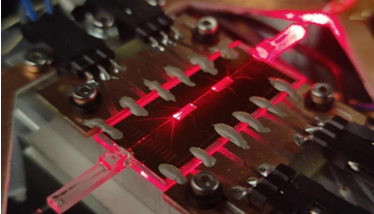
Figure 1. Ordinary Glass Powers High-Speed Quantum Security.
So far, most integrated coherent receivers have been developed on silicon-based platforms. While silicon technology is well established and enables high-density integration, it is highly sensitive to polarization and often causes greater optical losses. These limitations can reduce the stability and efficiency of quantum communication systems. Figure 1 shows Ordinary Glass Powers High-Speed Quantum Security.
Glass, however, offers several key advantages. It is naturally resistant to polarization effects, remains stable over long periods, and allows the fabrication of three-dimensional waveguides with very low signal loss. Using femtosecond laser micromachining, researchers can directly write light-guiding structures inside the glass. This approach makes it possible to create compact and intricate photonic circuits without the complex manufacturing processes required in traditional semiconductor fabrication.
Two Quantum Technologies Integrated on a Single Chip
Thanks to its combination of low optical loss, electrical tunability, and long-term stability, the chip can perform multiple quantum communication tasks without any physical reconfiguration.
When operated as a heterodyne detector, the device enabled a source-device-independent quantum random number generator (QRNG)—a security approach that remains robust even if the incoming optical signal is untrusted. With strong noise suppression and highly stable quadrature measurements, the chip achieved a record-breaking secure random number generation rate of 42.7 Gbit/s for this type of framework.
The same hardware was also used to implement a QPSK-based continuous-variable quantum key distribution (CV-QKD) protocol, in which information is encoded using a four-state quantum constellation. In tests over a simulated 9.3 km fiber link, the system reached a secret key rate of 3.2 Mbit/s. These results demonstrate that a glass-based photonic platform can deliver state-of-the-art CV-QKD performance while avoiding the limitations typically associated with silicon-based devices.
These properties provide long-term stability and resilience, making glass-based photonics a promising candidate for future field-deployable systems and even space-based quantum communication missions. The authors highlight that integrated glass photonics could help bridge the gap between laboratory experiments and practical quantum networks.
Exploiting these advantages, the team demonstrated two key applications on a single chip: a source-device-independent quantum random number generator (QRNG), which achieved a record-breaking secure generation rate of 42.7 Gbit/s, and a QPSK-based continuous-variable quantum key distribution (CV-QKD) system, which reached a secure key rate of 3.2 Mbit/s over a simulated 9.3 km fiber link.
Beyond these milestones, the work underscores the potential of glass-based integrated photonics as a robust and versatile platform for quantum technologies. Glass is inert, stable, and cost effective, allowing the creation of devices naturally resistant to harsh environmental conditions. This innvative approach could accelerate the transition from laboratory prototype to deployable quantum communication systems, representing an important step toward a real-world quantum network infrastructure.
Source: SciTECHDaily
Cite this article:
Priyadharshini S (2026), Scientists Transform Ordinary Glass into a High-Speed Quantum Security Device, AnaTechMaz, pp.443
Recent Post
-

Fermilab and Qblox Collaborate to Advance Quantum Research and Training
Fermilab, in partnership with Qblox and supported by the U.S. Department...
-

Quantum Computing Threat Spurs Preparations for Future Cyberattacks
Sharon Dolmans, an associate professor in Industrial...
-

Fermilab and Qblox Collaborate to Advance Quantum Research and Training
Fermilab, in partnership with Qblox and supported by the U.S....
-

Quantum and High-Throughput Computing Enable Molecular Resonance Discovery with Integrated qDRIVE
Researchers have introduced a powerful hybrid...
-

Silicon Processor Connects 11 Qubits with Over 99% Fidelity
Scaling up quantum computers requires adding and interconnecting more qubits, but ...
-

Quantum Internet Advances with 100 km Secure Communication Breakthrough
One of the main technical obstacles in quantum...
-
Revolutionary Cooling Method Could Redefine Quantum Computer Design
s quantum computers scale up with more qubits to tackle...
-
Scientists Transform Ordinary Glass into a High-Speed Quantum Security Device
Continuous-variable (CV) quantum information processing...
-

Caltech Achieves Fiber-Optic–Level Performance on Silicon Chips
To create the light-guiding structures—called waveguides, which are nanoscale pathways that...
-
Scientists Develop “Levitating” Time Crystals That Challenge the Laws of Physics
The time crystal is composed of tiny Styrofoam beads...
-
Scientists Uncover Unexpected Quantum Behavior in a Common Element
To investigate these phenomena, the team employed spin...
-

Quantum Microchip Simulated in Exceptional Detail Using 7,000 GPUs
Designing quantum chips involves integrating well-established...
-
Quantum Chaos Yields a Surprising Superconductivity “Hidden Order”
Superconductivity has fascinated scientists for decades due to its potential to revolutionize...
Physicists Find a New Method to Link Qubits Using Crystal Defects
Backed by Air Force funding, the project brought...

Exploring the Effects of Extra Dimensions on Light
Quantum structured light is paving the way for breakthroughs in imaging and metrology. Researchers...