

Caltech Achieves Fiber-Optic–Level Performance on Silicon Chips
To create the light-guiding structures—called waveguides, which are nanoscale pathways that direct light across a chip—the researchers used germano-silicate, the same type of glass used in optical fibers. They shaped the material through a lithography-based fabrication technique. The finished waveguides are arranged in a spiral layout, increasing the distance light can travel on the chip—much like light traveling through a coiled optical fiber—but condensed into a far smaller footprint using advanced nanofabrication.

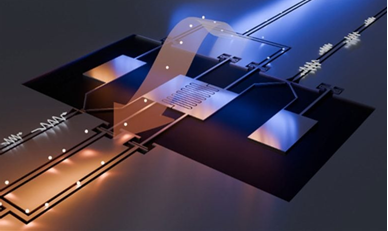
Figure 1. Fiber-Optic–Grade Performance Now Integrated into Silicon Chips.
“Germano-silicate waveguides exhibit exceptionally low loss and can be readily adapted to efficiently couple light between optical fibers and semiconductor lasers—an essential factor in lowering the overall energy demands of server infrastructure,” says Henry Blauvelt (PhD ’83), a visiting associate in applied physics and materials science at Caltech, chief technology officer at Emcore, and a co-author of the study. Figure 1 shows Fiber-Optic–Grade Performance Now Integrated into Silicon Chips.
At near-infrared wavelengths, devices developed on this new platform match the performance of leading silicon nitride technologies, a material widely recognized for its low-loss data transmission capabilities. At visible wavelengths, however, the germano-silicate platform significantly outperforms silicon nitride.
Atomic-Level Surface Smoothing Enhances Coherence
Because germano-silicate has a relatively low melting temperature, the researchers can place the fabricated devices in a furnace to “reflow” the waveguide surfaces. This process smooths them down to nearly atomic-level precision, greatly reducing the scattering losses that have traditionally limited visible photonic integrated circuits (PICs). At visible wavelengths, the new platform surpasses silicon nitride’s previous record by a factor of 20, with further improvements still possible.
Lowering optical loss substantially improves device performance. For example, lasers produced using this method maintain coherent light for more than 100 times longer than earlier designs.
“The broader wavelength range enabled by our method will support many key atomic processes, paving the way for chip-scale atomic sensors, optical clocks, and ion-trap systems,” Chen explains.
Colburn adds that targeting losses comparable to those measured over kilometer-scale distances may seem unnecessary for chips that are only about 2 centimeters wide. “Our chips are just 2 centimeters across, after all. But in practice, there are many applications where this level of performance becomes incredibly powerful,” he says. He highlights the ring resonator—an optical component widely used in research and telecommunications. In a ring resonator, light enters a circular pathway and circulates repeatedly, reinforcing specific frequencies.
Ring Resonators, Quantum Sensors, and Future Possibilities
Although these rings are only millimeters in diameter, the effective distance light travels depends on how little energy is lost during each pass. “That’s where achieving low loss over meters—or even kilometers—becomes crucial,” Colburn explains. “The longer light can circulate, the better the device performance.” For lasers that rely on resonators to enhance coherence, every tenfold reduction in loss can yield a hundredfold improvement in coherence.
More broadly, ultralow-loss waveguides operating in the visible spectrum unlock a diverse array of technologies. Vahala describes the platform as having a “Swiss Army knife” versatility, adaptable to many different applications. In their paper, the Caltech researchers demonstrate this flexibility by fabricating several optical devices using the new material, including ring resonators, multiple types of lasers, and nonlinear resonators capable of generating a broad spectrum of frequencies.
Source: SciTECHDaily
Cite this article:
Priyadharshini S (2026), Caltech Achieves Fiber-Optic–Level Performance on Silicon Chips, AnaTechMaz, pp.444
Recent Post
-

Fermilab and Qblox Collaborate to Advance Quantum Research and Training
Fermilab, in partnership with Qblox and supported by the U.S. Department...
-

Quantum Computing Threat Spurs Preparations for Future Cyberattacks
Sharon Dolmans, an associate professor in Industrial...
-

Fermilab and Qblox Collaborate to Advance Quantum Research and Training
Fermilab, in partnership with Qblox and supported by the U.S....
-

Quantum and High-Throughput Computing Enable Molecular Resonance Discovery with Integrated qDRIVE
Researchers have introduced a powerful hybrid...
-

Silicon Processor Connects 11 Qubits with Over 99% Fidelity
Scaling up quantum computers requires adding and interconnecting more qubits, but ...
-

Quantum Internet Advances with 100 km Secure Communication Breakthrough
One of the main technical obstacles in quantum...
-
Revolutionary Cooling Method Could Redefine Quantum Computer Design
s quantum computers scale up with more qubits to tackle...
-
Scientists Transform Ordinary Glass into a High-Speed Quantum Security Device
Continuous-variable (CV) quantum information processing...
-
Caltech Achieves Fiber-Optic–Level Performance on Silicon Chips
To create the light-guiding structures—called waveguides, which are nanoscale pathways that...
-
Scientists Develop “Levitating” Time Crystals That Challenge the Laws of Physics
The time crystal is composed of tiny Styrofoam beads...
-
Scientists Uncover Unexpected Quantum Behavior in a Common Element
To investigate these phenomena, the team employed spin...
-

Quantum Microchip Simulated in Exceptional Detail Using 7,000 GPUs
Designing quantum chips involves integrating well-established...
-
Quantum Chaos Yields a Surprising Superconductivity “Hidden Order”
Superconductivity has fascinated scientists for decades due to its potential to revolutionize...
Physicists Find a New Method to Link Qubits Using Crystal Defects
Backed by Air Force funding, the project brought...
Exploring the Effects of Extra Dimensions on Light
Quantum structured light is paving the way for breakthroughs in imaging and metrology. Researchers...