

Revolutionary Cooling Method Could Redefine Quantum Computer Design
As quantum computers scale up with more qubits to tackle practical problems, keeping them stable and uniformly cold becomes increasingly difficult. Larger systems allow heat and electrical noise to spread more easily, raising the chances of disrupting and destroying fragile quantum information.
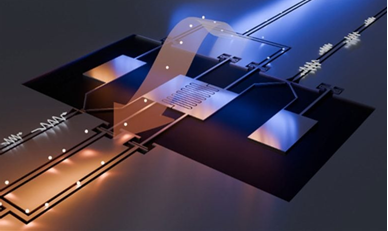
Figure 1. Breakthrough Cooling Tech Reshapes Quantum Computer Design.
“Many quantum systems are fundamentally constrained by how energy moves and dissipates within them. By understanding and measuring these processes, we can design devices where heat flow is predictable, manageable, and even beneficial,” says Simon Sundelin, a doctoral student at Chalmers University of Technology and lead author of the study. Figure 1 shows Breakthrough Cooling Tech Reshapes Quantum Computer Design
Precision Heat Control at the Smallest Scales
Researchers developed a superconducting artificial molecule in the nanofabrication laboratory at Chalmers University of Technology. Although it behaves like a natural molecule, it is made from tiny superconducting circuits instead of atoms. By connecting this artificial molecule to several microwave channels and introducing controlled microwave noise within a narrow frequency range, the team can precisely direct how heat and energy move through the system.
“The two microwave channels act as hot and cold reservoirs, but they only become effectively connected when we introduce controlled noise through a third port. This injected noise triggers and drives heat flow between the reservoirs through the artificial molecule. We were able to measure extremely small heat currents—down to attowatts, or 10⁻¹⁸ watts. At that scale, heating a single drop of water by one degree Celsius would take the age of the universe,” explains Simon Sundelin.
Because the researchers can adjust reservoir temperatures and monitor these tiny heat flows, the system can switch between different modes, functioning as a refrigerator, a heat engine, or a thermal transport amplifier. This adaptability is crucial for large quantum processors, where the highest temperatures often arise at control and measurement points near the qubits rather than at the edges of the cryostat.
“This work represents a crucial step toward controlling heat directly within quantum circuits, at a scale beyond the reach of conventional cooling systems. The ability to remove or redirect heat at such tiny levels paves the way for more stable, reliable, and resilient quantum technologies,” says Aamir Ali, a researcher at Chalmers University of Technology and co-author of the study.
Source: SciTECHDaily
Cite this article:
Priyadharshini S (2026), Searching Revolutionary Cooling Method Could Redefine Quantum Computer Design, AnaTechMaz, pp.442
Recent Post
-

Fermilab and Qblox Collaborate to Advance Quantum Research and Training
Fermilab, in partnership with Qblox and supported by the U.S. Department...
-

Quantum Computing Threat Spurs Preparations for Future Cyberattacks
Sharon Dolmans, an associate professor in Industrial...
-

Fermilab and Qblox Collaborate to Advance Quantum Research and Training
Fermilab, in partnership with Qblox and supported by the U.S....
-

Quantum and High-Throughput Computing Enable Molecular Resonance Discovery with Integrated qDRIVE
Researchers have introduced a powerful hybrid...
-

Silicon Processor Connects 11 Qubits with Over 99% Fidelity
Scaling up quantum computers requires adding and interconnecting more qubits, but ...
-

Quantum Internet Advances with 100 km Secure Communication Breakthrough
One of the main technical obstacles in quantum...
-
Revolutionary Cooling Method Could Redefine Quantum Computer Design
s quantum computers scale up with more qubits to tackle...
-
Scientists Transform Ordinary Glass into a High-Speed Quantum Security Device
Continuous-variable (CV) quantum information processing...
-

Caltech Achieves Fiber-Optic–Level Performance on Silicon Chips
To create the light-guiding structures—called waveguides, which are nanoscale pathways that...
-

Scientists Develop “Levitating” Time Crystals That Challenge the Laws of Physics
The time crystal is composed of tiny Styrofoam beads...
-

Scientists Uncover Unexpected Quantum Behavior in a Common Element
To investigate these phenomena, the team employed spin...
-

Quantum Microchip Simulated in Exceptional Detail Using 7,000 GPUs
Designing quantum chips involves integrating well-established...
-

Quantum Chaos Yields a Surprising Superconductivity “Hidden Order”
Superconductivity has fascinated scientists for decades due to its potential to revolutionize...
Physicists Find a New Method to Link Qubits Using Crystal Defects
Backed by Air Force funding, the project brought...

Exploring the Effects of Extra Dimensions on Light
Quantum structured light is paving the way for breakthroughs in imaging and metrology. Researchers...