

Quantum Hybrid Systems Show Photon-Tunneling Modulation Across Four Chiral States
Researchers are advancing nanoscale light control by investigating how chiral structures affect photon behavior. Aryan Pratap Srivastava, Moulik Deviprasad Ketkar, and Kuldeep Kumar Shrivastava, from IIT (BHU) and collaborators, demonstrate precise modulation of photon tunneling between microwave resonator pairs. By tuning the spacing between these chiral elements, they achieve strong control over light transmission, creating interference patterns and even ‘dark states’ where light is suppressed. This approach, which mimics quantum effects in a classical system, opens new avenues for reconfigurable photonic devices, chiral sensing, and advanced signal-processing applications.
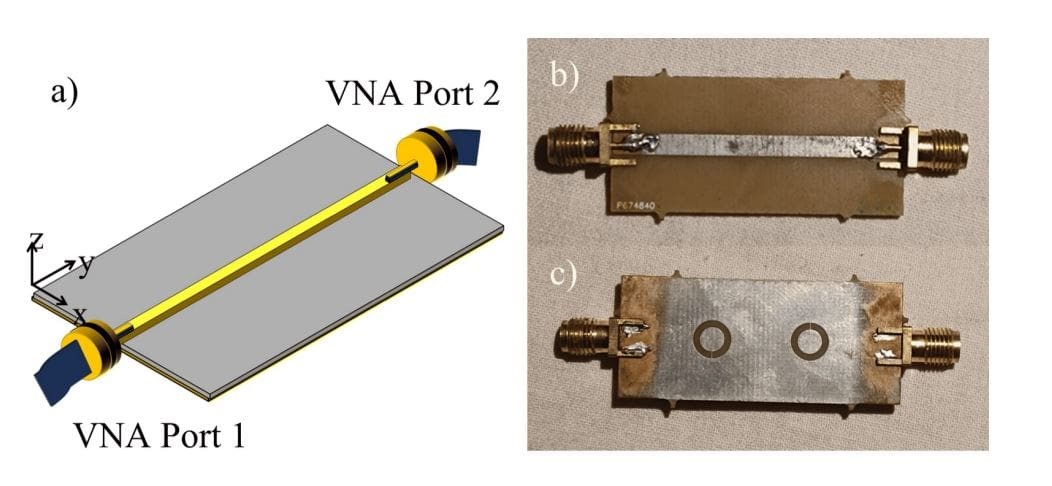
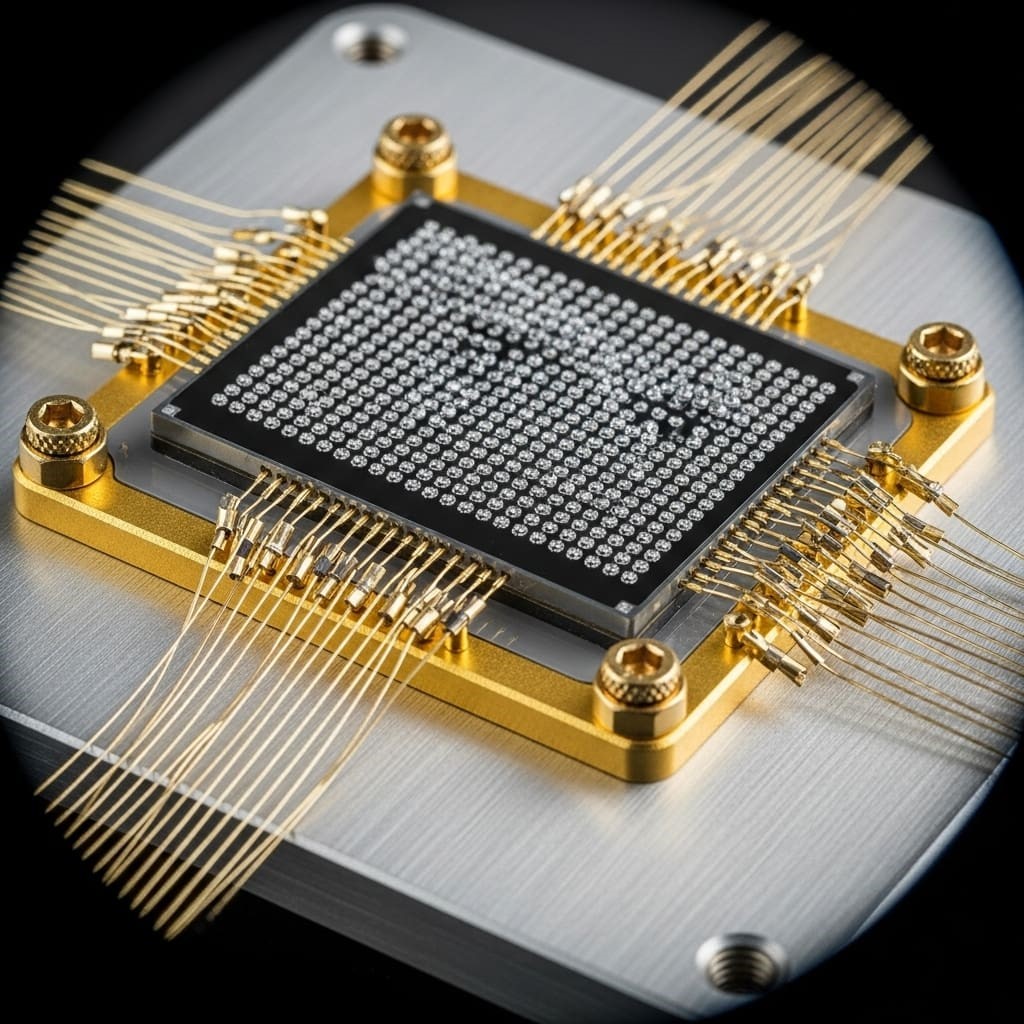
Figure 1. Tunable Photon Tunneling in Chiral Hybrid Resonators
Chiral Metamaterials Enable Control of Quantum-Like Photon Behaviour
Chiral metamaterials—structures without mirror symmetry—offer powerful ways to manipulate light for advanced quantum applications. This research focuses on split-ring resonators, engineered to strongly interact with electromagnetic waves, creating environments that control single-photon behavior and enable quantum devices. By carefully designing these structures, the team achieves non-reciprocal light propagation, allowing optical isolators and directional devices, while controlling light’s polarization, direction, and quantum state. These capabilities enhance light-matter interactions, improve quantum efficiency, and provide foundational components for future quantum computers and communication networks. Figure 1 shows Tunable Photon Tunneling in Chiral Hybrid Resonators.
Using concepts from circuit quantum electrodynamics, the researchers connect classical electromagnetism with quantum mechanics to model photon behavior in these metamaterials. They explore parity-time symmetry to balance gain and loss, employ tight-binding models to describe electronic structure, and aim for non-reciprocal operation without magnetic materials—a key advantage. The work also investigates integrating perovskites with metamaterials to further expand optical functionality. While challenges remain in fabrication, loss minimization, and scaling, the study offers a roadmap for next-generation quantum devices, advanced optical signal processing, high-sensitivity sensors, and secure communication systems.
Chirality and Spacing Govern Resonator Hybridization
Researchers achieved precise control of photon tunneling between coupled microwave resonators, each with four distinct chiral orientations. By adjusting the spacing between resonators, they observed pronounced effects on light transmission, including mode splitting, interference patterns, and the emergence of dark states—signatures of strong hybridization—validated through electromagnetic simulations.
To explain these phenomena, the team developed a circuit electrodynamics model that extends coupled-mode theory and classical dipole interactions to account for geometry-dependent coupling strength and possible reversal. Using concepts from circuit quantum electrodynamics, the model effectively describes photon tunneling, mode hybridization, and chirality-dependent interactions, reproducing the experimental observations.
The framework was further expanded to include a third spectral branch arising from incoherent processes such as mode interference and decoherence, offering a unified quantum description of all observed spectral features. The system was modeled using a Hamiltonian for two identical resonating modes coupled through a distance- and orientation-dependent coefficient. This coefficient combined a dimensionless angular prefactor—derived from iterative fitting of measured splitting data—with an exponential term describing evanescent photon tunneling, ensuring dimensional consistency. The transmission spectrum calculated via the Heisenberg-Langevin formalism closely matched experimental results, validating the model.
Photon Tunneling Modulated by Chiral Resonator Coupling
Researchers have achieved precise control of photon tunneling in coupled microwave resonators by manipulating their chiral orientation and spacing. Adjusting the distance between the resonators produced phenomena such as mode splitting, interference effects, and the formation of dark states, with hybridization dependent on both chirality and proximity, as confirmed through full-wave electromagnetic simulations. To explain these effects, the team developed a circuit electrodynamics model that accurately captures how coupling strength varies with resonator geometry and even predicts coupling sign reversal. Although the experiments involved classical excitation, the system mimics behaviors expected from quantized harmonic oscillators, creating a classical analogue of a chiral hybrid platform.
Simulations showed that at a 180° relative chiral angle, strong photon-mediated interactions produced hybridized modes with distinct resonant peaks at close resonator separations. As spacing increased, dipolar field overlap decreased, weakening coupling and causing the split resonances to merge. Experimental tests across 32 designs confirmed the simulations, demonstrating tunable photon tunneling and establishing chirality as a key parameter for controlling mode interactions. These findings pave the way for reconfigurable photonic devices, chiral sensing, and polarization-selective signal processing.
Chirality and Phase Enable Tunable Photon Tunneling
Researchers have demonstrated precise control of photon tunneling in chiral microwave resonators by engineering both their physical orientation and excitation phase. Using quantum interference effects in these tailored structures, they showed that the coupling between resonators is highly sensitive to these parameters, even reversing sign at specific orientations [1]. A newly developed circuit electrodynamics model accurately predicts this behavior. These results confirm the potential for dynamic modulation of light in compact photonic platforms, enabling applications such as phase-programmable isolators, dark-state filters, reconfigurable resonator arrays, and advancing prospects for chiral qudit logic and coherent quantum photonics.
References:
- https://quantumzeitgeist.com/quantum-systems-hybrid-photon-tunneling-modulation-four-discrete-chiral-orientations/
Cite this article:
Janani R (2025), Quantum Hybrid Systems Show Photon-Tunneling Modulation Across Four Chiral States, AnaTechMaz, pp. 255
Recent Post
-

Edge Stepper Router Implant Exploits Software Update Mechanisms to Deploy Malware
ESET researchers have identified a new adversary-in-the....
-

New Fingerprinting Resistance Measures Launched in Firefox Version 145
Mozilla has begun releasing Firefox 145, introducing....
-
China Tests Starlink Jamming Tactics Over Taiwan, Deploying 1,000+ Drones
Chinese military analysts are shifting their focus from the....
-
Leo Ultra Joins Satellite Internet Battle, Promising 1Gbps Service to Challenge Starlink
Amazon has taken a significant step toward the commercial....
-

A Critical Web assembly Vulnerability in Firefox Remained Unnoticed for Six Months
A serious memory corruption vulnerability in Firefox’s....
-

Free Tool Lets Users Check Whether Their IP Address Has Been Linked to Malicious Activity
Grey Noise has released a free online tool that allows....
-
Researchers Achieve Hybrid Spin Sound Waves That Could Support Advanced 6G
A recent study has demonstrated strong coupling between....
-

Star Catcher Sets New Benchmark in Wireless Power Beaming, Surpassing DARPA Record
Star Catcher Industries has achieved a new milestone in....
-

Apstra Founder Unveils Aria to Boost AI Network Performance
A growing number of networking startups are tackling the unique challenges posed by AI....
-

AIOZ Network: Creating an Internet Powered by People
The promise of Web2 was democratization—the idea that anyone with a computer could ....
-

Amazon’s Satellite Network Rebrands, Moves Away from Low-Cost Focus
Amazon’s emerging satellite internet program has dropped....
-

Exploring Networks, Artificial Intelligence, and the Metaverse
Enterprises must plan for the future, and the trajectory of AI matters far beyond AI itself.....
-

Scientists Achieve First-Ever Entanglement Teleportation Between Connected Quantum Networks
Researchers have, for the first time....
-
Mlipaudit Benchmarks ML Interatomic Potentials for Precise, Efficient Simulations
The growing need for accurate yet efficient atomistic....
-
Quantum Hybrid Systems Show Photon-Tunneling Modulation Across Four Chiral States
Researchers are advancing nanoscale light control by inves....