

Scientists Propose Quantum Network to Uncover the Universe’s Missing Matter
Testing Different Quantum Network Designs
The team explored various network architectures — including ring, line, star, and fully connected graphs — using systems of four and nine qubits. They employed variational quantum metrology, a method akin to training a machine-learning model, to optimize how quantum states were prepared and measured. To further refine the data, Bayesian estimation was applied to filter out noise, much like sharpening a blurry image.
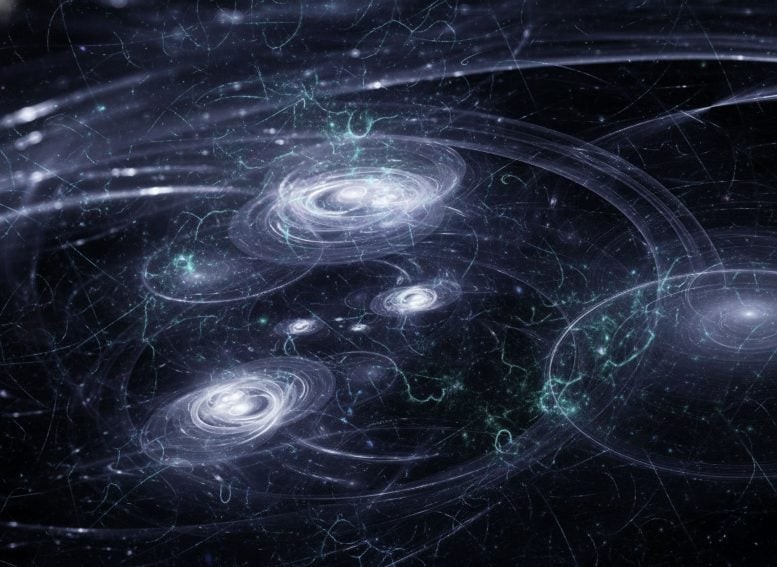
Figure 1. Quantum Network Could Help Detect the Universe’s Hidden Matter.
The results were striking: optimized networks consistently outperformed traditional methods, even when realistic noise was introduced. This demonstrates that the approach is feasible on today’s quantum devices. Figure 1 shows Quantum Network Could Help Detect the Universe’s Hidden Matter.
“Our goal was to figure out how to organize and fine-tune quantum sensors so they can detect dark matter more reliably,” said Dr. Le Bin Ho, lead author of the study. “The network structure plays a key role in enhancing sensitivity, and we’ve shown it can be achieved using relatively simple circuits.”
Beyond dark matter detection, these quantum sensor networks could advance technologies such as quantum radar, gravitational wave detection, and ultra-precise timekeeping. They might also one day boost GPS accuracy, improve brain imaging via MRI, or reveal hidden underground structures.
“This research shows that carefully designed quantum networks can push the boundaries of precision measurement,” Dr. Ho added. “It opens the door to deploying quantum sensors not just in laboratories, but in real-world tools that demand extreme sensitivity.”
Looking ahead, the team plans to expand this approach to larger, more noise-resistant networks, further advancing the quest for practical quantum sensing.
The Mystery of the Missing Matter
- The universe’s visible matter—stars, planets, gas, and dust—makes up less than 5% of its total mass. The rest is dark matter and dark energy, invisible yet detectable through their gravitational effects.
- Despite decades of searching, dark matter has never been directly detected. Traditional detectors rely on weak signals that easily vanish in background noise.
- Scientists are now turning to quantum technology—where particles exist in superpositions and can sense minute fluctuations—to seek answers that classical tools can’t reveal.
Building a Quantum Network for Discovery
- A team of physicists has proposed a quantum sensor network capable of detecting the faintest possible signals from dark matter.
- They tested various network designs (ring, line, star, and fully connected) using systems of four and nine qubits—tiny quantum bits that can represent multiple states at once.
- Using variational quantum metrology (an optimization method similar to training a machine-learning model) and Bayesian estimation to reduce noise, the team showed that these optimized networks outperform classical approaches—even on today’s imperfect quantum devices.
Beyond Dark Matter — The Future of Quantum Sensing
- Quantum sensor networks could revolutionize precision measurement far beyond cosmology.
- Potential applications include quantum radar, gravitational wave detection, ultra-precise atomic clocks, next-gen GPS, and advanced brain imaging.
- By scaling to larger networks and improving noise resistance, researchers aim to build systems capable of exploring both cosmic mysteries and real-world technologies.
- As Dr. Ho notes, “Carefully designed quantum networks could push the limits of what we can measure — turning quantum physics from a lab curiosity into a universal tool for discovery.”
Source: SciTECHDaily
Cite this article:
Priyadharshini S (2025), Scientists Propose Quantum Network to Uncover the Universe’s Missing Matter, AnaTechMaz, pp.236
Recent Post
-
Researchers Tackle Vanishing Gradients in Deep RNNs with Equilibrium Propagation
Equilibrium Propagation (EP) is emerging as a....
-
Researchers Create Scalable Repeaters for Long-Distance Internet Communication
Quantum repeaters are essential for enabling secure....
-
Scientists Warn: New WIFI Technology Can Identify People Without Their Devices
Researchers at the Karlsruhe Institute of Technology (KIT) have...
-

Surfshark Unveils Ultra-Fast 100 Gbps VPN Servers, Setting New Speed Benchmark
Surfshark has announced the deployment of 100 Gbps servers.....
-

Advanced Online Protection: Essential Tools for Modern Internet Security
In an era where cyber threats are smarter, stealthier, and...
-

Mississippi’s Age Verification Law Challenges Decentralized Social Networks
A sweeping new age assurance law in Mississippi has sparked debate over....
-
Cisco: AI Drives Need for More Dependable Optical Networking Components
Cisco warns that as AI-driven networks increasingly rely...
-

Digital Twin Technology for Networks Encounters Challenges
By leveraging digital twin technology, network teams can model complex networks in software...
-

California Reduces the Impact of Ads on Streaming Platforms
California lawmakers are dialing down the volume on streaming ads. On October 6, Gov. Gavin Newsom...
-

OceanGate’s ‘Titan’ Made 7 Dives with a Compromised Hull Before Imploding
The U.S. National Transportation Safety Board (NTSB) has concluded...
-
Scientists Propose Quantum Network to Uncover the Universe’s Missing Matter
The team explored various network architectures — including...
-

IBM Broadens its Professional Service Offerings for Cisco Firewall Solutions
IBM Technology Lifecycle Services (TLS) has added Cisco’s...
-
Arista Expands its Networking Portfolio with AI Solutions
The company is growing its R4 family of high-capacity devices with several new additions: the 7020...
-

Enhancing Protection Through an Integrated Security and Networking Platform
As networks evolve, the traditional perimeter has vanished. Every...
-

Google and the U.S. government clash over the future of online advertising
Google is preparing to face the U.S. government in federal...