

Cisco: AI Drives Need for More Dependable Optical Networking Components
Cisco warns that as AI-driven networks increasingly rely on optical components; enterprises must prioritize the reliability of these high-speed optics.

Figure 1. Cisco: AI Spurs Demand for More Reliable Optical Networking Components.
AI investments are projected to surge to $5.2 trillion by 2030, according to McKinsey Quarterly. Meanwhile, data center traffic is skyrocketing, with back-end traffic growing tenfold every two years and adoption of 800G and 1.6T speeds on the rise, reports Dell’Oro Group. Figure 1 shows Cisco: AI Spurs Demand for More Reliable Optical Networking Components.
Gartner highlighted a 2024 report from SemiAnalysis, which examined failure rates of optical transceivers in large GPU clusters. The study found that in a deployment with 100,000 GPUs, the sheer number of optical links and transceivers means failures could significantly disrupt AI training progress.
“And that aligns closely with what we’re hearing from customers—especially hyperscalers—about the challenges they face with link failures, whether it’s intermittent flapping or complete optic failures in their AI infrastructure,” Gartner said.
“If we were dealing with video, TCP/IP can usually bridge an error burst and retransmit without major issues,” Gartner explained. “But in AI infrastructure, GPUs operate in parallel and are highly sensitive to problems on even a single link. Since all GPUs exchange information in a synchronized manner, a link issue can force the workload to stop, roll back to a checkpoint, and restart. This can lead to a 40% drop in cluster performance when link errors occur.”
Reliability testing exposes weaknesses
Gartner recalled that Cisco previously conducted a reliability test using 20 different optics from various suppliers. “These were 100G and 400G optics at the time, all compliant with industry standards, yet none passed our stress test,” he said.
Cisco subjects its optics to rigorous testing by varying conditions such as temperature, humidity, voltage levels, and signal skew from the host. “We do all of those things in various combinations,” Gartner explained.
Even if optics meet industry standards, “we know that under stressful conditions … they wouldn’t perform,” he said. “That’s what we’re trying to raise awareness of for our customers.”
“When you start pushing every parameter to its limit—and sometimes slightly beyond—how does the optic perform?” Gartner added.
He described this as a warning flare for enterprise customers, neocloud players, and hyperscalers: optics are an area that deserves much more attention.
Optics account for a growing share of hardware costs
Enterprise customers are major consumers of Cisco optics, and Gartner highlighted how their pricing has evolved. “At 10G, optics were roughly 10% of the box cost, with the switch or router port at 90%. At 100G, it’s about 50/50. At 400G and certainly 800G, more than half the cost is in the optic,” he said. “So optics should be considered core components across your portfolio, not just accessories.”
In enterprise AI clusters, optical components range from short-reach optics connecting GPUs within a rack to higher-speed links for nearby devices, 400G/800G pluggable optics for tying together clusters and leaf fabrics, and coherent pluggable optics for linking multiple data centers over kilometers.
Cisco provides a full optical platform spanning the entire networking spectrum, from components via its Acacia division to ASICs, software, security, and management systems. Competitors like Arista, HPE/Juniper, Ciena, and Nokia cover portions of the optical ecosystem but often rely on partners or merchant optics to complete their offerings.
Looking ahead: CPO and LPO reliability
Future optical technologies, such as co-packaged optics (CPO) and linear pluggable optics (LPO), will also need to pass strict reliability tests.
“The theory is that CPO will ultimately deliver higher reliability,” Gartner said. In CPO, a photonic integrated circuit is connected to silicon, with the laser remaining pluggable and separate. “The packaged assembly—the silicon plus the optic chip—is mostly silicon, which should provide very high reliability.”
However, he urged caution. “A CPO assembly may have 1,000 or more fiber connections attached to silicon. The industry will need a learning curve to achieve high yield and reliability.” More fiber connections can create yield challenges early in the lifecycle, which often translate into field issues.
“Longer term, CPO has the potential for higher reliability. But in the short term, we must ensure that manufacturing challenges, particularly in fiber attach, don’t introduce field problems,” Gartner said.
Source: NETWORK WORLD
Cite this article:
Priyadharshini S (2025), AI Drives Need for More Dependable Optical Networking Components, AnaTechMaz, pp.232
Recent Post
-
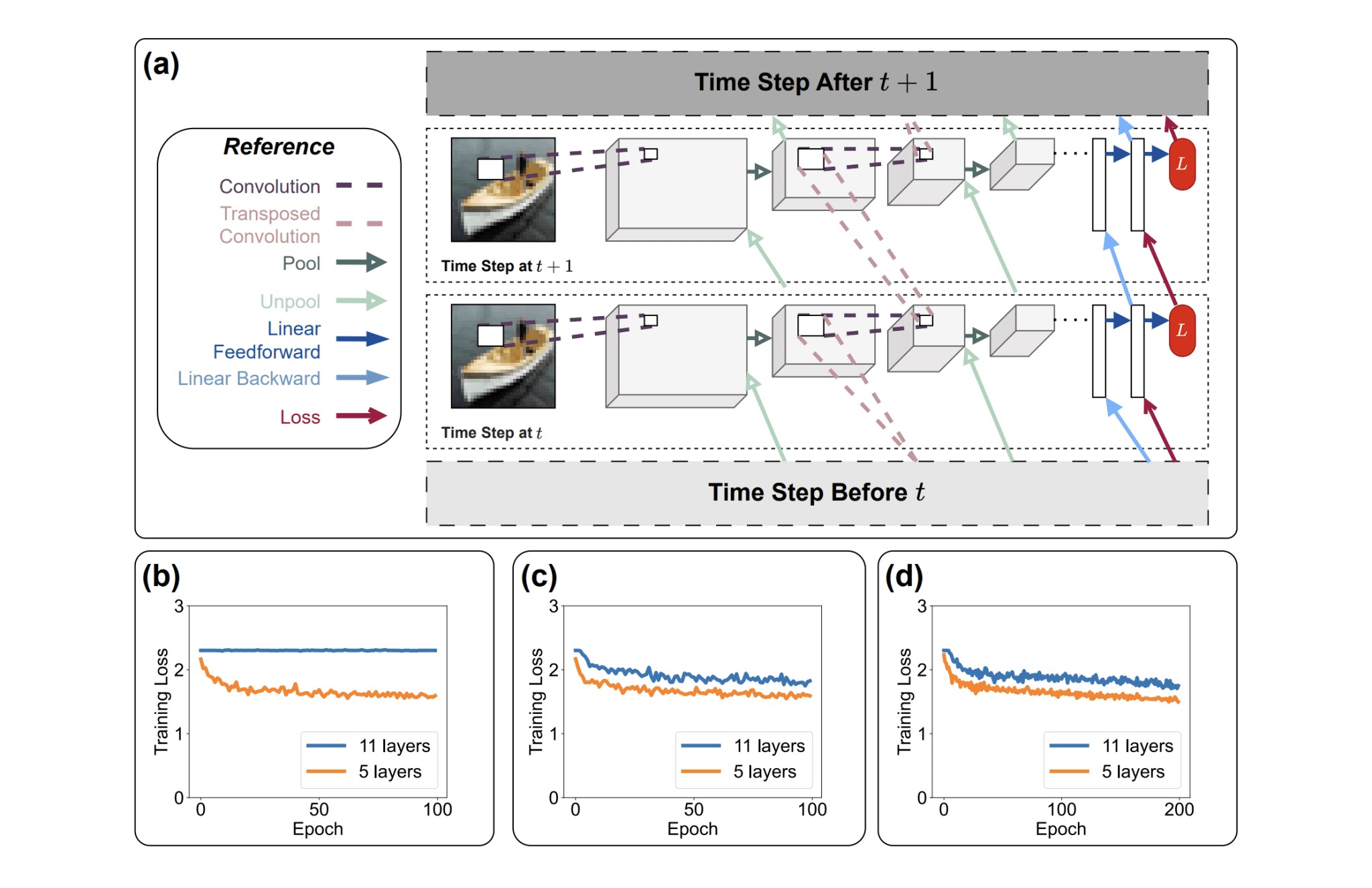
Researchers Tackle Vanishing Gradients in Deep RNNs with Equilibrium Propagation
Equilibrium Propagation (EP) is emerging as a....
-
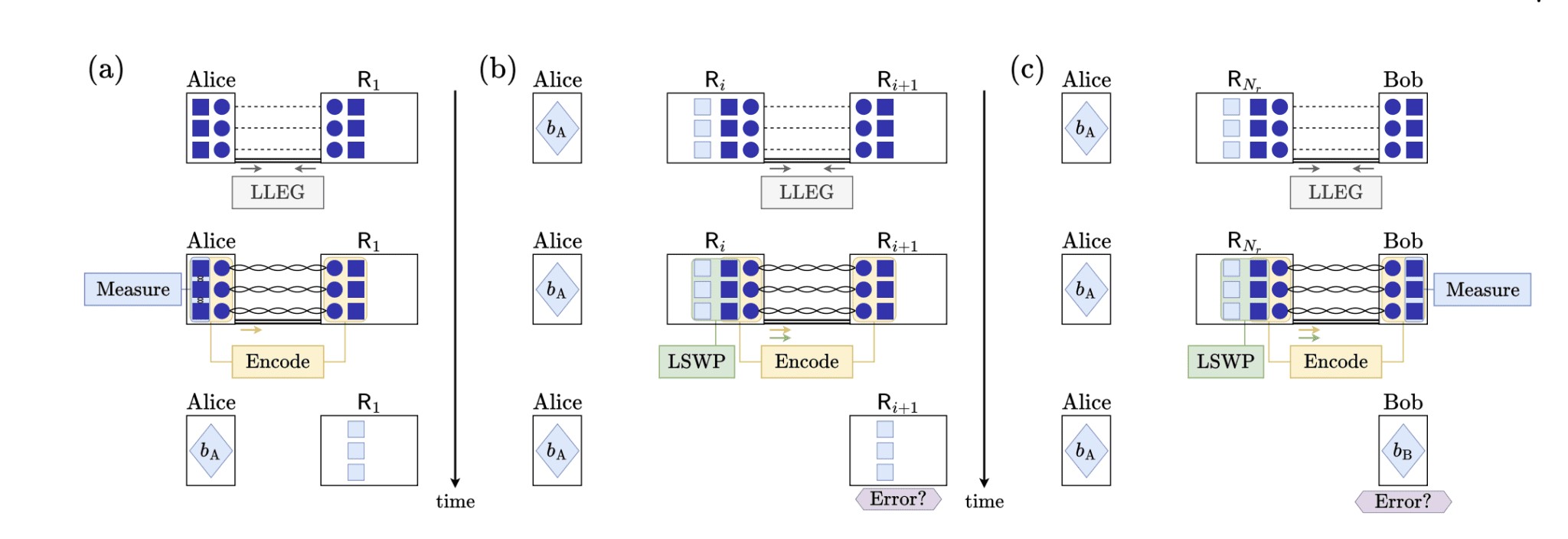
Researchers Create Scalable Repeaters for Long-Distance Internet Communication
Quantum repeaters are essential for enabling secure....
-
Scientists Warn: New WIFI Technology Can Identify People Without Their Devices
Researchers at the Karlsruhe Institute of Technology (KIT) have...
-

Surfshark Unveils Ultra-Fast 100 Gbps VPN Servers, Setting New Speed Benchmark
Surfshark has announced the deployment of 100 Gbps servers.....
-

Advanced Online Protection: Essential Tools for Modern Internet Security
In an era where cyber threats are smarter, stealthier, and...
-

Mississippi’s Age Verification Law Challenges Decentralized Social Networks
A sweeping new age assurance law in Mississippi has sparked debate over....
-
Cisco: AI Drives Need for More Dependable Optical Networking Components
Cisco warns that as AI-driven networks increasingly rely...
-

Digital Twin Technology for Networks Encounters Challenges
By leveraging digital twin technology, network teams can model complex networks in software...
-

California Reduces the Impact of Ads on Streaming Platforms
California lawmakers are dialing down the volume on streaming ads. On October 6, Gov. Gavin Newsom...
-
OceanGate’s ‘Titan’ Made 7 Dives with a Compromised Hull Before Imploding
The U.S. National Transportation Safety Board (NTSB) has concluded...
-

Scientists Propose Quantum Network to Uncover the Universe’s Missing Matter
The team explored various network architectures — including...
-

IBM Broadens its Professional Service Offerings for Cisco Firewall Solutions
IBM Technology Lifecycle Services (TLS) has added Cisco’s...
-

Arista Expands its Networking Portfolio with AI Solutions
The company is growing its R4 family of high-capacity devices with several new additions: the 7020...
-

Enhancing Protection Through an Integrated Security and Networking Platform
As networks evolve, the traditional perimeter has vanished. Every...
-

Google and the U.S. government clash over the future of online advertising
Google is preparing to face the U.S. government in federal...