

OceanGate’s ‘Titan’ Made 7 Dives with a Compromised Hull Before Imploding
The U.S. National Transportation Safety Board (NTSB) has concluded its investigation into the OceanGate Titan submersible disaster. In a summary report released on October 15, the agency stated that an already weakened hull caused the vessel to implode during its June 2023 journey to the RMS Titanic wreck, killing all five passengers aboard.
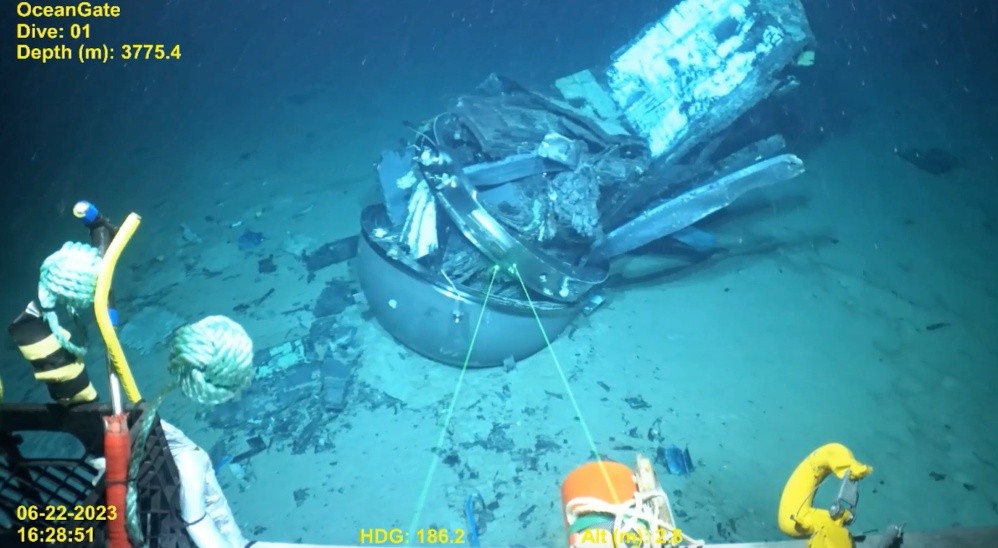
Figure 1. OceanGate’s ‘Titan’ Completed 7 Voyages with a Weakened Hull Before Its Fatal Implosion.
Investigators found that the submersible was not damaged immediately before its final dive. Instead, initial fractures, called delaminations, had formed in its carbon fiber composite hull during an earlier dive in July 2022—eight missions prior. Figure 1 shows OceanGate’s ‘Titan’ Completed 7 Voyages with a Weakened Hull Before Its Fatal Implosion.
The NTSB report stated that the Titan’s pressure vessel likely sustained damage after surfacing from dive 80 in the form of one or more delaminations, which weakened the hull. Additional damage “of unknown origin” further compromised the submersible after dive 82.
“The existing delaminations, combined with subsequent damage between dive 82 and the final dive (dive 88), caused a local buckling failure that led to the Titan’s implosion,” the summary reads.
Investigators also described the vessel’s engineering process as “inadequate,” resulting in multiple structural anomalies that failed to meet the strength and durability required for repeated dives to depths exceeding 10,700 feet. The NTSB added that OceanGate’s analysis of real-time monitoring data was flawed, leaving the company unaware that Titan had been damaged and should have been immediately retired after dive 80.
On June 18, 2023, OceanGate lost contact with the submersible about 105 minutes into its roughly 2.5-mile journey to the Titanic wreck. The subsequent international search covered more than 10,000 square miles of the Atlantic. After four days, dive teams recovered the first debris, confirming the deaths of all five passengers, including OceanGate CEO Stockton Rush.
In September 2024, the U.S. Coast Guard released a map showing Titan’s 322,917-square-foot debris field about 1,600 feet from the Titanic’s bow. At its last known depth of 11,033 feet, the ocean exerts 5,500 pounds per square inch of pressure—enough to cause the submersible to implode in less than 20 milliseconds, faster than the human brain could process.
Source: POPULAR SCIENCE
Cite this article:
Priyadharshini S (2025), OceanGate’s ‘Titan’ Made 7 Dives with a Compromised Hull Before Imploding, AnaTechMaz, pp.235
Recent Post
-
Researchers Tackle Vanishing Gradients in Deep RNNs with Equilibrium Propagation
Equilibrium Propagation (EP) is emerging as a....
-
Researchers Create Scalable Repeaters for Long-Distance Internet Communication
Quantum repeaters are essential for enabling secure....
-
Scientists Warn: New WIFI Technology Can Identify People Without Their Devices
Researchers at the Karlsruhe Institute of Technology (KIT) have...
-
Surfshark Unveils Ultra-Fast 100 Gbps VPN Servers, Setting New Speed Benchmark
Surfshark has announced the deployment of 100 Gbps servers.....
-

Advanced Online Protection: Essential Tools for Modern Internet Security
In an era where cyber threats are smarter, stealthier, and...
-

Mississippi’s Age Verification Law Challenges Decentralized Social Networks
A sweeping new age assurance law in Mississippi has sparked debate over....
-
Cisco: AI Drives Need for More Dependable Optical Networking Components
Cisco warns that as AI-driven networks increasingly rely...
-

Digital Twin Technology for Networks Encounters Challenges
By leveraging digital twin technology, network teams can model complex networks in software...
-

California Reduces the Impact of Ads on Streaming Platforms
California lawmakers are dialing down the volume on streaming ads. On October 6, Gov. Gavin Newsom...
-
OceanGate’s ‘Titan’ Made 7 Dives with a Compromised Hull Before Imploding
The U.S. National Transportation Safety Board (NTSB) has concluded...
-

Scientists Propose Quantum Network to Uncover the Universe’s Missing Matter
The team explored various network architectures — including...
-

IBM Broadens its Professional Service Offerings for Cisco Firewall Solutions
IBM Technology Lifecycle Services (TLS) has added Cisco’s...
-

Arista Expands its Networking Portfolio with AI Solutions
The company is growing its R4 family of high-capacity devices with several new additions: the 7020...
-

Enhancing Protection Through an Integrated Security and Networking Platform
As networks evolve, the traditional perimeter has vanished. Every...
-

Google and the U.S. government clash over the future of online advertising
Google is preparing to face the U.S. government in federal...