

Erosion Could Be the Most Exciting Roguelike Since Hades
Nearly six years after its full release, Hades remains one of the most influential narrative-driven roguelikes ever created. By weaving story progression seamlessly into repeated runs, the game transformed expectations for a genre traditionally defined by emergent gameplay rather than structured storytelling.
Many titles have since borrowed elements of Hades’ narrative formula, but few have pushed the concept forward in a meaningful way. That may soon change with Erosion, the next project from Plot Twist, the studio behind The Last Case of Benedict Fox.
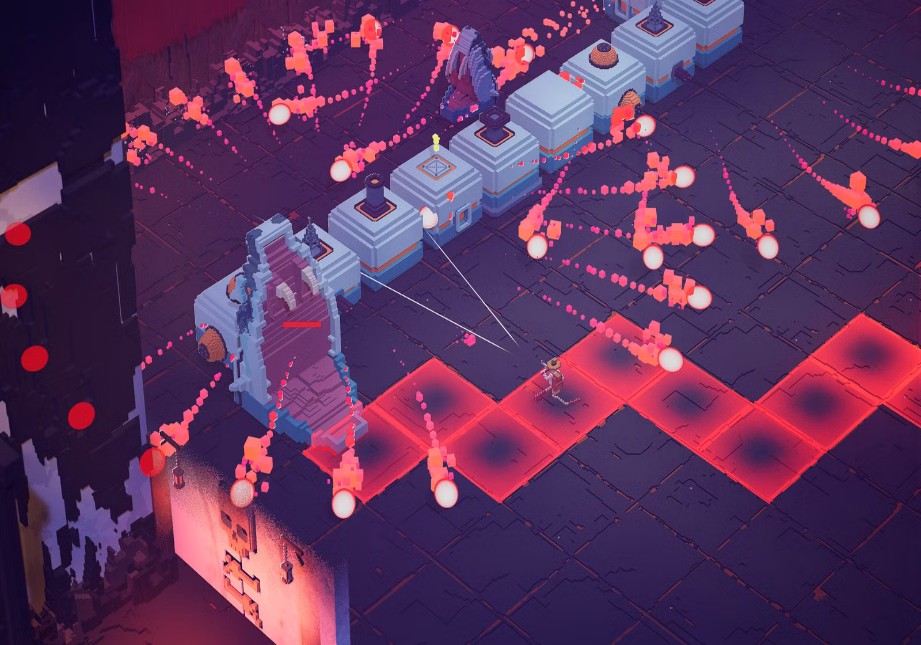
Figure 1. Dungeon of Decades.
A hands-on demo at Summer Game Fest revealed a roguelike that blends fast-paced combat with an ambitious narrative system centered on the passage of time. While the demo lasted only 30 minutes, it showcased a design philosophy that could set Erosion apart from its contemporaries. Figure 1 shows dungeon of decades.
The game follows a protagonist whose daughter has been abducted and taken deep into a mysterious dungeon. Players must descend into its depths to rescue her, but failure comes at a unique cost. Every three deaths advance the world by a decade, permanently altering the game's overworld and reshaping the journey. As time passes, the daughter grows older, and player decisions can dramatically transform entire regions.
Combat forms the backbone of the experience. Erosion embraces tight twin-stick shooting mechanics reminiscent of classics like Enter the Gungeon while maintaining a distinct identity of its own. Movement feels fluid and responsive, allowing players to weave through enemy attacks while unleashing an arsenal that ranges from whips to powerful laser weapons.
Each encounter rewards players with upgrades that gradually shape their build. Stat boosts, armor-piercing abilities, and other modifiers encourage experimentation, ensuring that no two runs feel exactly alike. The game’s striking voxel-based art style further enhances the action, with destructible environments crumbling under heavy fire and creating visually dynamic battles.
What truly elevates Erosion, however, is the way it integrates player performance into its narrative structure. During the demo, examples of decade-long time jumps revealed a world that reacts organically to player choices. A farm liberated from bandits in one era appeared abandoned in the next, while alternative outcomes could see the same location evolve into a sprawling outlaw stronghold.
This approach creates a narrative driven less by scripted dialogue and more by consequence. Unlike Hades, where character interactions and conversations fuel progression, Erosion allows the world itself to tell the story [1]. Every failure, success, and decision contributes to a personalized timeline that shapes the player's experience.
Remarkably, developers confirmed that highly skilled players can complete the game without ever triggering significant time progression, potentially finishing the adventure in a single run. This flexibility suggests a narrative system capable of producing vastly different stories depending on player skill and decision-making.
Where Hades revolutionized roguelike storytelling through exceptional writing and presentation, Erosion appears poised to advance the genre through player agency and world evolution. By embracing the emergent storytelling roots of roguelikes while introducing meaningful long-term consequences, it offers a fresh perspective on how narratives can unfold within the genre.
Based on this early glimpse, Erosion has the potential to become one of the most innovative roguelikes in years—and perhaps the first game since Hades to genuinely redefine what narrative-driven roguelikes can achieve.
References:
- https://www.polygon.com/erosion-preview-summer-game-fest-2026/
Cite this article:
Keerthana S (2026), Erosion Could Be the Most Exciting Roguelike Since Hades, AnaTechMaz, pp.438
Recent Post
-
The Creative Process Behind TF2 Is Something AI Can’t Replace
As artificial intelligence continues to make its way into game development workflows, debates about...
-

stuntman: Hollywood is a Bold Idea Still Finding its Footing
The long-dormant Stuntman franchise is making a return, and this time it's bringing some of Hollywood’s....
-
Erosion Could Be the Most Exciting Roguelike Since Hades
Nearly six years after its full release, Hades remains one of the most influential narrative-driven...
-
Collectors Rush for Lego’s Legend of Zelda Set Before It’s Gone
Fans of The Legend of Zelda may want to act quickly, as Lego’s highly sought-after Great Deku Tree ...
-

Expedition 33 Unveils a Distinctly French Merchandise Collection
Fans eagerly awaiting the next project from Sandfall Interactive may have a long wait ahead, but a...
-

Shion Shakes Up Overwatch with a Surprising Gameplay Reveal
Blizzard Entertainment has officially pulled back the curtain on Shion, the newest hero joining Overwatch, and ...
-
Gaming’s Biggest Release Day Just Got a Little Less Crowded
The battle for players’ attention in late 2026 has become one of the fiercest in recent gaming history,...