

A Doomed Experiment Sparks New Hope in Metroid Prime 4: Beyond
All hope has faded for the Lamorn. By the time Samus Aran arrives on the distant planet of Viewros, the once-powerful psychic species appears virtually wiped out. No signs of life remain, and every attempt they made to escape an existential catastrophe has failed. Their final act is a desperate one: trusting that a future Chosen One will preserve their memories and carry their legacy across the galaxy.
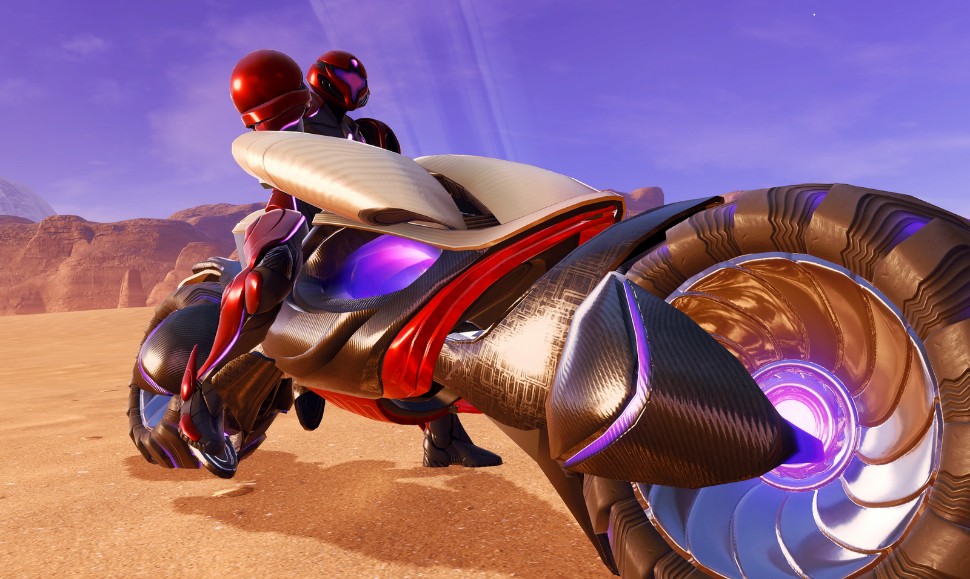
Figure 1. Metroid Prime 4: Beyond Finds Light in a Failed Experiment.
It’s a fitting backdrop for Metroid Prime 4: Beyond, a long-awaited sequel that has survived its own near-extinction. First announced in 2017, then fully rebooted in 2019 after a troubled start with Bandai Namco, the project was handed to Retro Studios in hopes of saving it. In many ways, the Lamorn’s story mirrors the game’s development — a struggle between despair and belief, hinging on someone else picking up the pieces. Figure 1 shows Metroid Prime 4: Beyond Finds Light in a Failed Experiment.
The result is a determined restoration effort, one that stitches together a vision fractured by its turbulent history. Though the tone wavers between quiet sci-fi introspection and brash military spectacle, its clearest moments place Samus in one of the most impressive alien worlds the series has ever crafted. It’s a testament that even something seemingly doomed can still be worth rescuing.
Metroid Prime 4 breaks from series tradition by starting at full throttle. A title card reveals that Sylux — the elusive bounty hunter teased in post-credits scenes for nearly 20 years — has launched an assault on the Galactic Federation. Samus is thrust straight into a battlefield, mowing down Space Pirates alongside Federation soldiers. The intro efficiently reintroduces the series’ signature first-person systems: the clever lock-on aiming that prioritizes mobility over precision, and the scanning visor that rewards curiosity with lore and enemy data. More importantly, it sets up what should be an electrifying clash with a long-teased nemesis.
That promise never materializes. Sylux is abruptly removed from the narrative when Samus is accidentally transported to Viewros, and his later appearances offer almost nothing new about his motives. He ends up feeling irrelevant — as do the Metroids he supposedly commands after stealing them from the Federation at the end of Metroid Prime: Federation Force. (In a strange twist, Prime 4 functions more as a sequel to that maligned 3DS spin-off than to Metroid Prime 3: Corruption.) It’s one of the earliest hints that major rewrites occurred after the game’s reboot, leaving behind remnants of an abandoned storyline.
Retro Studios instead leans into a quieter, more atmospheric narrative reminiscent of the original Metroid Prime’s subtle melancholy. Stranded on Viewros, Samus gains psychic powers that let her uncover the history of the Lamorn, the planet’s now-vanished civilization. The emotional core unfolds through lore entries and recorded transmissions left by Lamorn priests. Though Samus’ mission is to escape, she embraces a new purpose: preserving the Lamorn legacy by storing their collective memories in the Memory Fruit and spreading their story across the galaxy. It’s an engaging premise that echoes the Chozo extinction arc from the first game — only this time, Samus might actually be able to save what’s left of a lost race.
The Lamorn are the true heart of Metroid Prime 4, even if they survive only through the remnants Samus can scan. Viewros — divided into five biomes linked by a sprawling desert hub known as Sol Valley — is shaped entirely around their lost culture. Fury Green, the first major area, highlights their spirituality and harmony with nature: a sacred temple sits deep within a dense jungle teeming with birds and insects, each creature offering a detailed ecological profile when scanned. Volt Forge tells a different story, revealing a technologically advanced species entering a machine age through its AI-driven motorcycle factory. Every piece of their world contributes to some of the strongest environmental storytelling the series has ever delivered.
At times, the design feels like another remnant of an abandoned draft. Early on, Sol Valley suggests openness: I’m told I can travel to any of three remaining biomes to recover teleporter keys needed to activate an ancient machine and leave the planet. It sounds like a push toward a more open-ended Metroid, but the freedom is mostly illusion. The first biome I choose presents an immediate roadblock, pushing me to another area for a required upgrade. That second biome then halts my progress too, forcing me back to the first. There’s only one correct sequence, even if the game pretends otherwise.
Sol Valley mirrors that constraint in its own limited open-world design. It’s small enough to cross in minutes, and the sandy expanse largely serves as a corridor for Vi-0-La, Samus’ motorcycle. The bike handles well enough unless you’re trying sharp turns, but the valley offers little beyond a few scattered collectibles and shrine-like puzzles hiding upgrades. Activities unlock in a fixed order, and the space mainly exists so Samus can crash through green crystals to charge the Memory Fruit. Even combat is sparse, confined to a few enemy types easily dispatched with the bike’s energy cannon. The whole setup feels like a remnant of a Breath of the Wild-style reinvention that never fully materialized.
Ironically, Metroid Prime 4 only truly clicked once I realized how deeply it channels Zelda. Structurally, it’s not a Metroid game at all — it’s a classic 3D Zelda in disguise. Sol Valley functions much like Ocarina of Time’s Hyrule Field: a wide hub that adds scale but isn’t a true open world. The biomes operate more like elaborate dungeons than freeform exploratory spaces, each one a puzzle-filled labyrinth centered on acquiring key items that unlock new routes. Gear gating happens at a local, dungeon level rather than across the entire world.
That shift pays off in the game’s back half, where item hunting becomes more rewarding. Instead of upgrades being locked behind obvious doors, missile expansions, energy tanks, and elemental ammo are woven into clever environmental puzzles — many hidden in plain sight. A spiderweb burnt with a fire shot, a crate opened with a psychic lasso, a seemingly mundane vehicle that reveals itself as a late-game puzzle piece. This abundance of ideas makes Samus’ arsenal feel more flexible, leading to standout morph ball and grapple challenges. Taken together, these strengths push Metroid Prime 4 close to the series’ best work, quirks and all.
Source: Polygon
Cite this article:
Priyadharshini S (2025), A Doomed Experiment Sparks New Hope in Metroid Prime 4: Beyond, AnaTechMaz, pp.354
Recent Post
-
Slots & Daggers Brings Slay the Spire Mechanics to a Slot Machine
A faint glow emanates from the back of a medieval tavern, where a crowd has gathered around a curious...
-
Steam Game Prices Keep Dropping While Console Games Become More Expensive
PC games have long been seen as more affordable than their console...
-

Zootopia 2 Demonstrates How Humor Can Tackle Serious Themes
Early in Zootopia 2, the Zootopia Police Department honors ambitious bunny cop Judy Hopps (Ginnifer Goodwin)...
-
A Forgotten Fortnite Rival That Sank Its Studio Still Merited More Than 30 Days of Life
Some video game failures end up feeling like milestones....
-
Fallout: New Vegas — From Launch Flop to Modern-Day Masterpiece
With the second season of Prime Video's Fallout arriving next month, the series is fresh on my mind...
-

Bird Game 3 Becomes the Web’s Hottest Hit
Bird Game 3 has taken over TikTok, but if you’re confused about missing the first two games, there’s a simple...
-
Black Friday Deals Slash Prices on Dozens of Game Awards Nominees
Black Friday has arrived, making it the perfect time to snag some savings on the year’s top games. Unsure which...
-
Megabonk Makes Fan-Voted Game Awards Ballot Even After Developer Withdrawal
Megabonk developer Vedinad surprised many when he withdrew his game...
-
A Doomed Experiment Sparks New Hope in Metroid Prime 4: Beyond
All hope has faded for the Lamorn. By the time Samus Aran arrives on the distant planet of Viewros, the...
-
New Let It Die Installment Packed with AI-Generated Content
Let It Die: Inferno, the sequel to 2016's quirky hack-and-slash game Let It Die, is set to launch on Dec. 3. The game...
-

The Rush to Bring Bird Game 3 to Life Has Already Begun
Even though Bird Game 3 is nothing more than an AI-generated concept, it’s dominating TikTok with millions of...
-

Fortnite Players Might Visit South Park in an Upcoming Update
It appears we might be heading to South Park in Fortnite soon, if a new leak is to be believed. Well-known...
-
New Mario Kart World Update Quietly Delivers Major Improvements, According to Players
Mario Kart World’s biggest hook is its...
-
Nintendo Switch 2 Bundle Remains Discounted Even After Cyber Monday
In an unexpected continuation of holiday deals, the Nintendo Switch....
-
Defending the Sims 4’s SpongeBob Kits
Apparently, SpongeBob SquarePants transcends the Simlish language barrier—his world has officially arrived in...