

Scientists Monitored a Giant Solar Region for 94 Days — Here’s What They Found
Tangled Magnetic Fields Trigger Solar Storms
Active regions on the sun are shaped by intense, twisted magnetic fields. These fields form when highly magnetized plasma pushes up to the sun’s surface, sometimes erupting in violent events. During solar storms, the sun emits bursts of electromagnetic radiation, known as flares, and launches streams of plasma and high-energy particles into space.
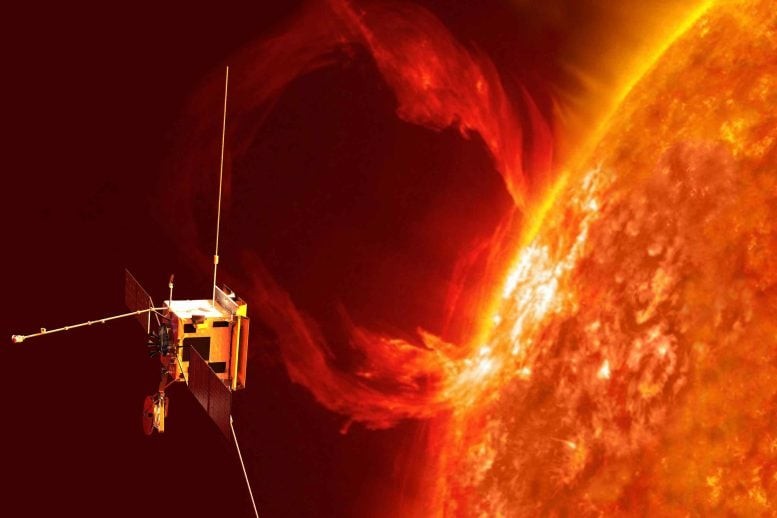
Figure 1. Tracking a Massive Solar Region for 94 Days: Key Discoveries.
The impact of these outbursts goes beyond dazzling auroras. They can disrupt essential technologies, causing power outages on Earth, interfering with communications, increasing radiation exposure for airline crews, and damaging satellites. For instance, in February 2022, 38 out of 49 Starlink satellites launched by SpaceX were lost within just two days. Figure 1 shows Tracking a Massive Solar Region for 94 Days: Key Discoveries.
“Even railway signals can be affected, switching from red to green or vice versa,” notes Harra. “That’s quite alarming.” NOAA 13664 also created widespread disruptions in May 2024. “Modern digital agriculture was hit hard,” explains the scientist. “Satellites, drones, and sensor networks were disrupted, leading to lost workdays and significant crop losses.”
“It's a reminder that the sun is the only star that directly influences our daily lives,” adds Kontogiannis. “Since we live with this star, it’s vital to observe it and understand how it works and affects our environment.”
Thanks to space probe data, scientists were able to track a solar region across three rotations for the first time, witnessing how its magnetic field evolved through multiple episodes into a highly complex, intertwined structure. This development ultimately culminated in the release of the strongest solar flare in two decades, erupting from the far side of the sun on 20 May 2024.
Forecasting Space Weather
Researchers hope that these observations will enhance our understanding of solar storms and their potential effects on Earth. The goal is to improve space weather forecasts so that vulnerable modern technologies can be better safeguarded. “When we observe a region on the sun with an extremely complex magnetic field, we know there’s a huge amount of energy that will eventually be released as solar storms,” explains Harra.
At present, however, scientists cannot predict how powerful an eruption will be, whether a single strong flare or multiple smaller ones will occur, or exactly when they will happen. “We’re not there yet,” says the scientist. “But the European Space Agency is developing a new probe called Vigil, dedicated entirely to advancing our understanding of space weather.” The mission is scheduled for launch in 2031.
Source: SciTECHDaily
Cite this article:
Priyadharshini S (2026), Scientists Monitored a Giant Solar Region for 94 Days — Here’s What They Found, AnaTechMaz, pp.656
Recent Post
-

Unprecedented Gamma-Ray Explosion Lasted 7 Hours, Baffles Scientists
Building on earlier findings, a research team led by Jonathan Carney, a...
-
Scientists Stunned as Neutron Star Brightens 100-Fold Overnight
A research team has investigated long-term variations in the X-ray emissions of the neutron star NGC 7793...
-

Stunning Discovery: Exoplanet Caught Orbiting Two Suns Like ‘Tatooine
The Northwestern team uncovered the new exoplanet by revisiting data...
-
Titan’s “Hidden Ocean” Might Be a Myth—And That Could Rewrite What We Know
Launched in 1997, Cassini spent nearly 20 years studying Saturn and its..
-

What Appeared to Be a Planet Turned Out to Be a Violent Cosmic Collision
For many years, astronomers have questioned the true nature of a bright...
-

Dark Energy in Flux: Insights from Supercomputer Simulations
Emerging observations are starting to question the traditional view of dark energy as a constant...
-

Astronomers Stunned by Discovery of a Completely New Exoplanet with a Strange Atmosphere
The newly discovered planet, PSR J2322-2650b, orbits a rapidly rotating...
-
Webb Telescope Discovers the Most Distant Supernova in the Universe
The key finding came from focused observations made with JWST’s Near...
-

Astronomers Crack the Long-Standing Mystery of Betelgeuse
Using the Hubble Space Telescope alongside ground-based instruments at the Fred Lawrence Whipple...

NASA Captures a “Dead” Star Reawakening in Dazzling X-Ray Detail
In intermediate polar systems, gas spirals inward through a rotating...
-
Scientists Monitored a Giant Solar Region for 94 Days — Here’s What They Found
Active regions on the sun are shaped by intense, twisted magnetic fields...
-

Astronomers May Have Spotted Signs of the Most Massive Stars Ever Observed
The distant universe may be filled with gigantic stars weighing..
-
World’s Farthest Spacecraft Voyager 1 Nears Distance of One Light-Day from Earth
NASA’s Voyager 1 and Voyager 2 remain the longest-operating...
-

US Space Solar Company Sets New World Record for Transmitting Power Wirelessly from Space
Space-based solar power company Star Catcher Industries has achieved...
-

US Company Developing ‘Space Gun’ Capable of Launching Satellites
Longshot, an aerospace startup founded in 2021, is building a ground..