

Scientists Stunned as Neutron Star Brightens 100-Fold Overnight
A research team has investigated long-term variations in the X-ray emissions of the neutron star NGC 7793 P13, thought to be fueled by supercritical accretion. In this process, enormous amounts of gas fall onto the neutron star, producing extremely intense X-rays. The team identified a link between the star’s X-ray luminosity and its rotation rate, providing important clues that could help clarify the mechanisms behind supercritical accretion.
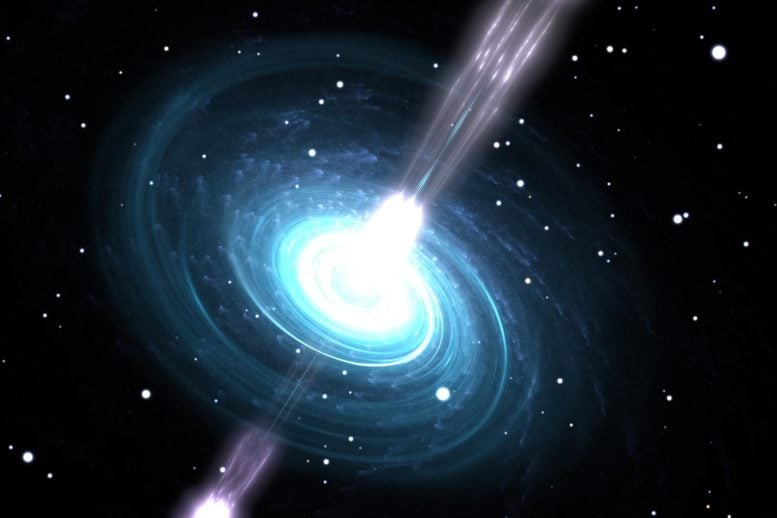
Figure 1. Neutron Star Surges to 100× Brightness Overnight, Baffling Scientists.
When gas is drawn in by the strong gravity of a compact object, such as a neutron star or black hole—a process called accretion—it emits energy as electromagnetic radiation. With the advent of highly sensitive telescopes, astronomers have detected sources with extraordinarily powerful X-ray emissions. Figure 1 shows Neutron Star Surges to 100× Brightness Overnight, Baffling Scientists.
To investigate this phenomenon, the team focused on NGC 7793 P13 (hereafter, P13), a neutron star experiencing supercritical accretion in the galaxy NGC 7793, located roughly 10 million light-years from Earth. As matter spirals inward toward the neutron star, its powerful magnetic field channels the inflowing gas toward the magnetic poles, forming tall, narrow structures called accretion columns. These columns are thought to be the primary source of the system’s intense X-ray emissions.
As the neutron star rotates, its X-ray emission can manifest as regular, repeating pulses synchronized with its spin. Previous studies determined that P13 has a rotation period of approximately 0.4 seconds and that its spin rate steadily increases over time.
Over roughly a decade, the system’s X-ray brightenss also fluctuated dramatically, varying by more than a factor of 100. While both the spin behavior and X-ray luminosity provide valuable insights into the rate at which material is accreting onto the neutron star, no clear relationship between these two properties had been established for P13.
Long-Term Variability and Insights into Supercritical Accretion
The team analyzed the long-term evolution of P13’s X-ray luminosity and rotation period from 2011 to 2024 using archival data from XMM-Newton, Chandra, NuSTAR, and NICER. They observed that P13 was in a faint state in 2021 but began brightening in 2022, eventually reaching a high luminosity by 2024—more than 100 times brighter than in 2021. During this rebrightening phase, the rate of spin acceleration doubled and remained elevated through 2024, suggesting a strong link between the inflow of material and the star’s rotational dynamics.
These findings indicate a connection between X-ray luminosity and the neutron star’s rotation rate, suggesting that the accretion system underwent changes during the faint phase. The team then turned their attention to the pulsations for more detailed analysis and proposed that the height of the accretion column varied in tandem with the decade-long flux modulation. These results provide important clues that may help unravel the underlying mechanism of supercritical accretion.
The Mysterious Neutron Star
Introduce the neutron star NGC 7793 P13 and its extreme environment. Explain that it is undergoing supercritical accretion, where massive amounts of gas fall onto the star, producing intense X-ray emissions. Highlight that such systems are rare and provide a natural laboratory for studying the physics of extreme gravity and magnetism.
The Sudden Brightening
Detail the dramatic observation: the neutron star’s X-ray brightness increased by a factor of 100 over a very short time. Describe how this was detected using telescopes like XMM-Newton, Chandra, NuSTAR, and NICER. Discuss what makes this spike surprising, emphasizing that such rapid changes are unusual in neutron stars and hint at shifts in the accretion process.
Unlocking the Secrets of Supercritical Accretion
Explore the scientific implications of the brightness surge. Explain how the change in X-ray luminosity is linked to the star’s rotation rate and the possible variations in accretion column height. Highlight that these findings provide crucial insights into the mechanism of supercritical accretion, offering a rare glimpse into how matter behaves under extreme conditions.
Source: SciTECHDaily
Cite this article:
Priyadharshini S (2025), Scientists Stunned as Neutron Star Brightens 100-Fold Overnight, AnaTechMaz, pp.647
Recent Post
-

Unprecedented Gamma-Ray Explosion Lasted 7 Hours, Baffles Scientists
Building on earlier findings, a research team led by Jonathan Carney, a...
-
Scientists Stunned as Neutron Star Brightens 100-Fold Overnight
A research team has investigated long-term variations in the X-ray emissions of the neutron star NGC 7793...
-

Stunning Discovery: Exoplanet Caught Orbiting Two Suns Like ‘Tatooine
The Northwestern team uncovered the new exoplanet by revisiting data...
-

Titan’s “Hidden Ocean” Might Be a Myth—And That Could Rewrite What We Know
Launched in 1997, Cassini spent nearly 20 years studying Saturn and its..
-

What Appeared to Be a Planet Turned Out to Be a Violent Cosmic Collision
For many years, astronomers have questioned the true nature of a bright...
-

Dark Energy in Flux: Insights from Supercomputer Simulations
Emerging observations are starting to question the traditional view of dark energy as a constant...
-

Astronomers Stunned by Discovery of a Completely New Exoplanet with a Strange Atmosphere
The newly discovered planet, PSR J2322-2650b, orbits a rapidly rotating...
-
Webb Telescope Discovers the Most Distant Supernova in the Universe
The key finding came from focused observations made with JWST’s Near...
-

Astronomers Crack the Long-Standing Mystery of Betelgeuse
Using the Hubble Space Telescope alongside ground-based instruments at the Fred Lawrence Whipple...

NASA Captures a “Dead” Star Reawakening in Dazzling X-Ray Detail
In intermediate polar systems, gas spirals inward through a rotating...
-
Scientists Monitored a Giant Solar Region for 94 Days — Here’s What They Found
Active regions on the sun are shaped by intense, twisted magnetic fields...
-

Astronomers May Have Spotted Signs of the Most Massive Stars Ever Observed
The distant universe may be filled with gigantic stars weighing..
-
World’s Farthest Spacecraft Voyager 1 Nears Distance of One Light-Day from Earth
NASA’s Voyager 1 and Voyager 2 remain the longest-operating...
-

US Space Solar Company Sets New World Record for Transmitting Power Wirelessly from Space
Space-based solar power company Star Catcher Industries has achieved...
-

US Company Developing ‘Space Gun’ Capable of Launching Satellites
Longshot, an aerospace startup founded in 2021, is building a ground..