

Titan’s “Hidden Ocean” Might Be a Myth—And That Could Rewrite What We Know
Cassini’s Two-Decade Mission Reveals Titan’s Unusual Surface Liquids
Launched in 1997, Cassini spent nearly 20 years studying Saturn and its 274 moons, providing unprecedented insights. Titan, cloaked in a dense haze, is unique beyond Earth for having surface liquids. However, at frigid temperatures near -297°F, this liquid isn’t water—methane forms lakes and even falls as rain.
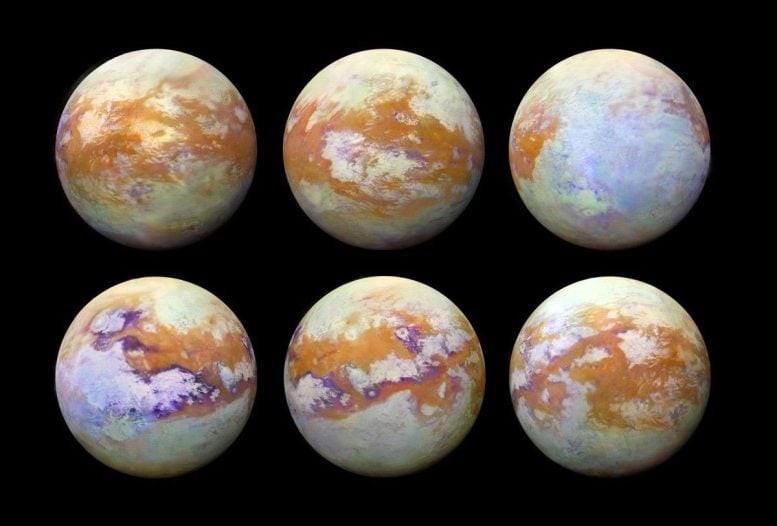
Figure 1. Titan’s “Hidden Ocean” May Be a Myth—Shaking Up What We Thought We Knew.
As Titan orbits Saturn on an elliptical path, scientists observed that the moon stretches and compresses depending on its position and orientation relative to the planet. In 2008, this pronounced flexing led researchers to suggest a vast subsurface ocean, reasoning that a fully frozen interior would resist deformation. Figure 1 shows Titan’s “Hidden Ocean” May Be a Myth—Shaking Up What We Thought We Knew.
“The degree of deformation depends on Titan’s internal structure. A deep ocean allows the crust to flex more under Saturn’s gravity, while a completely frozen interior wouldn’t deform as much,” explained Journaux. “The initial Cassini data supported the possibility of a global ocean, but new analyses show the picture is more complex.”
A 15-Hour Lag Reveals a Thicker, Slushier Interior
The latest study highlights a factor previously overlooked: the timing of Titan’s response. Titan’s shape changes lag about 15 hours behind the peak of Saturn’s gravitational pull. This delay is significant because moving thick, viscous material requires more energy than shifting a liquid—similar to stirring honey versus water. Measuring this lag allows scientists to estimate the energy needed to reshape Titan and infer the interior’s viscosity.
Instead of a planet-wide ocean, the preferred model envisions a thick slushy layer with limited liquid water. This slush accounts for the 15-hour lag while still permitting Titan’s crust to flex under Saturn’s gravitational pull.
How Radio Signals and Lab Experiments Supported the Slush Model
Petricca arrived at these conclusions by analyzing the radio signals Cassini transmitted during its close flybys of Titan. Journaux contributed by applying principles of thermodynamics. His research examines how water and minerals behave under extreme pressures—critical for understanding whether alien worlds could support life.
“The watery layer on Titan is so thick and under such immense pressure that water behaves differently than the seawater we know on Earth,” Journaux explained.
“This allowed them to predict the gravitational signals they should see based on our lab experiments,” Journaux said. “It was extremely rewarding to see our work applied this way.”
Implications for Life and the Dragonfly Mission
“The discovery of a slushy layer on Titan opens exciting possibilities for the search for life beyond Earth,” said Jones. “It broadens the types of environments we might consider habitable.”
While the idea of a global underground ocean once fueled hopes for life on Titan, the new model may actually improve those prospects. Analyses suggest that pockets of freshwater could reach temperatures as high as 68°F. In these smaller, concentrated volumes, nutrients would be more readily available than in a vast ocean, potentially making it easier for simple organisms to survive and grow.
Source: SciTECHDaily
Cite this article:
Priyadharshini S (2025), Titan’s “Hidden Ocean” Might Be a Myth—And That Could Rewrite What We Know, AnaTechMaz, pp.649
Recent Post
-

Unprecedented Gamma-Ray Explosion Lasted 7 Hours, Baffles Scientists
Building on earlier findings, a research team led by Jonathan Carney, a...
-
Scientists Stunned as Neutron Star Brightens 100-Fold Overnight
A research team has investigated long-term variations in the X-ray emissions of the neutron star NGC 7793...
-

Stunning Discovery: Exoplanet Caught Orbiting Two Suns Like ‘Tatooine
The Northwestern team uncovered the new exoplanet by revisiting data...
-
Titan’s “Hidden Ocean” Might Be a Myth—And That Could Rewrite What We Know
Launched in 1997, Cassini spent nearly 20 years studying Saturn and its..
-

What Appeared to Be a Planet Turned Out to Be a Violent Cosmic Collision
For many years, astronomers have questioned the true nature of a bright...
-

Dark Energy in Flux: Insights from Supercomputer Simulations
Emerging observations are starting to question the traditional view of dark energy as a constant...
-

Astronomers Stunned by Discovery of a Completely New Exoplanet with a Strange Atmosphere
The newly discovered planet, PSR J2322-2650b, orbits a rapidly rotating...
-

Webb Telescope Discovers the Most Distant Supernova in the Universe
The key finding came from focused observations made with JWST’s Near...
-

Astronomers Crack the Long-Standing Mystery of Betelgeuse
Using the Hubble Space Telescope alongside ground-based instruments at the Fred Lawrence Whipple...

NASA Captures a “Dead” Star Reawakening in Dazzling X-Ray Detail
In intermediate polar systems, gas spirals inward through a rotating...
-
Scientists Monitored a Giant Solar Region for 94 Days — Here’s What They Found
Active regions on the sun are shaped by intense, twisted magnetic fields...
-

Astronomers May Have Spotted Signs of the Most Massive Stars Ever Observed
The distant universe may be filled with gigantic stars weighing..
-
World’s Farthest Spacecraft Voyager 1 Nears Distance of One Light-Day from Earth
NASA’s Voyager 1 and Voyager 2 remain the longest-operating...
-

US Space Solar Company Sets New World Record for Transmitting Power Wirelessly from Space
Space-based solar power company Star Catcher Industries has achieved...
-

US Company Developing ‘Space Gun’ Capable of Launching Satellites
Longshot, an aerospace startup founded in 2021, is building a ground..