

Webb Telescope Discovers the Most Distant Supernova in the Universe
JWST Observations Reveal the Supernova
The key finding came from focused observations made with JWST’s Near-Infrared Camera (NIRCAM) roughly 110 days after the initial burst. These measurements allowed researchers to distinguish the fading glow of the supernova from the much fainter light of its host galaxy, confirming the presence of the stellar explosion far back in cosmic history.
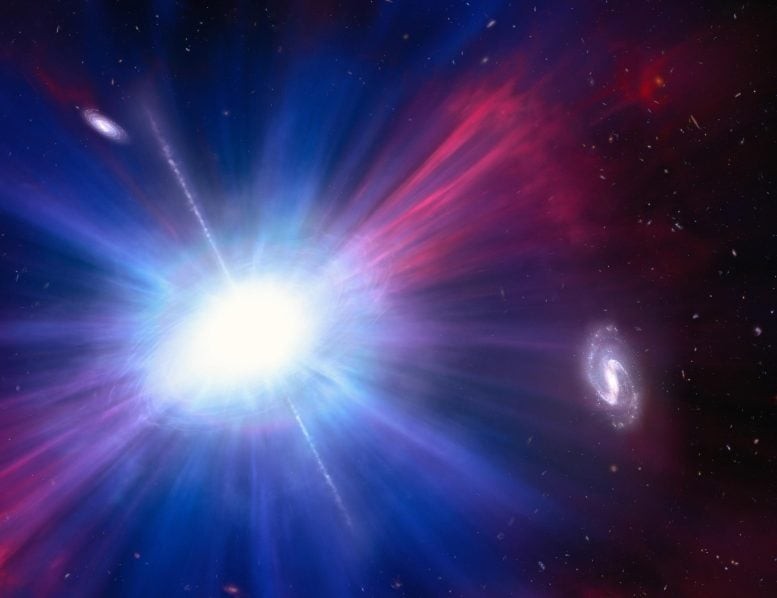
Figure 1. James Webb Reveals the Farthest Supernova in the Cosmos.
Co-author and astrophysicist at UCD School of Physics, Dr Antonio Martin-Carrillo said: “The key observation, or smoking gun, that connects the death of massive stars with gamma-ray bursts is the discovery of a supernova emerging at the same sky location. Almost every supernova ever studied has been relatively nearby to us, with just a handful of exceptions to date. When we confirmed the age of this one, we saw a unique opportunity to probe how the Universe was there and what type of stars existed and died back then. Figure 1 shows James Webb Reveals the Farthest Supernova in the Cosmos.
“Using models based on the population of supernovae associated with GRBs in our local universe, we made some predictions of what the emission should be and used it to propose a new observation with the James Webb Space Telescope. To our surprise, our model worked remarkably well and the observed supernova seems to match really well the death of stars that we see regularly. We were also able to get a glimpse of the galaxy that hosted this dying star.”
A Familiar Explosion in an Unfamiliar Universe
The data show that this extremely distant supernova closely resembles SN 1998bw—the prototype supernova associated with a gamma-ray burst in the nearby universe—both in brightness and spectral characteristics.
This resemblance implies that the massive star whose collapse produced GRB 250314A was not fundamentally different from the progenitors of gamma-ray bursts observed closer to home, despite the very different conditions that prevailed in the early universe, such as much lower metallicity. The observations also rule out a far more energetic event, including the possibility of a superluminous supernova (SLSN).
These results challenge long-held expectations that stars formed in the metal-poor early universe would generate dramatically different explosions—potentially brighter or bluer—than those seen in the present-day cosmos.
While the discovery offers a valuable reference point for studying stellar evolution in the early universe, it also raises new questions about why such uniformity exists across vastly different cosmic eras.
To investigate further, the team plans a second round of JWST observations within the next one to two years. By then, the supernova is expected to have faded by more than two magnitudes, enabling a detailed study of the faint host galaxy and a definitive confirmation of the supernova’s contribution.
Source: SciTECHDaily
Cite this article:
Priyadharshini S (2025), Webb Telescope Discovers the Most Distant Supernova in the Universe, AnaTechMaz, pp.653
Recent Post
-

Unprecedented Gamma-Ray Explosion Lasted 7 Hours, Baffles Scientists
Building on earlier findings, a research team led by Jonathan Carney, a...
-
Scientists Stunned as Neutron Star Brightens 100-Fold Overnight
A research team has investigated long-term variations in the X-ray emissions of the neutron star NGC 7793...
-

Stunning Discovery: Exoplanet Caught Orbiting Two Suns Like ‘Tatooine
The Northwestern team uncovered the new exoplanet by revisiting data...
-
Titan’s “Hidden Ocean” Might Be a Myth—And That Could Rewrite What We Know
Launched in 1997, Cassini spent nearly 20 years studying Saturn and its..
-

What Appeared to Be a Planet Turned Out to Be a Violent Cosmic Collision
For many years, astronomers have questioned the true nature of a bright...
-

Dark Energy in Flux: Insights from Supercomputer Simulations
Emerging observations are starting to question the traditional view of dark energy as a constant...
-

Astronomers Stunned by Discovery of a Completely New Exoplanet with a Strange Atmosphere
The newly discovered planet, PSR J2322-2650b, orbits a rapidly rotating...
-
Webb Telescope Discovers the Most Distant Supernova in the Universe
The key finding came from focused observations made with JWST’s Near...
-

Astronomers Crack the Long-Standing Mystery of Betelgeuse
Using the Hubble Space Telescope alongside ground-based instruments at the Fred Lawrence Whipple...

NASA Captures a “Dead” Star Reawakening in Dazzling X-Ray Detail
In intermediate polar systems, gas spirals inward through a rotating...
-
Scientists Monitored a Giant Solar Region for 94 Days — Here’s What They Found
Active regions on the sun are shaped by intense, twisted magnetic fields...
-

Astronomers May Have Spotted Signs of the Most Massive Stars Ever Observed
The distant universe may be filled with gigantic stars weighing..
-
World’s Farthest Spacecraft Voyager 1 Nears Distance of One Light-Day from Earth
NASA’s Voyager 1 and Voyager 2 remain the longest-operating...
-

US Space Solar Company Sets New World Record for Transmitting Power Wirelessly from Space
Space-based solar power company Star Catcher Industries has achieved...
-

US Company Developing ‘Space Gun’ Capable of Launching Satellites
Longshot, an aerospace startup founded in 2021, is building a ground..