

Exploring the Interaction of Light and Matter at the Nanoscale for Quantum Science
The succinct trio of terms masks the vast scope of science investigated by Randall Goldsmith, a chemistry professor at the University of Wisconsin–Madison. At the university, he guides nature's tiniest components to perform on an atomic-level stage.
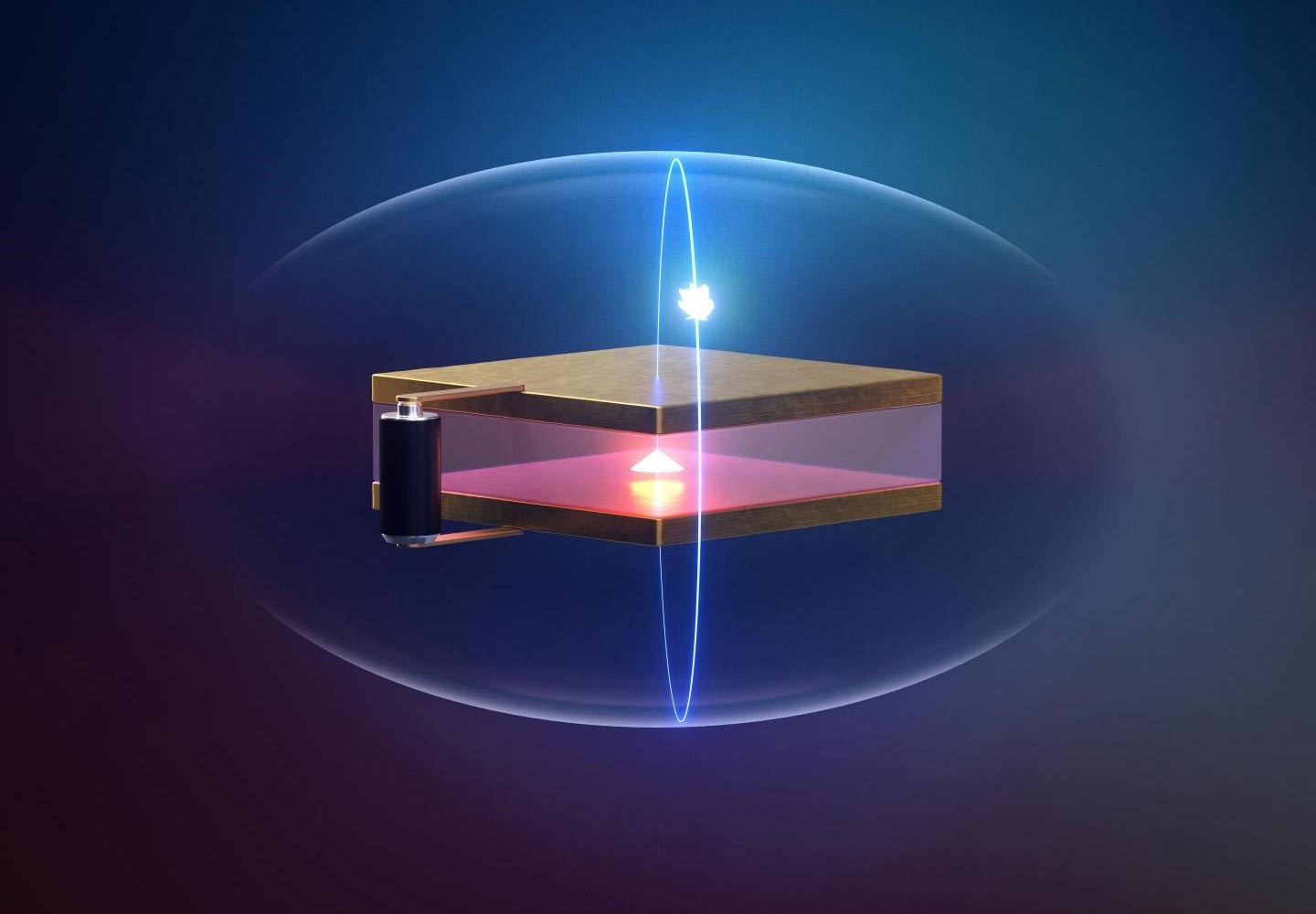
Figure 1. Light-Matter Interaction at the Nanoscale: Advancing Quantum Science.
On one hand, there are photons — particles of light. On the other, molecules — particles of matter. Goldsmith examines and manipulates their interactions, revealing phenomena that could serve as the foundation for technologies capable of detecting a single diseased cell in human tissue or transmitting data over an unbreakable network. Figure 1. Light-Matter Interaction at the Nanoscale: Advancing Quantum Science.
All of these partners kind of dance together in ways that offer a powerful new perspective on what molecules are doing,” Goldsmith explained. “We could potentially create black boxes that can be applied in biotechnology, pharmaceuticals, and environmental sensing. New possibilities arise when you incorporate nanodevices or nanostructures.”
Goldsmith is developing photonic interfaces—tiny mirrors and lenses—that control light to interact with molecules in specific ways.
One such technique is the microcavity approach, developed by Goldsmith and his team. A microcavity is a small space that captures light for a few nanoseconds. As the molecule moves through the cavity, the trapped light passes through it, providing detailed insights into the molecule’s shape and motion.
While researchers often use fluorescing compounds—substances that emit light—to track chemical reactions, Goldsmith’s microcavity method allows scientists to observe molecular behavior without the need for fluorescent labels, which can distort natural molecular interactions.
“These photonic devices give us a completely new toolkit to explore,” Goldsmith said. “To fully capture the system’s physics, we need to fine-tune all of the molecule’s various states.”
This precision is essential for designing molecules as custom qubits—the fundamental units of quantum information.
Molecular qubits are just one type in a broad spectrum of qubits, each offering unique advantages. Goldsmith is particularly drawn to molecular qubits for their versatility, providing a flexible quantum playground.
“The beauty of molecules is that there’s a century of knowledge in building them,” he explained. “With molecules, you can essentially customize them because you control what goes into them.”
By adjusting a molecule’s photonic properties, researchers can influence the qubit’s lifetime and the characteristics of the light it emits. This level of control enables the creation of ideal qubits for applications like measuring the temperature of living cells or transmitting data via a quantum communication network.
“If you enhance the rate at which qubits couple to each other through photonic interfaces, you can achieve meaningful data transmission speeds,” Goldsmith said. “Without these interfaces, molecules may emit light at random times, slowing down the process. But with photonic interfaces, you can speed things up. This applies to the diverse range of materials being explored in Q-NEXT.”
Goldsmith is collaborating with several researchers within Q-NEXT, a quantum research initiative. Together with Q-NEXT Director David Awschalom at the University of Chicago and Danna Freedman at MIT, Goldsmith is working to develop customizable qubits that can be applied across multiple domains—an exciting frontier in quantum research.
Goldsmith’s passion for molecular science began during his undergraduate years at Cornell University, where he became fascinated with the potential of molecules and the role light could play in understanding their behavior.
“I became increasingly excited about what molecules could do, especially in the context of using light to explore their properties,” he said. “I was reading popular science papers about the idea of using molecules as the fundamental components of tiny electronics, such as transistors and wires for charge movement.”
After completing graduate studies at Northwestern University and postdoctoral research at Stanford University, Goldsmith joined the University of Wisconsin as a faculty member. It was here that he began his “wacky project,” a new research area for him, involving the construction of photonic devices to explore molecular dynamics.
“It was a high-risk, high-reward project because I was venturing into an area where I had no prior experience,” he said. “Luckily, I had some adventurous and incredibly capable students who helped us learn and make progress in photonics.”
Tenacity and creativity have been essential to overcoming the challenges of manipulating information at the atomic scale.
Source: Argonne
Cite this article:
Priyadharshini S (2025),Exploring the Interaction of Light and Matter at the Nanoscale for Quantum Science, AnaTechMaz, pp. 184
Recent Post
-

The Role of Diamonds in Advancing Electronics and Quantum Technology
Diamond, celebrated for its unmatched hardness and clarity, is emerging.....
-

MIT's Fluxonium Qubits Set New Standard for Quantum Precision
Quantum computing harnesses the principles of quantum mechanics to solve complex...
-

Physicists Uncover Hidden Quantum Forces That Could Revolutionize Your Devices
In today’s rapidly evolving digital landscape, the demand for increased storage, efficiency...
-
Exploring the Interaction of Light and Matter at the Nanoscale for Quantum Science
The succinct trio of terms masks the vast scope of science investigated by Randall.....
-

Dual-Code Error Correction Makes Quantum Computers Smarter
Classical computers are equipped with methods to detect and correct errors by comparing...
-

Quantum Squeezing Enables Ultra-Fast Gas Sensors
The research on enhancing gas detection speed using frequency comb lasers is a...
-

How Hydrogen Ions Are Transforming Quantum Technology
Has introduced a groundbreaking method for controlling the electronic properties.....
-

Quantum Computing's Greatest Challenge Overcome with Self-Assembling Qubits
Qubits are the fundamental units of information in quantum technology, but a ...
-

New Experimental System Brings Quantum Technology Within Reach of Students
Quantum physics is experiencing a second revolution, set to propel advancements.....
-
Quantum Computer Reveals New Insights into the Potential Collapse of the Universe
Quantum field theory proposes that the fundamental structure of the universe could shift...
-
Psiquantum Aims to Construct the World's Largest Quantum Computer By 2027
PsiQuantum is investing AU$1 billion to develop a photonic quantum computer with one...
-

Scientists Achieve Historic Milestone in Linking Quantum Processors for Scalable Supercomputers
Scientists at Oxford have made a significant advancement in quantum computing...
-
Forschungszentrum Jülich Acquires D-Wave Quantum Computer, First HPC Center to Own System
Forschungszentrum Jülich (FZJ) becomes the first high-performance computing.....
-

Germany Allocates €20 Million for Quantum Repeater Technology to Transform Future Networks
Amid growing concerns over cyber sabotage, espionage, and hybrid warfare.....
-

Physicists Unveil the Hidden Quantum Landscape of Electrons
A groundbreaking method has unveiled the complete quantum identity of......