

MIT's Fluxonium Qubits Set New Standard for Quantum Precision
Quantum Computing and Qubits
Quantum computing harnesses the principles of quantum mechanics to solve complex problems far faster than classical computers. Unlike traditional binary bits, quantum bits, or qubits, can exist in multiple states simultaneously, enabling powerful computational capabilities.
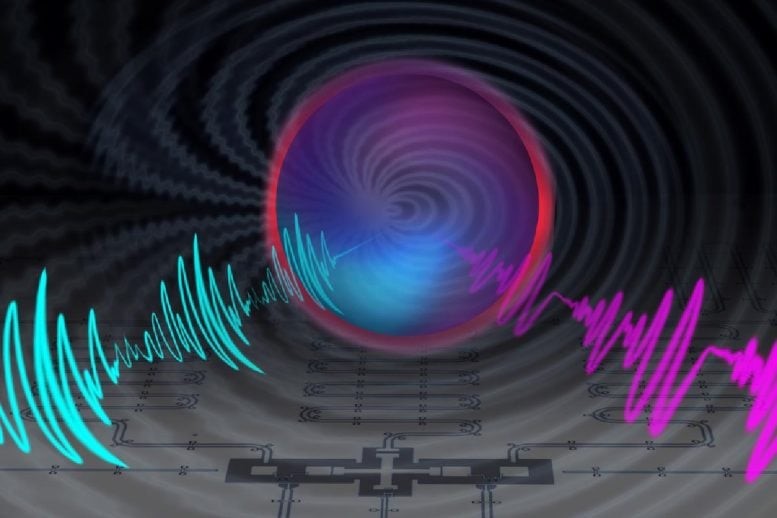
Figure 1. MIT's Fluxonium Qubits Establish New Benchmark for Quantum Precision.
However, scaling quantum computers is a major hurdle. Qubits are highly sensitive to external noise and minor imperfections in their control systems, which can lead to errors that disrupt calculations. These challenges limit the complexity and duration of quantum algorithms. To address this, researchers worldwide, including those at MIT, are working to enhance qubit performance and improve the reliability and scalability of quantum computing. Figure 1 shows MIT's Fluxonium Qubits Establish New Benchmark for Quantum Precision.
Advancements in Quantum Gate Fidelity
MIT researchers have achieved groundbreaking advancements using a superconducting qubit known as fluxonium. By developing two innovative control techniques, they set a world record for single-qubit fidelity, reaching an unprecedented accuracy of 99.998 percent. This achievement builds upon previous work, including Leon Ding’s 2023 demonstration of a 99.92 percent two-qubit gate fidelity.
Overcoming Decoherence and Counter-Rotating Errors
One of the fundamental challenges in quantum computing is decoherence, the process by which qubits lose their quantum information. In superconducting qubits, decoherence is a significant obstacle to achieving higher-fidelity quantum gates, which are essential for sustained computation and protocols like quantum error correction. The higher the gate fidelity, the more feasible it becomes to implement practical quantum computing.
To address decoherence, MIT researchers are developing techniques to make quantum gates faster, minimizing the time qubits are exposed to noise. However, faster gates introduce another challenge: counter-rotating errors. These errors arise from the interaction of qubits with electromagnetic waves used for control, particularly in systems like fluxonium qubits.
Counter-Rotating Dynamics and Solutions
Typically, single-qubit gates are implemented with resonant pulses that induce Rabi oscillations between qubit states. When pulses are applied too quickly, these gates become inconsistent due to counter-rotating effects, which are more pronounced in low-frequency qubits like fluxonium.
David Rower, Leon Ding, and their team tackled this challenge with two innovative approaches:
Circularly Polarized Microwave Drives
Inspired by circularly polarized light, this method adjusts the relative phase of charge and flux drives in superconducting qubits. While effective, the fidelities achieved with this approach did not fully match expectations based on coherence measurements.
Commensurate Pulses
The breakthrough came with a simpler solution: applying pulses at specific intervals aligned with the qubit’s frequency. These commensurate pulses made counter-rotating errors consistent across pulses, allowing them to be corrected through standard Rabi gate calibrations. This method is straightforward, portable, and does not require additional calibration overhead.
“Our commensurate technique was not only simple but highly effective and applicable to any qubit experiencing counter-rotating errors,” says Rower.
Revolutionary Techniques in Fluxonium Qubits
Fluxonium qubits, which incorporate a capacitor, Josephson junction, and a large superinductor, are designed to resist environmental noise, enabling more accurate logical operations. Despite their higher coherence, fluxonium qubits typically have lower frequencies, leading to longer gate times.
In their experiments, the MIT team achieved a gate that is both one of the fastest and most accurate ever demonstrated across superconducting qubits.
“Fluxonium is proving to be a highly promising qubit for both fundamental research and engineering performance,” notes Ding.
The team hopes further research will uncover additional limitations and lead to even faster and more reliable gates.
Collaborative Breakthroughs in Quantum Engineering
“This project exemplifies the interdisciplinary nature of work in the EQuS group, combining physics and electrical engineering to achieve remarkable results,” says William Oliver.
Key achievements include:
- Commensurate Non-Adiabatic Control: This method extends beyond the rotating wave approximation, leveraging concepts similar to the 2023 Nobel Prize-winning research on ultrafast pulses of light.[2]
- Synthetic Circularly Polarized Light: By manipulating the qubit’s magnetic flux and electric charge, the researchers created an analog of circularly polarized light in the qubit’s x-y space.
This combination of an innovative qubit design (fluxonium) and advanced control techniques has established new strategies for mitigating counter-rotating errors across various quantum computing platforms.
“With Google’s Willow quantum chip achieving quantum error correction beyond the threshold, our work comes at a crucial time,” adds Oliver. “Higher-performing qubits will significantly reduce the overhead required for fault-tolerant quantum computing.[1]”
This research represents a vital step toward scalable and reliable quantum computing, setting the stage for further advancements in the field.
Reference:
- https://www.dc.mit.edu/?utm_source=chatgpt.com
- https://scitechdaily.com/breaking-quantum-limits-mits-fluxonium-qubits-achieve-unprecedented-precision/
Cite this article:
Priyadharshini S (2025),MIT's Fluxonium Qubits Set New Standard for Quantum Precision, AnaTechMaz, pp. 182
Recent Post
-

The Role of Diamonds in Advancing Electronics and Quantum Technology
Diamond, celebrated for its unmatched hardness and clarity, is emerging.....
-
MIT's Fluxonium Qubits Set New Standard for Quantum Precision
Quantum computing harnesses the principles of quantum mechanics to solve complex...
-

Physicists Uncover Hidden Quantum Forces That Could Revolutionize Your Devices
In today’s rapidly evolving digital landscape, the demand for increased storage, efficiency...
-
Exploring the Interaction of Light and Matter at the Nanoscale for Quantum Science
The succinct trio of terms masks the vast scope of science investigated by Randall.....
-

Dual-Code Error Correction Makes Quantum Computers Smarter
Classical computers are equipped with methods to detect and correct errors by comparing...
-

Quantum Squeezing Enables Ultra-Fast Gas Sensors
The research on enhancing gas detection speed using frequency comb lasers is a...
-

How Hydrogen Ions Are Transforming Quantum Technology
Has introduced a groundbreaking method for controlling the electronic properties.....
-

Quantum Computing's Greatest Challenge Overcome with Self-Assembling Qubits
Qubits are the fundamental units of information in quantum technology, but a ...
-

New Experimental System Brings Quantum Technology Within Reach of Students
Quantum physics is experiencing a second revolution, set to propel advancements.....
-

Quantum Computer Reveals New Insights into the Potential Collapse of the Universe
Quantum field theory proposes that the fundamental structure of the universe could shift...
-

Psiquantum Aims to Construct the World's Largest Quantum Computer By 2027
PsiQuantum is investing AU$1 billion to develop a photonic quantum computer with one...
-

Scientists Achieve Historic Milestone in Linking Quantum Processors for Scalable Supercomputers
Scientists at Oxford have made a significant advancement in quantum computing...
-
Forschungszentrum Jülich Acquires D-Wave Quantum Computer, First HPC Center to Own System
Forschungszentrum Jülich (FZJ) becomes the first high-performance computing.....
-

Germany Allocates €20 Million for Quantum Repeater Technology to Transform Future Networks
Amid growing concerns over cyber sabotage, espionage, and hybrid warfare.....
-

Physicists Unveil the Hidden Quantum Landscape of Electrons
A groundbreaking method has unveiled the complete quantum identity of......