

Physicists Uncover Hidden Quantum Forces That Could Revolutionize Your Devices
The Spintronics Advantage: Paving the Way for Faster Electronics
In today’s rapidly evolving digital landscape, the demand for increased storage, efficiency, and computing power is ever-growing. To meet these challenges, scientists are turning to the groundbreaking field of spintronics, a technology poised to transform modern electronics.

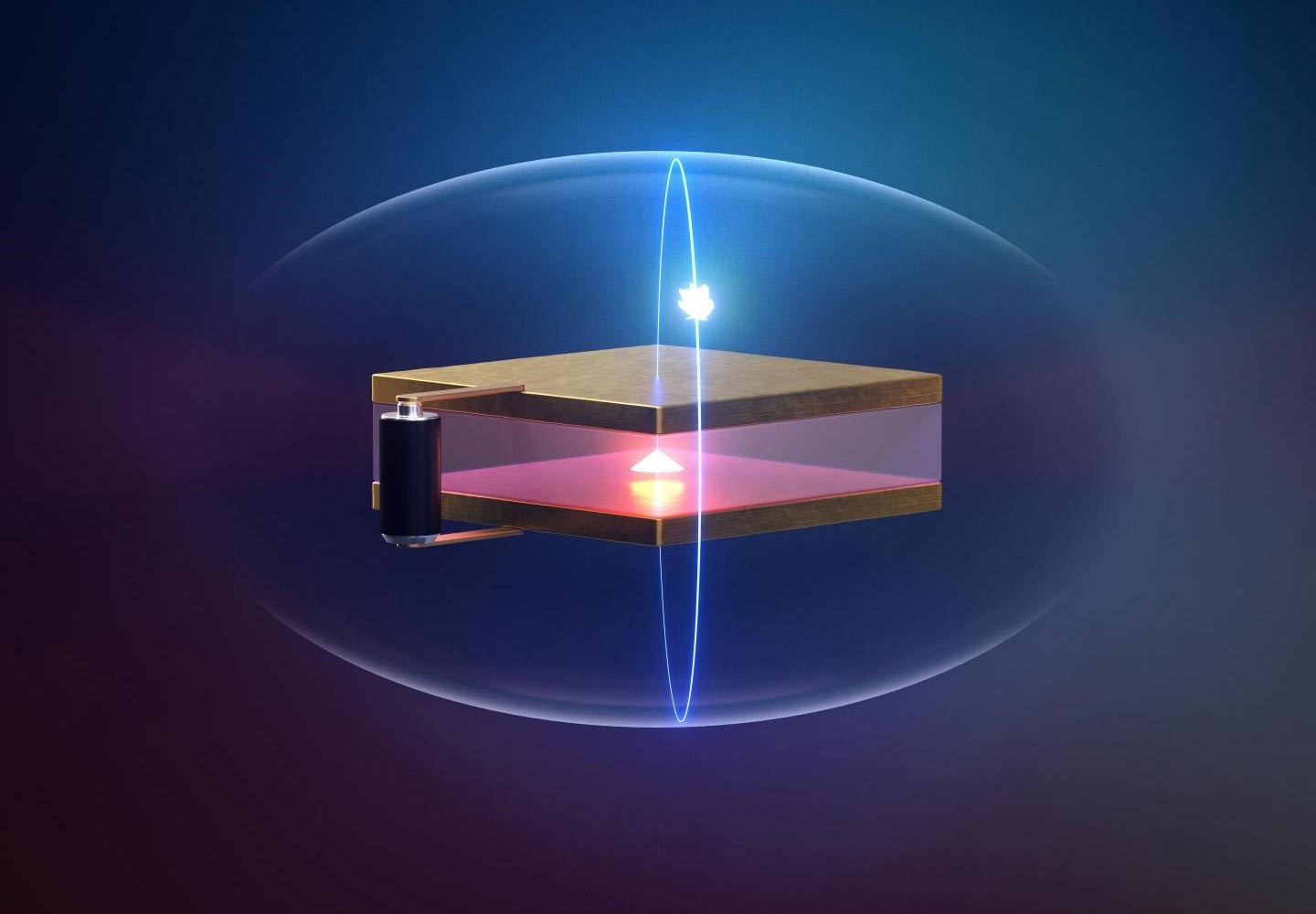
Figure 1. Revolutionary Quantum Forces Unveiled to Transform Modern Devices.
Unlike conventional electronics, which rely exclusively on the charge of electrons to process and store data, spintronics utilizes both the charge and the spin of electrons. By encoding binary values—spin-up for 0 and spin-down for 1—this approach promises faster processing speeds and enhanced energy efficiency. Figure 1 shows Revolutionary Quantum Forces Unveiled to Transform Modern Devices.
Unlocking the Quantum Potential
To make spintronics a practical reality, a deeper understanding of the quantum properties of materials is essential. A critical element is spin-torque, which enables electrical currents to control magnetization—an essential feature for next-generation data storage and computational technologies.
Researchers from the University of Utah and the University of California, Irvine (UCI), have uncovered a novel type of spin-orbit torque. Their study, published in Nature Nanotechnology on January 15, 2025, introduces the concept of anomalous Hall torque, a revolutionary method for manipulating spin and magnetization using electrical currents.
“This is entirely new physics, which is fascinating in its own right, but it also opens doors to numerous potential applications,” said Eric Montoya, assistant professor of physics and astronomy at the University of Utah and lead author of the study. “These self-generated spin-torques are ideally suited for emerging technologies like neuromorphic computing, which mimics the complex networks of the human brain.”
The Physics of Spin and Torque
Electrons possess tiny magnetic fields that behave like dipoles—similar to Earth's magnetic poles—orienting either north ("up"), south ("down"), or somewhere in between. Like magnets, opposite poles attract, while like poles repel. Spin-orientation torque refers to the speed at which electrons spin around a fixed point.
In certain materials, electricity can sort electrons based on their spin orientation. This sorting results in a distribution pattern known as symmetry, which influences the material's properties, including the directional flow of a ferromagnet's magnetic field.
Symmetry and the Anomalous Hall Torque
The anomalous Hall torque is closely related to the anomalous Hall effect, first discovered by Edwin Hall in 1881. The anomalous Hall effect describes how electrons are scattered asymmetrically when traveling through a magnetic material, generating a charge current that flows perpendicular to an external electric current. Similarly, with spin, when an electrical current is applied to a material, a spin current flows at a 90-degree angle to the electrical current, with its orientation aligned with the magnetization direction.
“It all comes down to symmetry,” said Eric Montoya. “The different Hall effects describe the symmetry of how efficiently we can control spin orientation in a material. You might observe one effect or several simultaneously. As material scientists, we can fine-tune these properties to design devices with tailored functions.”
A Triad of Torques for Spintronics
The anomalous Hall torque represents a new class of self-generated spin-orbit torques, which exhibit unique spin-torque symmetries optimized for next-generation spintronic devices. Alongside the spin Hall torque and the planar Hall torque—previously identified by Montoya and Ilya Krivorotov of UCI—the anomalous Hall torque completes a triad of Hall-like spin-orbit torques. These “Universal Hall torques,” as the researchers call them, are expected to be present in all conductive spintronic materials, providing a versatile framework for developing advanced spintronic devices.
Revolutionary Spintronic Prototypes
Traditional spintronic devices, such as Magnetoresistive Random Access Memory (MRAM), often feature a non-magnetic layer sandwiched between two ferromagnetic materials. Spin-torque MRAMs manipulate data by injecting spin-polarized currents from one magnetic layer to another, flipping the second layer’s spin orientation to represent binary data as "up" (0) or "down" (1). These devices offer faster and more energy-efficient performance compared to conventional MRAMs, which rely on magnetic fields.
In their breakthrough, the researchers demonstrated that spin orientation could be transferred from a ferromagnetic conductor to an adjacent non-magnetic material, removing the need for a second ferromagnetic layer. Using this principle, they built the first-ever spintronic prototype leveraging the anomalous Hall torque effect.
“We used anomalous Hall torque to create a nanoscale device known as a spin-torque oscillator,” explained Krivorotov. “This device mimics the behavior of a neuron but operates at much smaller scales and significantly higher speeds. Our next goal is to interconnect these devices into a larger network, enabling us to explore their potential for neuromorphic tasks like image recognition.”
Source: SciTECHDaily
Cite this article:
Priyadharshini S (2025),Physicists Uncover Hidden Quantum Forces That Could Revolutionize Your Devices, AnaTechMaz, pp. 183
Recent Post
-

The Role of Diamonds in Advancing Electronics and Quantum Technology
Diamond, celebrated for its unmatched hardness and clarity, is emerging.....
-

MIT's Fluxonium Qubits Set New Standard for Quantum Precision
Quantum computing harnesses the principles of quantum mechanics to solve complex...
-
Physicists Uncover Hidden Quantum Forces That Could Revolutionize Your Devices
In today’s rapidly evolving digital landscape, the demand for increased storage, efficiency...
-
Exploring the Interaction of Light and Matter at the Nanoscale for Quantum Science
The succinct trio of terms masks the vast scope of science investigated by Randall.....
-

Dual-Code Error Correction Makes Quantum Computers Smarter
Classical computers are equipped with methods to detect and correct errors by comparing...
-

Quantum Squeezing Enables Ultra-Fast Gas Sensors
The research on enhancing gas detection speed using frequency comb lasers is a...
-

How Hydrogen Ions Are Transforming Quantum Technology
Has introduced a groundbreaking method for controlling the electronic properties.....
-

Quantum Computing's Greatest Challenge Overcome with Self-Assembling Qubits
Qubits are the fundamental units of information in quantum technology, but a ...
-

New Experimental System Brings Quantum Technology Within Reach of Students
Quantum physics is experiencing a second revolution, set to propel advancements.....
-

Quantum Computer Reveals New Insights into the Potential Collapse of the Universe
Quantum field theory proposes that the fundamental structure of the universe could shift...
-

Psiquantum Aims to Construct the World's Largest Quantum Computer By 2027
PsiQuantum is investing AU$1 billion to develop a photonic quantum computer with one...
-

Scientists Achieve Historic Milestone in Linking Quantum Processors for Scalable Supercomputers
Scientists at Oxford have made a significant advancement in quantum computing...
-
Forschungszentrum Jülich Acquires D-Wave Quantum Computer, First HPC Center to Own System
Forschungszentrum Jülich (FZJ) becomes the first high-performance computing.....
-

Germany Allocates €20 Million for Quantum Repeater Technology to Transform Future Networks
Amid growing concerns over cyber sabotage, espionage, and hybrid warfare.....
-

Physicists Unveil the Hidden Quantum Landscape of Electrons
A groundbreaking method has unveiled the complete quantum identity of......