

Analysis and Benchmarks of The First Descendant's Performance on PC
Last month, NEXON launched its third-person looter shooter, The First Descendant, on PC. Utilizing Unreal Engine 5, we will now benchmark and analyze its performance on PC.
For our benchmarks, we used an AMD Ryzen 9 7950X3D, 32GB of DDR5 at 6000MHz, and the following graphics cards: AMD’s Radeon RX580, RX Vega 64, RX 6900XT, RX 7900XTX, as well as NVIDIA’s GTX980Ti, RTX 2080Ti, RTX 3080, and RTX 4090. The system ran on Windows 10 64-bit, with the GeForce 556.12 and Radeon Adrenalin Edition 24.6.1 drivers. Additionally, we disabled the second CCD on our 7950X3D.
NEXON has included several graphics settings for customization. PC gamers can adjust the quality of Visibility, Shadows, Textures, Reflections, Vegetation, and more. The game also supports Ray Tracing, NVIDIA DLSS 3, and AMD FSR 3.0. For detailed information on these features, be sure to check out our separate articles.
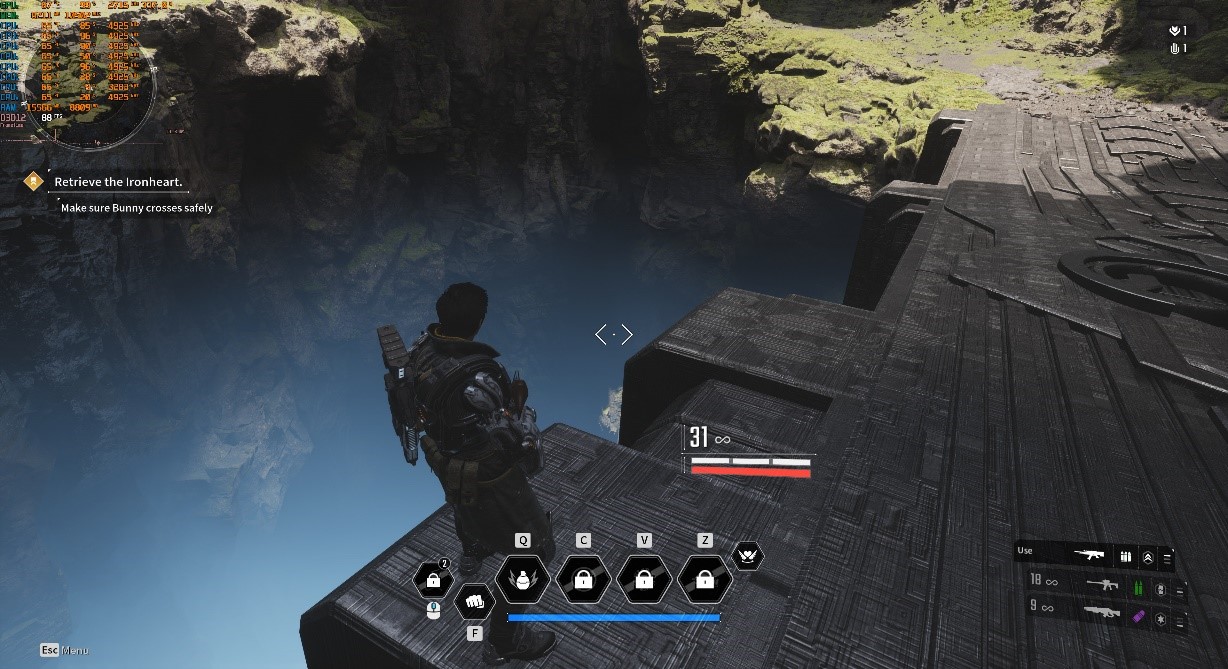
Figure 1.PC Performance Analysis of The First Descendant
The First Descendant does not include a built-in benchmark tool. Therefore, we used its hub area for both our CPU and GPU benchmarks, as this area seems to stress both the [1] CPU and GPU significantly. This approach provides a good indication of the game's overall performance. Additionally, we lowered our resolution to 720p for our CPU tests to avoid any potential GPU bottlenecks. Figure 1 shows PC Performance Analysis of The First Descendant.
To evaluate the game's performance with various CPU configurations, we simulated dual-core, quad-core, and hexa-core CPUs. Our findings revealed that The First Descendant is the first game to fully utilize eight CPU threads. At 720p on Epic Settings, our eight-core CPU outperformed the simulated hexa-core CPU by 14-17%.
It’s also interesting to observe the behavior of SMT (Simultaneous Multi-Threading) on these various CPU configurations. SMT/Hyper-Threading can enhance performance on CPUs with 2 or 4 cores. However, it slightly reduces performance on CPUs with 6 or 8 cores.
At 1080p on Epic Settings, achieving a constant 60fps experience requires a graphics card equivalent to the NVIDIA RTX 3080. On Epic Settings, the game utilizes Lumen, which accounts for these performance requirements.
At 1440p on Epic Settings, only the AMD Radeon RX 7900XTX and the NVIDIA GeForce RTX 4090 could deliver a smooth gaming experience. The AMD Radeon RX 6900XT managed an average of 70fps but could drop to 40fps at times. For Native 4K on Epic Settings, no GPU can maintain 60fps consistently.
Graphics-wise, The First Descendant looks impressive. With Nanite, pop-in issues are minimized, and Lumen enhances the visual quality of the environments. The developers have also incorporated many high-resolution textures, resulting in detailed main characters. Overall, there’s nothing to criticize in this regard.
Unfortunately, the game experiences noticeable stuttering issues, likely due to traversal stutters caused by a shader compilation process before loading its map. This is a disappointing aspect of the overall experience.
The First Descendant performs similarly to other UE5 titles. For native resolutions, a high-end GPU is essential, especially for gaming at 1440p or 4K. [2] However, since DLSS and FSR look excellent in this game, we recommend using them. Additionally, The First Descendant is one of the few PC games that can utilize up to eight CPU threads, which is a pleasant surprise given UE5's historically poor CPU multithreading performance.
References:
- https://en.gamegpu.com/mmorpg-/-%D0%BE%D0%BD%D0%BB%D0%B0%D0%B9%D0%BD-%D0%B8%D0%B3%D1%80%D1%8B/the-first-descendant-test-gpu-cpu-2
- https://www.dsogaming.com/pc-performance-analyses/the-first-descendant-benchmarks-pc-performance-analysis/
Cite this article:
Janani R (2024), Analysis and Benchmarks of The First Descendant's Performance on PC, AnaTechMaz, pp. 33
Recent Post
-

The Double Dragon Series Makes a Comeback with A Modern Tribute to The Original Game
I began frequenting arcades in the late '80s, and one of the first games I...
-
Laser Sphere Uses Playdate’s Crank to Control a Space Laser, And I’m Having a Blast
In "Laser Sphere," a Playdate game by Shaun Inman, you face ...
-
Analysis and Benchmarks of The First Descendant's Performance on PC
Last month, NEXON launched its third-person looter shooter,...
-
Mutants Unleashed: What We Know About the New Teenage Mutant Ninja Turtles Video Game
The Teenage Mutant Ninja Turtles (TMNT) franchise has been a...
-
Tales Of the Shire Is a Cozy Village Sim Where You Can’t Run, But You Can Skip
The wave of big-budget Tolkien fantasy has once again reached the......
-

Everything We Know About the Upcoming 'Wonder Woman' Video Game
The upcoming Wonder Woman game has generated excitement......
-
Microsoft Unveils a New Deadpool-Themed Xbox Controller: Here's A Look at It
Microsoft has unveiled a new Deadpool-themed controller, launching just...
-
Everything We Know About the Upcoming 'Legacy of Kain: Soul Reaver' Remaster Games
The Legacy of Kain: Soul Reaver series, a staple in action-adventure......
-
The PlayStation Portal Remote Player Has Been Launched in India: Price, Features, And More Details
The PlayStation Portal is not a traditional handheld gaming console.......
-

Preliminary PC System Requirements for Empire of The Ants Revealed
Microids has unveiled the preliminary PC system requirements for its......
-
"Sins Of a Solar Empire II" Will Be Released on August 15th. Here Are the PC Requirements
Stardock has announced that its real-time 4X strategy game, Sins of......
-

Wuthering Waves Unveils Shorekeeper as Newest Star in Version 1.3 Update
Wuthering Waves has officially announced its latest character with...
-

Dead by Daylight and Five Nights at Freddy's Announce Exciting Crossover for 2025
In a thrilling announcement for horror game enthusiasts, Dead by.....
-

Lollipop Chainsaw RePOP Release Date and Details Announced!
Dragami Games, Ltd. has just made an exciting announcement for......
-

Exploring Naraka: Bladepoint Season 13 - A Journey into Chinese Culture with Kylin Zhang
naraka: Bladepoint has continued to captivate players with its......