

Old Servers Could Unlock a New Source of Rare Earths Through Data Mining
Retiring old server hardware from data centers may soon shift from being a costly disposal task to a potential revenue stream for companies.

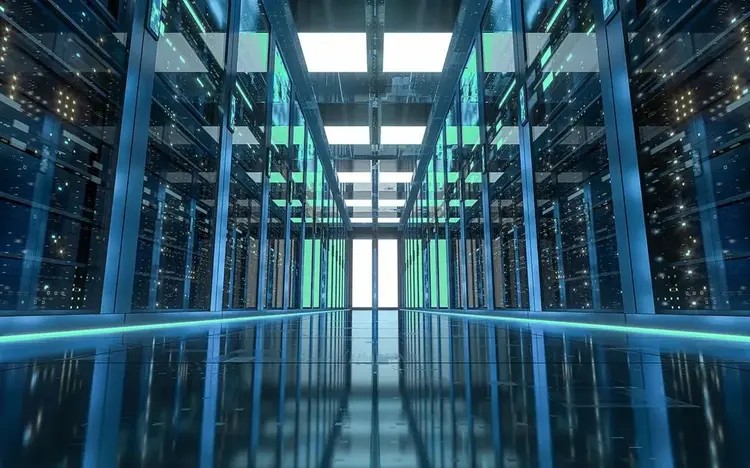
Figure 1. Retired Servers May Become a Valuable Source of Rare Earths.
Last year, Western Digital revealed it was exploring innovative methods to recover valuable rare earth elements and metals from obsolete servers at Microsoft’s US data centers, partnering with Critical Materials Recycling and PedalPoint Recycling. Figure 1 shows Retired Servers May Become a Valuable Source of Rare Earths.
This initiative comes nearly a year after China imposed immediate export controls on seven additional rare earth elements vital for enterprise IT hardware production. The State Council’s new regulations now require export licenses for samarium, gadolinium, terbium, dysprosium, lutetium, scandium, and yttrium—including their alloys, oxides, and compounds—all of which are critical for data center storage systems, networking gear, and semiconductors.
For decades, he said, the retirement of data center equipment was seen almost entirely as a matter of compliance and disposal. Companies prioritized secure decommissioning, certified recycling, and documented destruction of sensitive hardware, assuming that once equipment left production, its economic value was largely gone.
That perspective, he noted, is starting to shift. Modern data center hardware contains a variety of strategically important materials. Servers, storage systems, networking devices, and power components hold copper, aluminum, silver, gold, and increasingly small but valuable quantities of rare earth elements and other critical minerals.
These materials are essential for producing semiconductors, energy systems, defense electronics, and advanced computing infrastructure. With global demand for digital infrastructure continuing to grow, the volume of retired hardware entering disposal channels is rising rapidly.
Electronic waste has already become one of the fastest-growing waste streams worldwide. Current global volumes exceed 60 million tonnes annually and could approach 80 million tonnes by the end of the decade if trends persist. While data center infrastructure represents only a fraction of this total, it is a particularly significant fraction due to its concentration, professional management, and replacement on structured cycles.
For enterprises, he added, the implications are largely economic and operational rather than geopolitical. Capturing value from retired hardware depends on how well organizations manage the end-of-life phase of their infrastructure. Many companies still treat hardware retirement as a straightforward disposal task, sending mixed equipment to recyclers without separating component types—an approach that often results in most of the recoverable value being lost.
Organizations that handle decommissioning more strategically can significantly improve outcomes, Gogia noted. Separating storage devices, circuit boards, and power components allows recyclers to process materials more efficiently, while maintaining detailed chain-of-custody records ensures secure tracking of hardware—a compliance requirement that also enables the recovery of valuable materials.
Data centers have long been seen as energy-intensive facilities consuming vast resources, but he said, “what is becoming clear now is that they also produce a growing stream of recoverable materials as equipment reaches the end of its operational life. As computing infrastructure continues to expand globally, these retirement streams will increasingly resemble industrial resource flows rather than simple waste.”
Source: NETWORK WORLD
Cite this article:
Priyadharshini S (2026), Old Servers Could Unlock a New Source of Rare Earths Through Data Mining, AnaTechMaz, pp.187
Recent Post
-

OpenAI Adopts Power-First Approach in AI Data Center Strategy
OpenAI is addressing one of the fastest-growing bottlenecks...
-

AI Chatbots Surpass Human Teams in Medical Data Analysis
Quicker and more advanced data analysis has the potential to significantly improve...
-

Optimizing Hybrid Powertrains Using Real-Time Route Data
Among the most compelling aspects of the research is the emphasis on environmental...
-

Health Data and Digital Privacy in the Prison System
A new study is bringing overdue attention to how personal health information is managed ...
-

Arista Unveils Liquid-Cooled Pluggable Optic Module for AI Data Centers
Arista introduced the eXtra-dense Pluggable Optics (XPO)...
-
Old Servers Could Unlock a New Source of Rare Earths Through Data Mining
Retiring old server hardware from data centers may soon shift from...
-

AI Data Centers Could Raise Nearby Temperatures by Up to 9.1°C
AI-powered data centres generate such intense heat that they can raise nearby land surface temperatures...
-

Smart Batteries Use Sensor Data to Boost Safety and Reliability
Researchers have introduced a groundbreaking “Talkative Battery” that combines advanced safety....
-
Inside Amazon’s Push for Ultra-Efficient Data Center Water Use
As scrutiny intensifies over the environmental impact of artificial intelligence and cloud computing,....
-
Texas Leak Reveals Data of 3 million Hunters and Anglers
The Texas Parks and Wildlife Department (TPWD) has revealed a cybersecurity incident involving....
-

Meta Alerts Thousands of Instagram Users to AI-Driven Account Takeovers
Meta has notified approximately 20,000 Instagram users that their ...
-
Kodak Faces Data Breach Fallout After ShinyHunters Hack Claims
Kodak has confirmed a cybersecurity incident after the notorious ShinyHunters cybercrime...
-
Healthcare Firm iRhythm Confirms Stolen Data in Cyberattack
Digital healthcare company iRhythm has disclosed a cybersecurity incident that resulted in the theft of ....
-
The Security Risks Lurking Behind Modern Browser Extensions
Browser extensions have become an essential part of modern web browsing. From grammar checkers and....