

The Quantum Spin Discovery That Could Revolutionize Computing
UC Riverside Leads Antiferromagnetic Spintronics Research to Revolutionize Computing
The University of California, Riverside, in collaboration with several research partners, is pioneering advancements in antiferromagnetic spintronics—a cutting-edge technology that could enable ultra-fast, high-density memory and smarter computing through quantum mechanics.

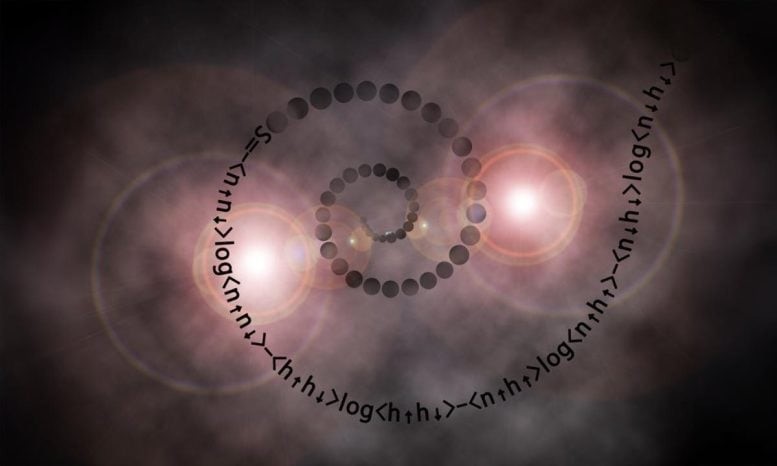
Figure 1.Quantum Spin.
$4 Million Grant to Push Microelectronics Boundaries
UC Riverside has secured nearly $4 million from the UC National Laboratory Fees Research Program to spearhead a major research initiative in this field. Over the next three years, the project will explore how antiferromagnetic materials, known for their ultrafast spin dynamics, can revolutionize modern microelectronics [1]. Figure 1 shows quantum spin.
Advancing Semiconductor Technology with Quantum Mechanics
“The semiconductor industry is constantly seeking new materials, phenomena, and mechanisms to drive technological progress,” said Jing Shi, distinguished professor of physics and astronomy at UC Riverside and the project’s principal investigator.
With co-investigators from UC San Diego, UC Davis, UCLA, and Lawrence Livermore National Laboratory, the initiative aims to solidify the University of California’s leadership in this domain and secure additional funding shortly.
What Is Spintronics?
Spintronics, short for spin-based electronics, leverages the quantum property of electron spin, alongside electric charge, for information processing. Antiferromagnetic spintronics presents a faster, more efficient alternative to traditional ferromagnetic-based memory technologies found in chips and hard drives.
“With UCR at the helm of this project, we are in a strong position to compete nationally for CHIPS Act funding, which supports domestic semiconductor production,” Shi said.
Why Antiferromagnetic Spintronics?
In ferromagnetic materials, electron spins align in the same direction, creating a net magnetic moment. In contrast, antiferromagnets have alternating spin directions, canceling out the overall magnetic moment. Despite this, their spin states can still be flipped, enabling them to represent binary data for memory storage.
“Antiferromagnetic memory offers higher density, as the absence of a net magnetic moment prevents interference between neighboring bits,” Shi explained. “Additionally, writing data in antiferromagnets is faster, thanks to rapid spin dynamics driven by a quantum interaction known as the exchange interaction.”
Magnetic Neural Networks and Energy-Efficient Processing
Beyond memory applications, antiferromagnets hold promise for next-generation computing, particularly in magnetic neural networks. Special types of antiferromagnets, called easy-plane antiferromagnets, can transmit spin pulses over long distances with minimal energy loss.
“These pulses can carry information through multiple neural layers, much like signals travel in biological neural networks,” Shi explained. “This is due to a quantum phenomenon called spin superfluidity, where spin pulses move efficiently through the material with little dissipation.”
High-Risk, High-Reward Research
The project, titled “Antiferromagnetic Spintronics for Advanced Memory and Computing,” will investigate these unique antiferromagnets using research facilities at UC Riverside, Lawrence Berkeley National Laboratory, and Oak Ridge National Laboratory. The study will also involve postdoctoral researchers and graduate students.
Although the research is considered high risk, Shi is optimistic about overcoming potential challenges [2]. “Designing and synthesizing these materials requires innovative approaches, but our team has deep expertise in this field,” he said.
The UC Riverside team includes Igor Barsukov, associate professor of physics and astronomy, alongside other researchers dedicated to pushing the frontiers of computing technology.
Reference:
- https://scitechdaily.com/the-quantum-spin-breakthrough-that-could-supercharge-computing/
- https://quantumzeitgeist.com/antiferromagnetic-spintronics-pave-way-for-next-gen-memory-and-computing-uc-riverside-secures-4m-award/?utm_source=chatgpt.com
Cite this article:
Keerthana S (2025),The Quantum Spin Discovery That Could Revolutionize Computing, AnaTechMaz, pp. 217
Recent Post
-

China's New Quantum Computer Outperforms Google's, Operating a Million Times Faster
A groundbreaking advancement in quantum computing has shaken the tech industry, as researchers...
-

Breakthrough in Photon Entanglement Could Lead to Smaller Quantum Computers
Quantum computing has faced challenges in efficiently...
-

IBM's Quantum Breakthrough: Europe's First System Two Arrives in Spain
IBM and the Basque Government will install Europe’s first IBM Quantum System Two at the...
-

world-first: US-Designed Photon Router to Connect Qubits in Quantum Networks
The device bridges the significant energy gap between.....
-

A Quantum Computer Has Successfully Solved a Real-World Problem for The Automotive Giant, Ford
D-Wave Quantum Inc., based in Palo Alto, California, claims to be the first company to offer ...
-

A Crucial Advancement for Quantum Computers Enabling Direct Processor Communication
Quantum computers must efficiently share information between processors to realize their...
-
The Quantum Spin Discovery That Could Revolutionize Computing
The University of California, Riverside, in collaboration...
-

Scientists Discover Hidden Quantum Tornadoes with Potential to Transform Electronics
Scientists have long known that electrons can form vortices in quantum materials. However,...
-

Water’s Secret Unveiled – It Can Exist in Two Liquid States Simultaneously
Water is a truly remarkable substance, known for its ability...
-
Scientists Uncover a Surprisingly Simple Formula for Quantum Entanglement
Quantum entanglement is a phenomenon where two particles become interconnected, ...
-

Physicists Observe a Quantum Phase Flip—And It's Even More Mind-Bending Than Expected
Phase transitions, such as water freezing into ice, are common in everyday life. ...
-

Spinning Electrons Unravel a Long-Standing Semiconductor Mystery
Their semiconductor emits circularly polarized light, ...
-

A Small Twist Ignites a Quantum Breakthrough in Superconductors
Scientists at the RIKEN Center for Emergent Matter Science (CEMS) and their collaborators...
-

Hofstadter’s Butterfly Finally Lands – A 50-Year-Old Quantum Puzzle Solved
A team of Princeton University scientists has successfully measured electron energy levels...
-

Scientists Unlock Breakthrough in Capturing Ultrafast Electron Motion in Real Time
Two doctoral students from Lienau’s Ultrafast Nano-Optics research group, Daniel Timmer ...