

China's New Quantum Computer Outperforms Google's, Operating a Million Times Faster
A groundbreaking advancement in quantum computing has shaken the tech industry, as researchers at USTC introduced Zuchongzhi-3, a 105-qubit machine capable of performing calculations at speeds far surpassing those of the most powerful supercomputers.
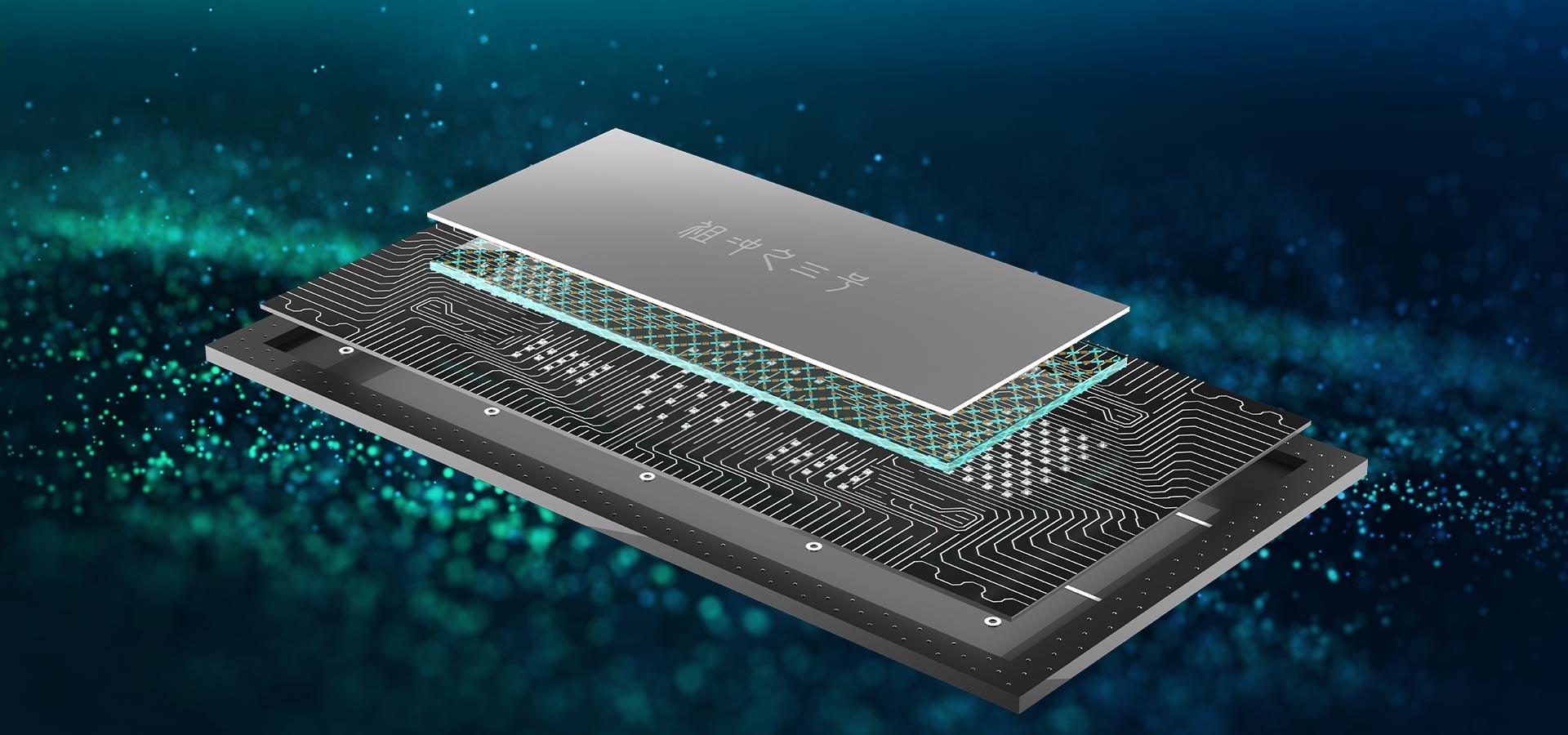
Figure 1. China's New Quantum Machine.
This achievement represents a significant step toward quantum supremacy, with the team showcasing computational power that vastly exceeds Google's most recent benchmarks. Figure 1. China's New Quantum Machine.
Zuchongzhi-3 Achieves Groundbreaking Advancement in Quantum Computing
A research team from the University of Science and Technology of China (USTC), in collaboration with the Chinese Academy of Sciences and other partners, has achieved a major breakthrough in random quantum circuit sampling using their latest superconducting quantum computing prototype, Zuchongzhi-3. This advanced machine features 105 qubits and 182 couplers, pushing the boundaries of quantum computing performance.
Zuchongzhi-3 operates at an extraordinary speed, performing calculations 10¹⁵ times faster than the most powerful supercomputer currently available and one million times faster than Google's latest reported quantum computing results. Building upon the success of its predecessor, Zuchongzhi-2, this achievement represents a significant leap in quantum computing capabilities.
The study, led by prominent researchers Jianwei Pan, Xiaobo Zhu, Chengzhi Peng, and their international colleagues, has been published as a cover article in Physical Review Letters, highlighting the groundbreaking nature of their work.
The Path to Achieving Quantum Supremacy
Quantum supremacy, the point at which a quantum computer can solve problems far beyond the capabilities of classical computers, has long been a central pursuit in quantum computing [1]. In 2019, Google’s 53-qubit Sycamore processor achieved a major milestone by completing a random circuit sampling task in just 200 seconds — a task that was estimated to take the world’s fastest supercomputer 10,000 years at that time.
However, by 2023, researchers at USTC developed more advanced classical algorithms capable of completing the same task in just 14 seconds using over 1,400 A100 GPUs. With the introduction of the Frontier supercomputer, which features expanded memory capacity, the task can now be executed in only 1.6 seconds, posing a significant challenge to Google's previous claim of quantum supremacy.
Advancing the Frontiers: Major Milestones Achieved with Jiuzhang and Zuchongzhi
Building on their breakthroughs, the USTC team achieved the first rigorously proven quantum supremacy in 2020 using the Jiuzhang photonic quantum computing prototype, setting a new benchmark in quantum computing. This achievement was further reinforced in 2021 with a superconducting demonstration using the Zuchongzhi-2 processor.
By 2023, the team advanced even further with the development of Jiuzhang-3, a 255-photon quantum computing prototype, which demonstrated computational power surpassing classical supercomputers by an astonishing 10¹⁶ orders of magnitude.
In October 2024, Google also made significant progress in quantum computing with its 67-qubit superconducting quantum processor, Sycamore, showcasing quantum supremacy by outperforming classical supercomputers by nine orders of magnitude.
zuchongzhi-3: Advancing Quantum Computing to New Heights
Building upon the foundation of the 66-qubit Zuchongzhi-2, the USTC research team made significant advancements in quantum computing performance with the development of Zuchongzhi-3, a superconducting quantum processor equipped with 105 qubits and 182 couplers. The upgraded processor boasts a coherence time of 72 μs, along with high precision levels, achieving a simultaneous single-qubit gate fidelity of 99.90%, a simultaneous two-qubit gate fidelity of 99.62%, and a simultaneous readout fidelity of 99.13%. This extended coherence time enables the processor to perform more complex and prolonged quantum operations.
To assess its computational capabilities, the team executed an 83-qubit, 32-layer random circuit sampling task on Zuchongzhi-3. The results revealed a processing speed exceeding that of the world’s most powerful supercomputer by 15 orders of magnitude and outperforming Google’s latest quantum computing results by six orders of magnitude. This accomplishment establishes Zuchongzhi-3 as the most powerful superconducting quantum computing system to date, solidifying a new benchmark in quantum computational advantage.
Shaping the Future of Quantum Research
Building on the remarkable achievement of establishing the strongest "quantum computational advantage" with Zuchongzhi-3, the USTC research team is now focusing on advancing key areas of quantum computing, including quantum error correction, quantum entanglement, quantum simulation, and quantum chemistry.
To further enhance performance, the team has implemented a 2D grid qubit architecture, significantly improving qubit interconnectivity and data transfer rates. This architecture has enabled the integration of a surface code, a critical step toward achieving fault-tolerant quantum computing [2]. Currently, the team is developing quantum error correction using a distance-7 surface code, with ambitious plans to extend this to distances of 9 and 11. These advancements are expected to pave the way for large-scale integration and more stable manipulation of quantum bits, bringing practical quantum computing closer to reality.
Global Influence and Recognition
The team’s work is profoundly significant and has received widespread acclaim. One journal reviewer described it as “benchmarking a new superconducting quantum computer, which shows state-of-the-art performance” and a “significant upgrade from the previous 66-qubit device (Zuchongzhi-2).”
In recognition of the study’s critical importance, at the same time, Physics Magazine featured a dedicated viewpoint article that provided an in-depth exploration of its innovations and emphasized its broader significance.
Reference:
- https://analyticsindiamag.com/ai-news-updates/chinas-zuchongzhi-3-0-quantum-processor-outpaces-google-willow-by-million-times/
- https://scitechdaily.com/chinas-new-quantum-machine-runs-one-million-times-faster-than-googles/
Cite this article:
Keerthana S (2025),China's New Quantum Computer Outperforms Google's, Operating a Million Times Faster, AnaTechMaz, pp. 211
Recent Post
-
China's New Quantum Computer Outperforms Google's, Operating a Million Times Faster
A groundbreaking advancement in quantum computing has shaken the tech industry, as researchers...
-

Breakthrough in Photon Entanglement Could Lead to Smaller Quantum Computers
Quantum computing has faced challenges in efficiently...
-

IBM's Quantum Breakthrough: Europe's First System Two Arrives in Spain
IBM and the Basque Government will install Europe’s first IBM Quantum System Two at the...
-

world-first: US-Designed Photon Router to Connect Qubits in Quantum Networks
The device bridges the significant energy gap between.....
-

A Quantum Computer Has Successfully Solved a Real-World Problem for The Automotive Giant, Ford
D-Wave Quantum Inc., based in Palo Alto, California, claims to be the first company to offer ...
-

A Crucial Advancement for Quantum Computers Enabling Direct Processor Communication
Quantum computers must efficiently share information between processors to realize their...
-

The Quantum Spin Discovery That Could Revolutionize Computing
The University of California, Riverside, in collaboration...
-

Scientists Discover Hidden Quantum Tornadoes with Potential to Transform Electronics
Scientists have long known that electrons can form vortices in quantum materials. However,...
-

Water’s Secret Unveiled – It Can Exist in Two Liquid States Simultaneously
Water is a truly remarkable substance, known for its ability...
-
Scientists Uncover a Surprisingly Simple Formula for Quantum Entanglement
Quantum entanglement is a phenomenon where two particles become interconnected, ...
-

Physicists Observe a Quantum Phase Flip—And It's Even More Mind-Bending Than Expected
Phase transitions, such as water freezing into ice, are common in everyday life. ...
-

Spinning Electrons Unravel a Long-Standing Semiconductor Mystery
Their semiconductor emits circularly polarized light, ...
-

A Small Twist Ignites a Quantum Breakthrough in Superconductors
Scientists at the RIKEN Center for Emergent Matter Science (CEMS) and their collaborators...
-

Hofstadter’s Butterfly Finally Lands – A 50-Year-Old Quantum Puzzle Solved
A team of Princeton University scientists has successfully measured electron energy levels...
-

Scientists Unlock Breakthrough in Capturing Ultrafast Electron Motion in Real Time
Two doctoral students from Lienau’s Ultrafast Nano-Optics research group, Daniel Timmer ...