

Scientists Uncover a Surprisingly Simple Formula for Quantum Entanglement
Quantum entanglement is a phenomenon where two particles become interconnected, meaning their states remain correlated regardless of the distance between them. This mysterious connection plays a crucial role in advanced technologies such as quantum computing and quantum cryptography.
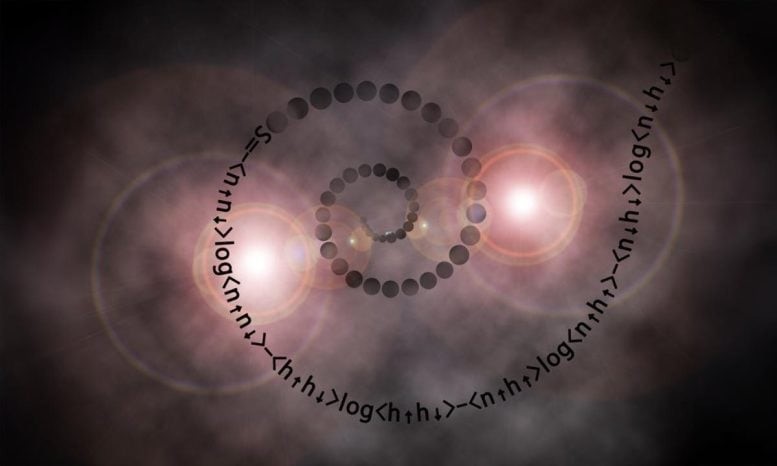
Figure 1. Scientists Discover an Unexpectedly Simple Formula for Quantum Entanglement.
Although significant progress has been made in understanding entanglement, many of its aspects remain intricate and challenging to decipher. Figure 1 shows Scientists Discover an Unexpectedly Simple Formula for Quantum Entanglement.
Emphasizing Local Quantum Interactions
"Previous studies have primarily examined the universal properties of quantum entanglement in materials with magnetism or superconductivity," explained Yunori Nishikawa, a lecturer at Osaka Metropolitan University’s Graduate School of Science and the study’s lead author.
Instead, the research team took a more localized approach. They focused on the quantum entanglement between one or two randomly chosen atoms in a strongly correlated electron system and their surrounding environment.
The Complexity of Strongly Correlated Electron Systems
Strongly correlated electron systems are materials where interactions between electrons dictate the system’s behavior, giving rise to intricate and highly entangled quantum states. These systems provide a valuable framework for studying quantum entanglement.
The researchers developed formulas to compute essential quantum information metrics, including:
- Entanglement entropy – measures the degree of entanglement in a system.
- Mutual information – quantifies the shared information between two parts of the system.
- Relative entropy – assesses differences between quantum states.
A Surprising Discovery in Simplified Equations
We were pleasantly surprised to find that the formula for entanglement entropy could be expressed in a remarkably simple way," said Nishikawa.
To validate their approach, the team applied their formulas to various material systems, including nanoscale artificial magnetic materials arranged in a linear chain and dilute magnetic alloys. Their analysis uncovered unexpected patterns of quantum entanglement in the nanoscale magnetic systems.
In the case of dilute magnetic alloys, they identified quantum relative entropy as a crucial factor in capturing the Kondo effect—a phenomenon where a magnetic impurity becomes screened by conduction electrons.
Uncovering Unexpected Quantum Behaviors
"The behavior of quantum entanglement in nanoscale artificial magnetic materials defied our initial expectations, opening new avenues for understanding quantum interactions," said Nishikawa.
Expanding the Frontiers of Quantum Research
This study lays the groundwork for deeper investigations into quantum entanglement, potentially accelerating advancements in quantum technologies.
"Our formulas can also be applied to systems with various other physical properties," Nishikawa said. "We hope to inspire further research and provide new insights into quantum behaviors in different materials."
Source: SciTECHDaily
Cite this article:
Priyadharshini S (2025),"Scientists Uncover a Surprisingly Simple Formula for Quantum Entanglement", AnaTechMaz, pp. 220
Recent Post
-

China's New Quantum Computer Outperforms Google's, Operating a Million Times Faster
A groundbreaking advancement in quantum computing has shaken the tech industry, as researchers...
-

Breakthrough in Photon Entanglement Could Lead to Smaller Quantum Computers
Quantum computing has faced challenges in efficiently...
-

IBM's Quantum Breakthrough: Europe's First System Two Arrives in Spain
IBM and the Basque Government will install Europe’s first IBM Quantum System Two at the...
-

world-first: US-Designed Photon Router to Connect Qubits in Quantum Networks
The device bridges the significant energy gap between.....
-

A Quantum Computer Has Successfully Solved a Real-World Problem for The Automotive Giant, Ford
D-Wave Quantum Inc., based in Palo Alto, California, claims to be the first company to offer ...
-

A Crucial Advancement for Quantum Computers Enabling Direct Processor Communication
Quantum computers must efficiently share information between processors to realize their...
-

The Quantum Spin Discovery That Could Revolutionize Computing
The University of California, Riverside, in collaboration...
-

Scientists Discover Hidden Quantum Tornadoes with Potential to Transform Electronics
Scientists have long known that electrons can form vortices in quantum materials. However,...
-

Water’s Secret Unveiled – It Can Exist in Two Liquid States Simultaneously
Water is a truly remarkable substance, known for its ability...
-
Scientists Uncover a Surprisingly Simple Formula for Quantum Entanglement
Quantum entanglement is a phenomenon where two particles become interconnected, ...
-

Physicists Observe a Quantum Phase Flip—And It's Even More Mind-Bending Than Expected
Phase transitions, such as water freezing into ice, are common in everyday life. ...
-

Spinning Electrons Unravel a Long-Standing Semiconductor Mystery
Their semiconductor emits circularly polarized light, ...
-

A Small Twist Ignites a Quantum Breakthrough in Superconductors
Scientists at the RIKEN Center for Emergent Matter Science (CEMS) and their collaborators...
-

Hofstadter’s Butterfly Finally Lands – A 50-Year-Old Quantum Puzzle Solved
A team of Princeton University scientists has successfully measured electron energy levels...
-

Scientists Unlock Breakthrough in Capturing Ultrafast Electron Motion in Real Time
Two doctoral students from Lienau’s Ultrafast Nano-Optics research group, Daniel Timmer ...