

Collapsing Plasma Could Unlock the Mystery of Cosmic Magnetism
Galactic magnetic fields may form much faster than previously thought, fueled by collapsing plasma and turbulent motion.
While conventional models predict that organized magnetic fields spanning thousands of light-years take billions of years to develop, astronomical observations suggest galaxies achieve this much sooner. A study in Physical Review Letters proposes that collapsing plasma clouds during galaxy formation can accelerate the growth of magnetic fields, potentially resolving this discrepancy.

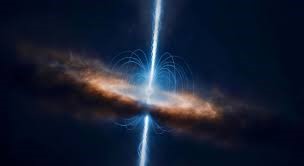
Figure 1. Collapsing Plasma Accelerates Galactic Magnetic Fields
Most of the universe’s visible matter exists as plasma, a state highly responsive to forces like gravity, temperature differences, and rotation. These forces can create turbulence, and according to dynamo theory, such turbulence amplifies existing magnetic fields. Dynamo theory is the primary framework scientists use to explain the origin of cosmic magnetic fields. Figure 1 shows Collapsing Plasma Accelerates Galactic Magnetic Fields.
“Dynamo theory, however, has limitations,” explains Pallavi of the International Centre for Theoretical Sciences and co-author of the study. “It particularly struggles to account for observations of young galaxies that already exhibit strong magnetic fields stretching across thousands of light-years.”
Rethinking Galaxy Formation
The study explores how dynamo processes may behave differently during the early stages of galaxy formation, focusing on collapsing clouds of ionized gas—critical building blocks of galaxies. “During galaxy formation, gravity stirs the plasma, which can amplify magnetic fields,” explains Irshad, the study’s lead author.
Using analytical techniques, the researchers demonstrate that gravity-driven plasma motion can accelerate magnetic field development, allowing them to form much earlier than previously thought. This effect is tied to turbulence within the collapsing cloud, which generates swirling eddies. The growth of magnetic fields depends on the eddies’ turnover rate, which increases as the cloud contracts. The team observed “super-exponential” growth in magnetic strength, providing a plausible explanation for the strong magnetic fields seen in young galaxies. Their numerical results suggest these fields can exceed the strength predicted by conventional dynamo theory.
Modeling Approach and Its Limitations
For their analysis, the researchers employed a mathematical technique called “supercomoving coordinates,” which accounts for the universe’s expansion [1]. “These coordinates simplify the equations of a collapsing galaxy, making them equivalent to those of a static galaxy and easing calculations,” explains Irshad. “This method works well for a uniformly collapsing spherical system, but more realistic scenarios will require further study.”
Key questions remain, particularly regarding the timescales involved, notes Pallavi. Computational models are being developed to simulate cosmic structure formation, and the study’s predictions can help refine and test these models.
While magnetic forces are generally weaker than gravity in shaping cosmic structures, the findings indicate that strong, ordered magnetic fields could have emerged earlier than expected, potentially influencing the evolution of the universe in subtle but lasting ways.
Reference:
- https://scitechdaily.com/collapsing-plasma-may-hold-the-key-to-cosmic-magnetism/
Cite this article:
Janani R (2026), Collapsing Plasma Could Unlock the Mystery of Cosmic Magnetism, AnaTechMaz, pp.820
Recent Post
-

China’s Solar Power Satellite Could Have Dual-Use Military Capabilities
China’s ambitious plans to build a space-based solar power station are drawing renewed attention after....
-

Astronomers Observe Two Giant Planets Forming Around a Distant Star
Astronomers have discovered two giant planets forming around the young....
-

Scientists Suggest This Extreme “Day-Night” Planet Could Potentially Harbor Life
A recent study indicates that even the harshest exoplanets may not be...
-

Cosmic “Blinking Lights” May Reveal Hidden Supermassive Black Hole Pairs
A new study introduces a novel method for detecting hidden pairs of....
-
Astronomers Detect Unusual “Chirp” From a Supernova, Uncovering Hidden Physics
Astronomers analyzing a distant superluminous supernova have....
-

AI Detects Hidden Patterns, Revealing Dozens of New Alien Planets
Using machine learning to analyze extensive Transiting Exoplanet....
-

NASA Clears Artemis II for Moon Mission as Orion Nears Key Engine Burn
NASA’s Artemis II crew is set for a historic journey, returning humans to...
-

NASA Artemis II Prepares for Historic Moon Flyby and Record-Breaking Milestone
The Artemis II crew is approaching the Moon, testing critical life-support suits...
-

New Solar Panel Breakthrough Generates Energy from Sunlight and Rain
A new thin-film innovation allows solar panels to generate electricity from....
Collapsing Plasma Could Unlock the Mystery of Cosmic Magnetism
Galactic magnetic fields may form much faster than previously thought, fueled by collapsing plasma and....
-

Astronomers Identify the Most Pristine Star on Record
Astronomers have discovered an exceptionally ancient star that provides a rare window into the early universe....