

Astronomers Detect Unusual “Chirp” From a Supernova, Uncovering Hidden Physics
Astronomers analyzing a distant superluminous supernova have discovered an unusual, rapidly accelerating “chirp” pattern in its light.
Supernovae have long been used as cosmic tools to study fundamental physics and measure the universe. While examining one such event, graduate student Joseph Farah noticed this unexpected signal.
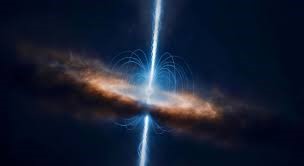
Figure 1. Spinning Magnetar Warps Space-Time, Producing Bright Supernova Flashes
In a study published in Nature, Farah and an international team—including his advisor Andy Howell from the Las Cumbres Observatory—reported the discovery of a rare superluminous supernova, SN 2024afav. The unusual behavior of this explosion provides strong evidence for a long-standing theory of how massive stars collapse and die. By applying principles of General Relativity, the researchers developed a model that explains the distinctive light patterns observed in these extraordinarily bright stellar events. Figure 1 shows Spinning Magnetar Warps Space-Time, Producing Bright Supernova Flashes.
Unraveling the Mystery of the Light Curve Bumps
When a massive star exhausts its nuclear fuel, its core collapses under gravity, triggering a supernova explosion. Most of these events brighten and fade in a smooth, predictable way.
However, some rare cases—known as superluminous supernovae—are 10 to 100 times brighter and remain poorly understood. Their light curves often show unusual fluctuations, with brief increases in brightness that appear as bumps, suggesting complex activity within the expanding stellar debris.
One leading explanation is that the energy originates from within the explosion itself. In this model, the collapsing core forms a neutron star—an extremely dense remnant—that injects energy into the surrounding material, enhancing the supernova’s brightness.
Another explanation points to external interactions, where the supernova’s shock wave collides with surrounding shells of gas, briefly boosting its brightness.
Astronomers at the Las Cumbres Observatory closely tracked SN 2024afav, located about a billion light-years away, and observed a series of repeating brightness variations.
Joseph Farah found that these fluctuations were not random. Instead, they followed a smooth, repeating pattern with intervals that became progressively shorter. This marked the first observation of a supernova producing a quasi-periodic signal with increasing frequency—a “chirp” similar to signals seen in merging black holes.
As Farah noted, the structured nature of the signal could not be explained by existing models, prompting new ideas about the underlying physical processes driving these unusual patterns.
A Magnetar Powering the Explosion
Joseph Farah developed a new explanation for the unusual signal after drawing inspiration from a General Relativity course taught by Gary Horowitz. He proposed that the supernova left behind a Magnetar—a rapidly spinning neutron star with an ուժ強 magnetic field—capable of powering the explosion.
In this model, some of the ejected material falls back and forms a tilted accretion disk around the magnetar. Due to a relativistic effect called Lense-Thirring precession, the spinning magnetar twists spacetime, causing the disk to wobble. As the disk precesses, it periodically blocks and redirects light, creating a repeating, lighthouse-like signal. As the disk moves inward, the wobble speeds up—producing the observed “chirp.”
Farah and collaborators, including Logan Prust, tested multiple alternative explanations, from classical (Newtonian) effects to magnetically driven precession. However, only Lense-Thirring precession successfully matched both the timing and the rate of change in the observed signal. This marks the first time general relativity has been used to explain the internal dynamics of a supernova in this way.
A Triumph for Global Observation
The discovery was a rapid, coordinated effort involving a global network of telescopes. After the initial detection by the ATLAS survey in December 2024, the Las Cumbres Observatory played a key role by monitoring SN 2024afav for over 200 days. Using its flexible observing capabilities, the team continuously adjusted parameters to capture even subtle brightness variations.
Joseph Farah highlighted that the high-quality, high-cadence data allowed researchers to predict future brightness “bumps” and then confirm them in real time—an indication they were observing something truly unusual.
The study is considered a breakthrough for two main reasons: it marks the first detection of a “chirp” signal in a supernova, revealing a new observational phenomenon, and it provides strong confirmation of the magnetar model as the driving mechanism behind superluminous supernovae.
The Next Frontier in Supernova Research
Joseph Farah, who is set to complete his Ph.D. at UC Santa Barbara, will continue his research as a Miller Fellow at the Miller Institute for Basic Research in Science, working with Dan Kasen, who originally proposed the magnetar model.
His advisor, Andy Howell, emphasized the significance of the discovery, noting that while the magnetar model had long explained the immense energy of superluminous supernovae, it could not account for the mysterious brightness fluctuations—until now. By linking these “bumps” to the magnetar model using General Relativity, Farah’s work provides a compelling and elegant explanation.
Looking ahead, Farah expects many more “chirping” supernovae to be discovered with the upcoming Vera C. Rubin Observatory, which will conduct an unprecedented survey of the night sky, generating massive amounts of data over the next decade [1]. He describes the discovery as a defining moment in his career—one that highlights how much there is still to learn about the universe.
Reference:
- https://scitechdaily.com/astronomers-detect-strange-chirp-from-a-supernova-revealing-hidden-physics/
Cite this article:
Janani R (2026), Astronomers Detect Unusual “Chirp” From a Supernova, Uncovering Hidden Physics, AnaTechMaz, pp.815
Recent Post
-

China’s Solar Power Satellite Could Have Dual-Use Military Capabilities
China’s ambitious plans to build a space-based solar power station are drawing renewed attention after....
-

Astronomers Observe Two Giant Planets Forming Around a Distant Star
Astronomers have discovered two giant planets forming around the young....
-

Scientists Suggest This Extreme “Day-Night” Planet Could Potentially Harbor Life
A recent study indicates that even the harshest exoplanets may not be...
-

Cosmic “Blinking Lights” May Reveal Hidden Supermassive Black Hole Pairs
A new study introduces a novel method for detecting hidden pairs of....
-
Astronomers Detect Unusual “Chirp” From a Supernova, Uncovering Hidden Physics
Astronomers analyzing a distant superluminous supernova have....
-

AI Detects Hidden Patterns, Revealing Dozens of New Alien Planets
Using machine learning to analyze extensive Transiting Exoplanet....
-

NASA Clears Artemis II for Moon Mission as Orion Nears Key Engine Burn
NASA’s Artemis II crew is set for a historic journey, returning humans to...
-

NASA Artemis II Prepares for Historic Moon Flyby and Record-Breaking Milestone
The Artemis II crew is approaching the Moon, testing critical life-support suits...
-

New Solar Panel Breakthrough Generates Energy from Sunlight and Rain
A new thin-film innovation allows solar panels to generate electricity from....

Collapsing Plasma Could Unlock the Mystery of Cosmic Magnetism
Galactic magnetic fields may form much faster than previously thought, fueled by collapsing plasma and....
-

Astronomers Identify the Most Pristine Star on Record
Astronomers have discovered an exceptionally ancient star that provides a rare window into the early universe....