

Cosmic “Blinking Lights” May Reveal Hidden Supermassive Black Hole Pairs
A new study introduces a novel method for detecting hidden pairs of supermassive black holes by observing faint, repeating flashes of starlight.
Researchers from the University of Oxford and the Max Planck Institute for Gravitational Physics (Albert Einstein Institute) suggest that these elusive binaries—formed when galaxies merge—can be identified through periodic brightening of background stars. As the black holes orbit each other, their intense gravity bends and amplifies the starlight, producing a series of recurring signals that reveal their presence.

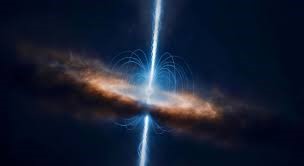
Figure 1. Gravitationally Lensed Starlight by a Supermassive Black Hole Binary with an Einstein Ring
Supermassive black holes, found at the centers of most galaxies, can be millions or billions of times more massive than the Sun. While widely separated pairs have been observed, tightly bound binaries remain difficult to detect. This new light-based approach could change that. Figure 1 shows Gravitationally Lensed Starlight by a Supermassive Black Hole Binary with an Einstein Ring.
Importantly, the method does not rely on gravitational wave detection, allowing astronomers to potentially spot these systems well before next-generation observatories become operational, and enabling more detailed multi-method studies of their behavior.
Gravitational Lensing as a Method for Detection
Dr. Miguel Zumalacárregui of the Max Planck Institute for Gravitational Physics explains that supermassive black holes can act like natural telescopes, bending and intensifying passing light due to their immense gravity—a phenomenon known as gravitational lensing. This effect can make background stars appear dramatically brighter.
In the case of a single black hole, such strong lensing only occurs when a star is almost perfectly aligned with the observer. However, a binary system behaves differently. Two black holes working together create a diamond-shaped region, called a caustic curve, where stars can be significantly magnified even without perfect alignment. Although ideal models predict extreme amplification, the finite size of real stars limits the intensity.
As Professor Bence Kocsis from the University of Oxford notes, the likelihood of strong light amplification is much higher in binary systems than around a single black hole, making them easier to detect using this method.
Orbital Motion and Periodic Light Flashes
Unlike single black holes, binary systems are constantly moving, orbiting each other while gradually losing energy through gravitational waves, as predicted by general relativity. As they draw closer, their orbital speed increases and their separation shrinks over time.
Hanxi Wang, a graduate student in Professor Bence Kocsis’ group, explains that this motion causes the caustic curve to rotate and change shape, sweeping across stars in the background [1]. When a bright star enters this region, it can produce an intense flash of light each time the caustic passes over it—resulting in repeating bursts that serve as a clear signature of a supermassive black hole binary.
The study shows that these flashes follow predictable patterns. As the black holes spiral inward, gravitational wave emission subtly alters the caustic structure, affecting both the timing and brightness of the flashes. By studying these variations, astronomers can estimate key properties such as the masses of the black holes and the evolution of their orbit.
Future Observations and the Rise of Multi-Messenger Astronomy
Upcoming wide-field observatories, such as the Vera C. Rubin Observatory and the Nancy Grace Roman Space Telescope, are expected to significantly enhance the ability to detect these subtle light signals.
Professor Bence Kocsis highlights that identifying inspiraling supermassive black hole binaries years before space-based gravitational wave detectors become operational is an exciting possibility. This approach paves the way for true multi-messenger astronomy, enabling scientists to combine light and gravitational wave data to test theories of gravity and better understand black hole physics.
Reference:
- https://scitechdaily.com/cosmic-blinking-lights-could-expose-hidden-supermassive-black-hole-pairs/
Cite this article:
Janani R (2026), Cosmic “Blinking Lights” May Reveal Hidden Supermassive Black Hole Pairs, AnaTechMaz, pp.814
Recent Post
-

China’s Solar Power Satellite Could Have Dual-Use Military Capabilities
China’s ambitious plans to build a space-based solar power station are drawing renewed attention after....
-

Astronomers Observe Two Giant Planets Forming Around a Distant Star
Astronomers have discovered two giant planets forming around the young....
-

Scientists Suggest This Extreme “Day-Night” Planet Could Potentially Harbor Life
A recent study indicates that even the harshest exoplanets may not be...
-
Cosmic “Blinking Lights” May Reveal Hidden Supermassive Black Hole Pairs
A new study introduces a novel method for detecting hidden pairs of....
-
Astronomers Detect Unusual “Chirp” From a Supernova, Uncovering Hidden Physics
Astronomers analyzing a distant superluminous supernova have....
-

AI Detects Hidden Patterns, Revealing Dozens of New Alien Planets
Using machine learning to analyze extensive Transiting Exoplanet....
-

NASA Clears Artemis II for Moon Mission as Orion Nears Key Engine Burn
NASA’s Artemis II crew is set for a historic journey, returning humans to...
-

NASA Artemis II Prepares for Historic Moon Flyby and Record-Breaking Milestone
The Artemis II crew is approaching the Moon, testing critical life-support suits...
-

New Solar Panel Breakthrough Generates Energy from Sunlight and Rain
A new thin-film innovation allows solar panels to generate electricity from....

Collapsing Plasma Could Unlock the Mystery of Cosmic Magnetism
Galactic magnetic fields may form much faster than previously thought, fueled by collapsing plasma and....
-

Astronomers Identify the Most Pristine Star on Record
Astronomers have discovered an exceptionally ancient star that provides a rare window into the early universe....