

First Quantum Simulations Set New Standard for Biochemical Accuracy
Under the leadership of University of Melbourne theoretician and HPC expert Associate Professor Giuseppe Barca [1], a research team has achieved a groundbreaking milestone: the first quantum simulation of biological systems at a scale sufficient to model drug performance accurately.
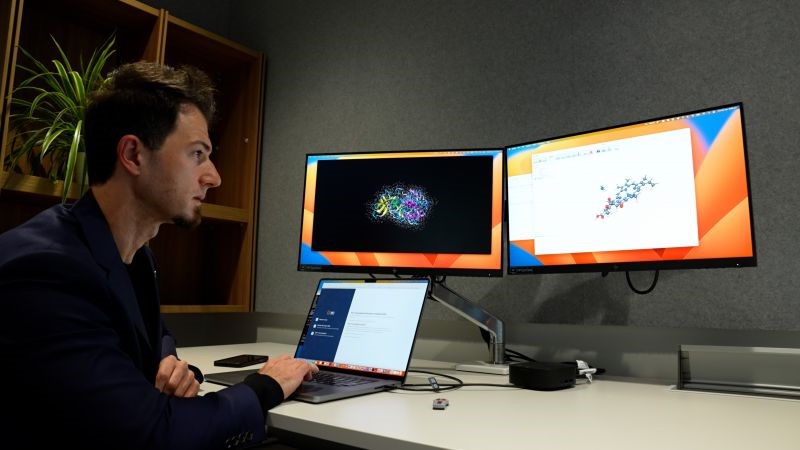
Figure 1. The First Quantum Simulation of Biological Systems. (Credit: University of Melbourne)
Harnessing the unprecedented "exascale" power of the Frontier supercomputer at the Oak Ridge Leadership Computing Facility in Tennessee, the team has developed pioneering software that can accurately predict the chemical reactions and physical properties of molecular systems containing up to hundreds of thousands of atoms. This advancement delivers highly precise predictions of molecular behavior and sets a new benchmark in computational chemistry. Figure 1 shows the first quantum simulation of biological systems at a scale necessary to accurately model drug performance.
The project combined expertise in chemistry, drug discovery, quantum mechanics, and supercomputing, with key collaborations from the Oak Ridge National Laboratory, leading semiconductor company AMD, and deep-tech startup QDX [2].
After more than four years of record-setting research, this breakthrough allows for the first-time study of biomolecular-scale systems with quantum-level accuracy. This cutting-edge simulation capability provides unprecedented detail for observing and understanding these systems, which is crucial for enhancing the evaluation of traditional drugs and designing new therapeutics that interact more effectively with target biological systems.
“This breakthrough enables us to simulate drug behaviour with an accuracy that rivals physical experiments. We can now observe not just the movement of a drug but also its quantum mechanical properties, such as bond breaking and formation, over time in a biological system. This is vital for assessing drug viability and designing new treatments,” Associate Professor Barca said.
Currently, over 80 percent of disease-causing proteins remain untreatable with existing drugs, and only two percent are effectively addressed by known drugs. This highlights the limitations of current methods. Advanced quantum mechanics and HPC expand the computational tools available for drug discovery, providing new levels of speed and accuracy at biologically relevant scales. Moreover, they offer insights and capabilities that traditional computational chemistry methods could not, unlocking new approaches for modulating therapeutic targets and increasing the number of treatable disease targets.
The simulations calculate a drug molecule's affinity for specific targets, such as genetically mutated proteins causing diseases. Algorithms then assess the drug's effectiveness by evaluating the strength of the bond between the drug and the target, demonstrating its potency. For effective quantum simulation testing, the biological model system must incorporate thousands of atoms.
“This is exactly why we built Frontier, to tackle larger, more complex problems facing society,” said Dmytro Bykov, a computational chemist at Oak Ridge National Laboratory. “By breaking the exascale barrier, these simulations push our computing capabilities into a brand new world of possibilities with unprecedented levels of sophistication and radically faster times to solution — and this is just the beginning of the exascale era.”
Dr. Jakub Kurzak, a principal member of the technical staff at AMD and representative for AMD at Oak Ridge National Laboratory, commented, "We are thrilled to see AMD high-performance computing technologies enable breakthrough exascale science in medical research and deliver the computing performance to accurately model the highly complex physics of molecular systems for drug discovery.”
Loong Wang, Co-Founder and CEO of QDX, expressed, “At QDX, we are incredibly excited to transform groundbreaking scientific advancements into a powerful, user-friendly platform that accelerates and enhances drug discovery, opening doors to innovative treatments. Our advanced quantum simulations have set a new benchmark for accuracy at biologically-relevant scales. We hope that this technology will enable new drugs to be developed faster and cheaper, and for diseases that have — so far — been too difficult to treat.”
Associate Professor Barca, based in the Faculty of Engineering and Information Technology’s School of Computing and Information Systems, was recognized by The Australian as one of Australia's Top 250 Researchers in 2024. In 2023, he co-founded QDX, which is already leveraging high-performance quantum simulations to speed up new therapeutics design. QDX has secured commercial deals with pharmaceutical companies and tech start-ups in Australia, Singapore, and the US.
“Thanks to new computing and software capabilities that enable accurate modelling at the quantum mechanical level, we can achieve predictive accuracy close to experimental results. These calculations were completely unfeasible just a few years ago,” Associate Professor Barca said.
Source: University of Melbourne
References:
- https://www.linkedin.com/posts/the-group-of-eight_breakthrough-in-high-performance-computing-activity-7221401246807601152-wsC8
- https://www.eurekalert.org/news-releases/1053152
Cite this article:
Hana M (2024), First Quantum Simulations Set New Standard for Biochemical Accuracy, AnaTechMaz, pp. 149
Recent Post
-

Non-Toxic Quantum Dot Technology Powers Breakthrough in SWIR Image Sensors
In a groundbreaking development, researchers from ICFO and Qurv......
-

Efficient Generation and Assessment of Entanglement in Quantum Systems
Entanglement, a hallmark of quantum mechanics, is a unique correlation....
-
University of Ottawa Researchers Pioneer Revolutionary Quantum Circuit Evaluation Technique
A team of researchers from the University of Ottawa’s Nexus for Quantum Technologies Institute (NexQT) ...
-

Here's How We Can Enable the Next Major Advancement in Quantum Computing
Before revealing the first on-campus quantum computer in the US......
-

Controlling Quantum States with Spin-Polarized Currents
Electrons possess an intrinsic angular momentum called spin.....
-

Novel In Situ Luminescence Technique Enhances Quantum Dot Synthesis and Monitoring
Luminescence is the result of a process where an object absorbs light at...
-

Cooling Quantum Leap: EPFL’s Breakthrough Device Could Revolutionize Quantum Computing
In the realm of quantum computing, maintaining quantum bits (qubits)...
-
Advancing Quantum Computing: Simulating Quantum Materials with Quantum Annealers
Physicists have long pursued the concept of using quantum computers.....
-

Quantum Computers Are Like Kaleidoscopes, Illustrating Science and Technology in Fascinating Ways
Quantum computing is like Forrest Gump’s box of chocolates.....
-

Sound Science: Phononic Crystals' Impact on Quantum Computing
Researchers have created a genetic algorithm to design phononic......
-

A Quantum Algorithm Solves the Travelling Salesperson Problem Using Only 1 Qubit
Quantum physicists have created an algorithm that utilizes just one qubit to solve a problem that previously ...
-

QuTech's Breakthrough in Somersaulting Spin Qubits for Efficient Quantum Logic
Researchers at QuTech have made a breakthrough in the field of quantum.....
-

University of Bath Develops Specialty Optical Fibers for Future Quantum Computing Challenges
Physicists at the University of Bath in the UK have developed a new...
-
First Quantum Simulations Set New Standard for Biochemical Accuracy
Under the leadership of University of Melbourne theoretician.....
-

How UCSB Researchers Are Paving the Way for the Quantum Internet
The potential of quantum computing could be amplified by a quantum internet, and at the heart ...