

University of Ottawa Researchers Pioneer Revolutionary Quantum Circuit Evaluation Technique
A team of researchers from the University of Ottawa’s Nexus for Quantum Technologies Institute (NexQT) [1], led by Dr. Francesco Di Colandrea and supervised by Professor Ebrahim Karimi, has developed an innovative method for assessing the performance of quantum circuits. This groundbreaking advancement, recently published in the esteemed journal npj Quantum Information, marks a significant progress in the realm of quantum computing.
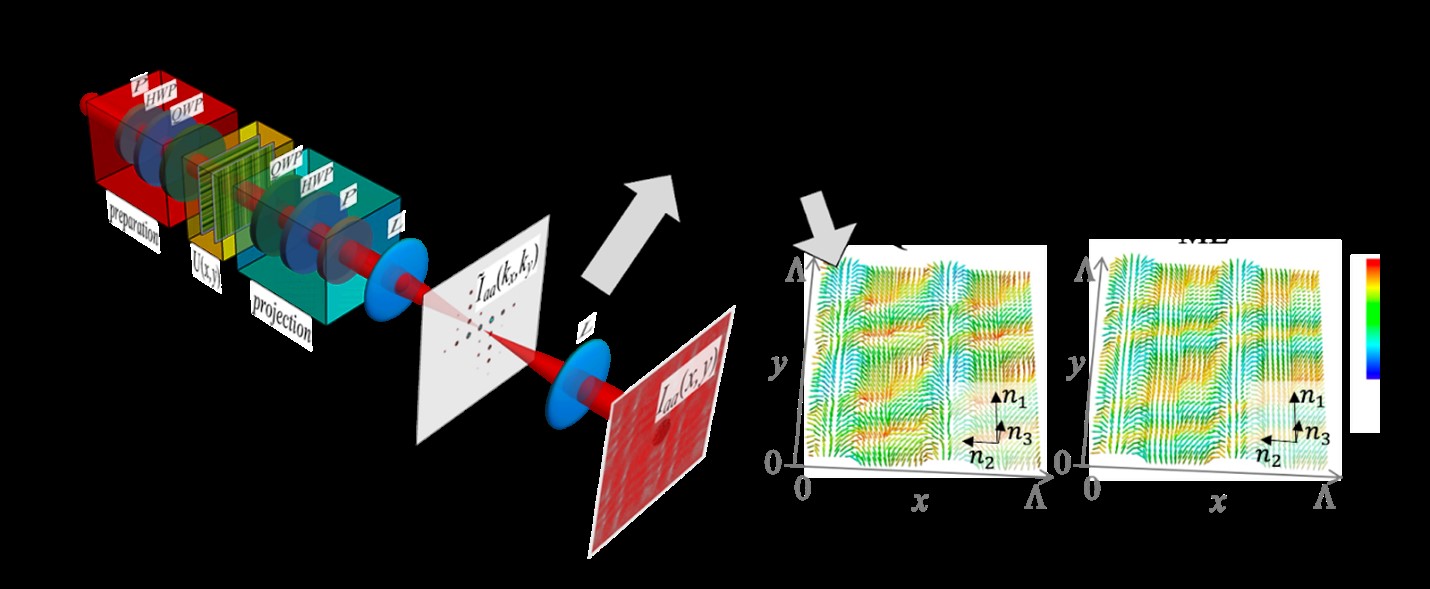
Figure 1. FQPT compared with traditional maximum likelihood (ML) methods. (Credit: University of Ottawa)
Figure 1 shows the schematic of a high-dimensional quantum photonics system generation and implementation of Fourier quantum process tomography (FQPT) compared with traditional maximum likelihood (ML) methods.
In the fast-developing field of quantum technologies, ensuring the reliability and functionality of quantum devices is paramount. Accurately and swiftly characterizing these devices is essential for their seamless integration into quantum circuits and computers, influencing both fundamental research and practical applications.
Characterization is crucial for verifying device operations, especially when anomalies or errors occur. Identifying and addressing these issues is vital for the advancement of future quantum technologies.
Historically, scientists have used Quantum Process Tomography (QPT) [2], a method requiring a large number of “projective measurements” to fully reconstruct a device’s operations. However, the number of measurements needed in QPT scales quadratically with the operation's dimensionality, posing significant experimental and computational challenges, particularly for high-dimensional quantum information processors.
The University of Ottawa team has introduced an optimized method called Fourier Quantum Process Tomography (FQPT). This technique enables the complete characterization of quantum operations with a minimal number of measurements. Instead of numerous projective measurements, FQPT employs the Fourier transform to perform a portion of the measurements in two different mathematical spaces. The physical relationship between these spaces enhances the information extracted from single measurements, drastically reducing the number of measurements needed. For example, for processes with dimensions 2d (where d can be arbitrarily high), only seven measurements are required.
To validate their technique, the researchers conducted a photonic experiment using optical polarization to encode a qubit. The quantum process was implemented as a complex space-dependent polarization transformation, using advanced liquid-crystal technology. This experiment showcased the method’s flexibility and robustness.
“The experimental validation is a fundamental step to probe the technique’s resilience to noise, ensuring robust and high-fidelity reconstructions in realistic experimental scenarios,” said Francesco Di Colandrea, a postdoctoral fellow at the University of Ottawa.
This novel technique signifies a remarkable advancement in quantum computing. The research team is now working on extending FQPT to arbitrary quantum operations, including non-Hermitian and higher-dimensional implementations, and employing AI techniques to increase accuracy and reduce measurements. This new method represents a promising pathway for further advancements in quantum technology.
Source: University of Ottawa
References:
- https://www.sciencedaily.com/releases/2024/06/240620194011.htm
- https://www.eurekalert.org/news-releases/1048809
Cite this article:
Hana M (2024), University of Ottawa Researchers Pioneer Revolutionary Quantum Circuit Evaluation Technique, AnaTechMaz, pp. 138
Recent Post
-

Non-Toxic Quantum Dot Technology Powers Breakthrough in SWIR Image Sensors
In a groundbreaking development, researchers from ICFO and Qurv......
-

Efficient Generation and Assessment of Entanglement in Quantum Systems
Entanglement, a hallmark of quantum mechanics, is a unique correlation....
-
University of Ottawa Researchers Pioneer Revolutionary Quantum Circuit Evaluation Technique
A team of researchers from the University of Ottawa’s Nexus for Quantum Technologies Institute (NexQT) ...
-

Here's How We Can Enable the Next Major Advancement in Quantum Computing
Before revealing the first on-campus quantum computer in the US......
-

Controlling Quantum States with Spin-Polarized Currents
Electrons possess an intrinsic angular momentum called spin.....
-

Novel In Situ Luminescence Technique Enhances Quantum Dot Synthesis and Monitoring
Luminescence is the result of a process where an object absorbs light at...
-

Cooling Quantum Leap: EPFL’s Breakthrough Device Could Revolutionize Quantum Computing
In the realm of quantum computing, maintaining quantum bits (qubits)...
-
Advancing Quantum Computing: Simulating Quantum Materials with Quantum Annealers
Physicists have long pursued the concept of using quantum computers.....
-

Quantum Computers Are Like Kaleidoscopes, Illustrating Science and Technology in Fascinating Ways
Quantum computing is like Forrest Gump’s box of chocolates.....
-

Sound Science: Phononic Crystals' Impact on Quantum Computing
Researchers have created a genetic algorithm to design phononic......
-

A Quantum Algorithm Solves the Travelling Salesperson Problem Using Only 1 Qubit
Quantum physicists have created an algorithm that utilizes just one qubit to solve a problem that previously ...
-
QuTech's Breakthrough in Somersaulting Spin Qubits for Efficient Quantum Logic
Researchers at QuTech have made a breakthrough in the field of quantum.....
-

University of Bath Develops Specialty Optical Fibers for Future Quantum Computing Challenges
Physicists at the University of Bath in the UK have developed a new...
-
First Quantum Simulations Set New Standard for Biochemical Accuracy
Under the leadership of University of Melbourne theoretician.....
-

How UCSB Researchers Are Paving the Way for the Quantum Internet
The potential of quantum computing could be amplified by a quantum internet, and at the heart ...