

Flying Car Industry Eyes Solid-State Batteries to Achieve Commercial Takeoff
As the flying car industry shifts from experimental prototypes to commercial reality, battery technology is emerging as a key factor in determining its success. Industry leaders increasingly view solid-state batteries as a critical solution for delivering the safety, performance, and energy density needed to support large-scale aerial mobility.
A New Phase for Urban Air Mobility
According to Su Qingpeng, founder and CEO of GAC Govy, the future of flying cars will depend heavily on advances in solid-state battery technology. These next-generation batteries offer the potential for greater energy storage, improved safety, and longer flight ranges compared with conventional lithium-ion systems.
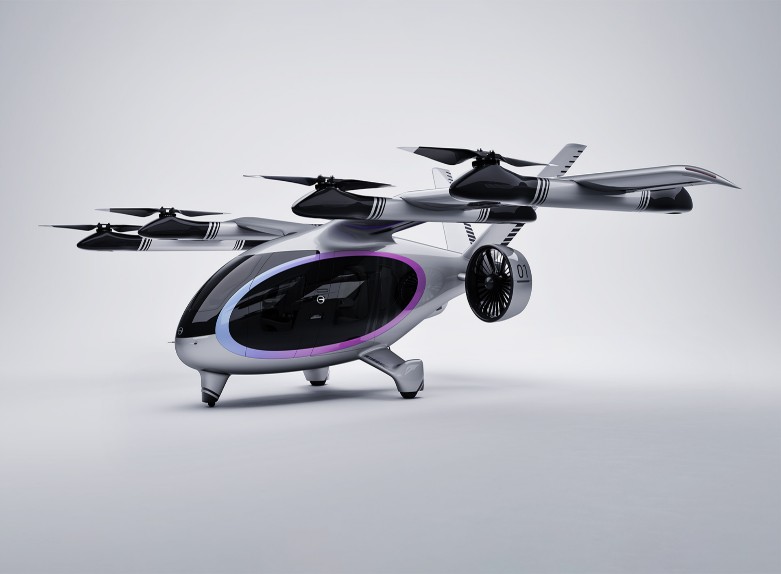
Figure 1. Flying Car.
At the same time, investors are becoming more focused on practical milestones such as production readiness, vehicle deliveries, profitability, and regulatory certification rather than purely technical demonstrations. Figure 1 shows flying car.
Following a Path Similar to Electric Vehicles
Su compares today’s flying car sector to the electric vehicle industry roughly a decade ago, when EVs were transitioning from niche products to mainstream transportation. He believes aerial mobility could expand even faster once the technology, regulations, and infrastructure reach a critical level of maturity.
Industry forecasts suggest that by 2030, flying cars could begin operating within a sustainable commercial ecosystem supported by technological advances, regulatory approvals, and the expansion of low-altitude transportation networks.
Govy AirCab Moves Toward Commercial Launch
The company’s flagship aircraft, the Govy AirCab, began accepting pre-orders in 2025 and entered production in 2026. GAC Govy is now working toward completing airworthiness testing and obtaining Type Certification by the end of 2026. Production Certification is expected to follow in 2027, a major step that would allow larger-scale manufacturing and bring commercial deployment closer to reality.
Why Solid-State Batteries Matter
Battery performance remains one of the biggest challenges for electric vertical takeoff and landing (eVTOL) aircraft. Flying vehicles require far more energy than ground-based electric cars while also meeting strict aviation safety standards. Solid-state batteries are considered a promising solution because they can potentially provide higher energy density, enabling longer flights while reducing safety risks associated with traditional battery technologies. These advantages could make them a cornerstone of future flying car designs.
A Different Economic Model
Unlike the automotive industry, where manufacturers seek lower battery costs for mass-market vehicles, flying car companies can tolerate higher battery expenses. Aircraft are inherently more expensive to produce than automobiles, giving developers greater flexibility to adopt advanced technologies at an earlier stage.
This economic advantage may allow solid-state batteries to be introduced in limited-production aerial vehicles before they become widely adopted in passenger cars [1]. As production scales across multiple industries, battery costs are expected to decline, improving the commercial viability of flying cars.
The Road to Mass Adoption
Despite rapid progress, large-scale production of flying cars is likely to advance more slowly than traditional automobiles. Extensive testing, regulatory approvals, certification requirements, and manufacturing validation processes create significant hurdles before widespread deployment can occur.
Nevertheless, industry leaders see solid-state batteries as a key enabling technology that could help transform flying cars from a futuristic concept into a practical transportation option over the coming decade.
Reference:
- https://interestingengineering.com/energy/flying-car-turns-to-solid-state-batteries-for-takeoff
Cite this article:
Keerthana S (2026), Flying Car Industry Eyes Solid-State Batteries to Achieve Commercial Takeoff, AnaTechMaz, pp.465
Recent Post
-

Tiny Nanolaser Breakthrough Could Transform the Future of Computing
Researchers have developed an ultra-compact nanolaser that could fundamentally ...
-

Microscopic Spotlight Effect Achieved with Ultra-Thin Device
The device developed at CUNY is the first to combine two key advantages for nonlinear light ...
-

Researchers Discover “Mouse Bite” Flaws Hidden Within Computer Chips
For decades, tiny imperfections have posed major ...
-

Physicists Discover Big Bang’s Primordial Matter Behaved Like a Liquid
Quark–gluon plasma (QGP) is believed to be the very first ...
-

Scientists Create Atom-Scale Gates That Mimic Living Cell Behavior
In living cells, ions move through specialized protein channels embedded in the cell...
-

Scientists Challenge Decades-Old Understanding of Turbulence
Earlier research by Fang showed that microscopic swimmers can influence large-scale ocean currents...
-

Next-Generation Aerospace Composite Promises Superior Strength and Durability
A Texas-based materials company has filed a patent for a next....
-

Scientists Achieve Record-Breaking Superconductivity Under Normal Pressure
Superconductors already play a crucial role in technologies like.....
-

Colder Than Deep Space: Scientists Push Temperatures Near Absolute Zero in the Search for Dark Matter
Researchers at the University of Minnesota engineered...
-

Researchers Develop Robust Wireless System for Next-Generation Bioelectronic Implants
Researchers have developed a new magnetoelectric...
-

26-Billion-Parameter AI Models Now Run on Standard PCs
Phison has unveiled aiDAPTIV, a new memory extension technology designed to help everyday PCs run...
-

Microsoft Reimagines Computing with the Launch of Solara OS
Microsoft has unveiled Project Solara, a new operating system designed for a future where AI agents...
-

New Meta-Operators Advance Wireless Optical Image Processing
Researchers have developed a groundbreaking optical computing technology that...
-

AI-Powered Vaccine Development Scores Early Win in Human Trials
A pioneering vaccine platform developed by researchers at University of Cambridge and...
-
Flying Car Industry Eyes Solid-State Batteries to Achieve Commercial Takeoff
As the flying car industry shifts from experimental prototypes to ...